Knots & Rigs
How to Rig a Wacky Worm for Bass, and When It Outfishes a Jig
Step-by-step wacky rig setup for bass, plus when it beats a jig or Texas rig and the gear that makes the slow fall work.
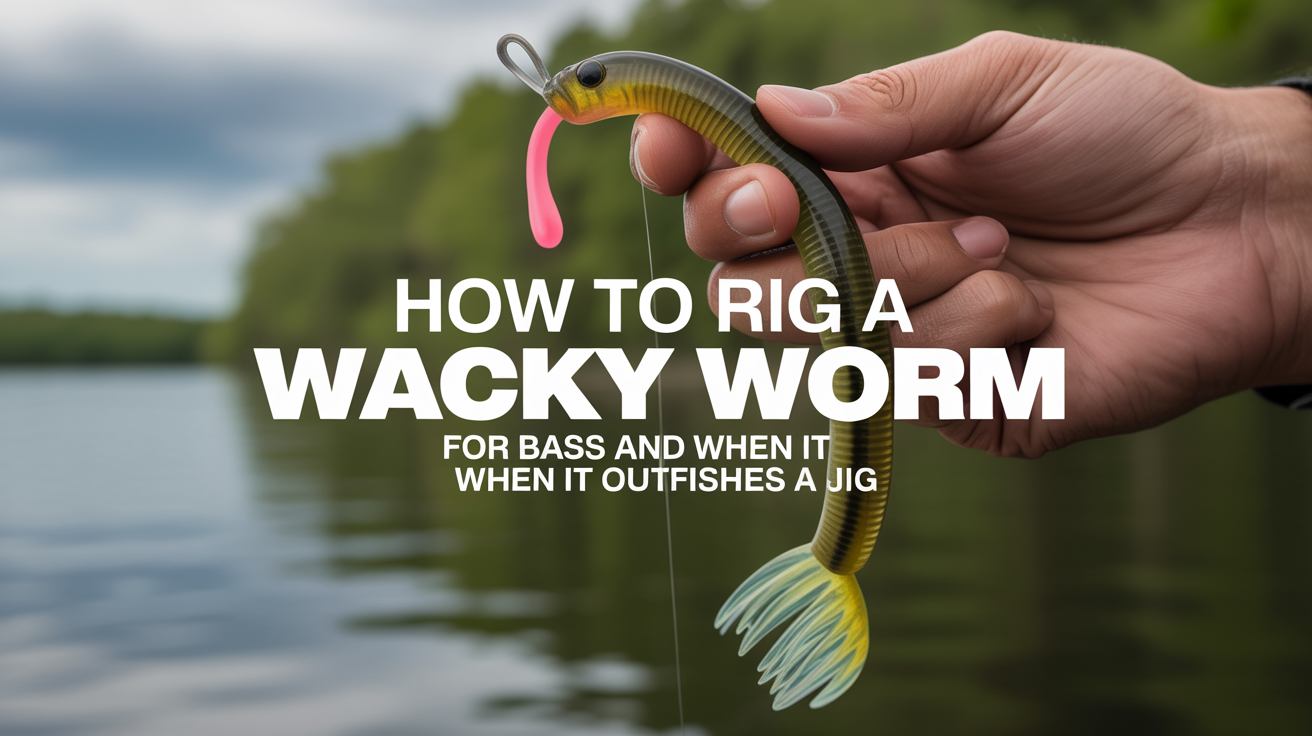
If you already know how to rig a Texas rig, learning how to rig a wacky worm takes about two minutes and one trip to the tackle shop for the right hook. The idea behind a wacky rig is doing less to the bait, not more. You hook a soft stick worm through its middle instead of burying the point in the nose, and both ends hang loose so the whole bait shivers and folds on the fall. It looks like nothing special in your hand. In the water, especially in front of a bass that has already seen six Texas-rigged worms come through, it looks like something wounded and easy.
What a Wacky Rig Actually Is
A wacky rig is a soft stick worm (a Senko or one of its many clones) hooked crosswise through the middle of the body, usually with a wacky hook or an O-ring holding the bait in place. There's no weight built into the hookset, no keeper barb, nothing pinning the ends down. Both halves of the worm move independently, which is the entire point. When the bait sinks, it doesn't drop straight down like a jig. It folds at the middle and both ends flap on the way to the bottom, then settles and barely moves again until you twitch it.
Compare that to a Texas rig, where the hook point is buried in the nose and a bullet weight pulls the package down nose-first through cover. A Texas rig is built to get through brush and grass without hanging up. A wacky rig is built to look helpless in open water where there's nothing to snag on anyway. They solve different problems, which is why most anglers carry both instead of picking a favorite.
How to Rig a Wacky Worm Step by Step
- Pick your worm. A 5-inch stick worm is the standard size for largemouth. Watermelon, green pumpkin, and black/blue cover most water before you need to branch out.
- Find the middle. Eyeball the midpoint, or fold the worm in half to mark it. This matters more than it sounds. Hook it off-center and one end will spiral on the fall instead of fluttering evenly, which kills the action.
- Use a wacky hook or an O-ring. A wacky hook has a slightly offset eye built to sit through the plastic at that middle point. If you'd rather not re-rig every time a bass swallows a worm, slide a wacky O-ring tool onto the worm, roll an O-ring around the midpoint, then run the hook under the ring instead of through the plastic. It costs a few extra seconds but the ring spreads out the stress that would otherwise tear the hook hole.
- Thread the hook through, not lengthwise. Push the point through one side of the worm and out the other, perpendicular to the body, so the eye sits near center and both ends hang free and even. Don't skin-hook it along the side; you want the point exposed for a bass that inhales the middle of the bait.
- Check the balance. Hold the rigged worm up by the line and let it hang. Both ends should droop close to level. If one end sags lower, slide the hook toward the heavier side and check again.
Weightless vs. a Nail Weight: Getting the Fall Right
Most of the time a wacky rig is fished completely weightless, and that's where it earns its reputation. Around docks, laydowns, and shallow grass edges, a weightless worm falls slowly enough that a bass has time to notice it, decide it's worth eating, and move on it before it's gone. That slow, wobbling fall is the whole presentation. Speed it up with weight and you lose most of what makes the rig work.
The exception is depth. Once you're working water past 8 to 10 feet, or fishing on a windy day when a weightless worm won't get down before it drifts off, a small nail weight solves the problem without ruining the action. Push a 1/16-ounce nail weight into the tail end (not the head, where the hook already sits) and you'll cut the fall time while keeping most of the shimmy. Go much heavier and you've basically built a clumsy jig with extra steps, so don't size up just because the water's a bit deeper than usual.
When a Wacky Rig Outfishes a Jig or a Texas Rig
A wacky rig tends to win in a few specific situations, and it's worth knowing them rather than just picking a rig at random:
- Pressured water. On a lake that gets fished hard, bass see plenty of jigs and Texas-rigged worms crashing through cover. A wacky rig's subtle, lazy fall reads as something different, and different is often what triggers a bite once the usual presentations have gone stale.
- Clear water. In gin-clear lakes and quarries, bass get a long look at anything before they commit. A slow, natural fall gives them a good look at something that doesn't look like a threat, which beats a jig's faster, more aggressive drop when fish are cautious.
- Finicky, following fish. If bass have followed a spinnerbait or jig to the boat without committing, that's a sign to slow down. A wacky worm dropped into that spot and twitched gently will often finish the job a faster bait couldn't.
- Docks and laydowns in open water. Skipping a wacky worm under a dock and letting it fall next to a piling is one of the most consistent ways to draw a bite from bass holding in the shade, especially with no thick brush to fight through.
A jig still does things a wacky rig can't. It pushes more water, works through heavy cover with a weed guard protecting the hook, and its bulkier profile suits reaction bites better when bass are actively feeding rather than sulking. If you're new to finesse presentations generally, the Ned rig is worth learning alongside the wacky rig. Both trade power for subtlety, just in different ways.
When to Reach for a Texas Rig Instead
Cover is the deciding factor. Drop a weightless wacky worm into a mat of milfoil or a pile of flooded brush and it'll hang up before it reaches a fish. A Texas rig's buried hook point and bullet weight are built for that water; the whole rig can be dragged and hopped through thick stuff without constantly snagging. If you're fishing standing timber, matted grass, or a brush pile on your electronics, tie on a Texas rig and save the wacky worm for open water and dock pilings where nothing's waiting to grab the hook.
Thick cover is also where a Texas rig's weight helps you cover water faster. A wacky rig's whole appeal is a slow fall, which is wasted time on a long grass line you're trying to work efficiently. Match the rig to the water in front of you rather than defaulting to whichever one caught fish last weekend.
Gear Notes for Wacky Rigging
Light spinning tackle is standard for wacky worms, not baitcasting gear, mostly because the worm itself is nearly weightless and a spinning reel casts light lures more easily.
- Rod: A 6'6" to 7-foot medium or medium-light spinning rod with a fairly soft tip, enough give to avoid ripping the hook out of a bass that's mouthing the worm rather than crushing it.
- Line: 8 to 10-pound braid as your main line handles wind and gives a direct hookset feel, with a fluorocarbon leader tied on to stay nearly invisible underwater. Fluorocarbon also sinks, which helps the rig settle rather than fighting a floating line.
- Retrieve: Cast past your target, let the worm fall on slack line so it can flutter naturally, then twitch the rod tip once or twice and let it sit. Most bites come on the fall or right after it settles, not while you're actively working it.
This shallow, structure-oriented style of fishing is exactly where a largemouth bass spends most of its time, so a wacky worm and a little patience around docks and laydowns go a long way.
Frequently Asked Questions
What size hook should I use for a wacky rig?
A size 1 or 1/0 wacky hook covers most 5-inch stick worms. Go up to a 2/0 if you're rigging a bulkier 6-inch worm, and size down to a 2 or 4 if you're working a smaller finesse worm for pressured or clear water fish.
Does a wacky rig work for anything besides bass?
Yes. A small wacky-rigged worm draws strikes from panfish too, though bluegill tend to nip at the tail ends rather than eat the whole bait. If panfish are your main target, a smaller worm and lighter hook beats scaling down a bass setup.
Can I use a Texas rig hook for a wacky rig instead of buying a wacky hook?
You can, but a straight-shank worm hook doesn't sit as evenly through the midpoint, and the exposed point sits differently than a hook designed for it. An O-ring setup with any light wire hook is a fine workaround if you don't have a dedicated wacky hook on hand.
Why does my wacky worm keep tearing off the hook?
The hook hole stretches with repeated hooksets and short strikes, especially with soft plastics. Switching to an O-ring rig solves most of this, since the hook rides under the ring instead of through the plastic itself, and one worm will hold up through far more fish and misses.
Is a wacky rig weedless?
Not on its own. The hook point is fully exposed, so it will snag in grass, wood, and brush. If you need to fish a wacky rig around light cover, a weedless wacky hook with a built-in weed guard exists and is worth carrying, though it still isn't a substitute for a Texas rig in genuinely heavy cover.