Knots & Rigs
How to Tie a Texas Rig (and When to Use It)
Learn how to tie a Texas rig step by step — bullet weight, hook, and Texposed plastic — plus when to peg the weight and where this setup shines for bass.
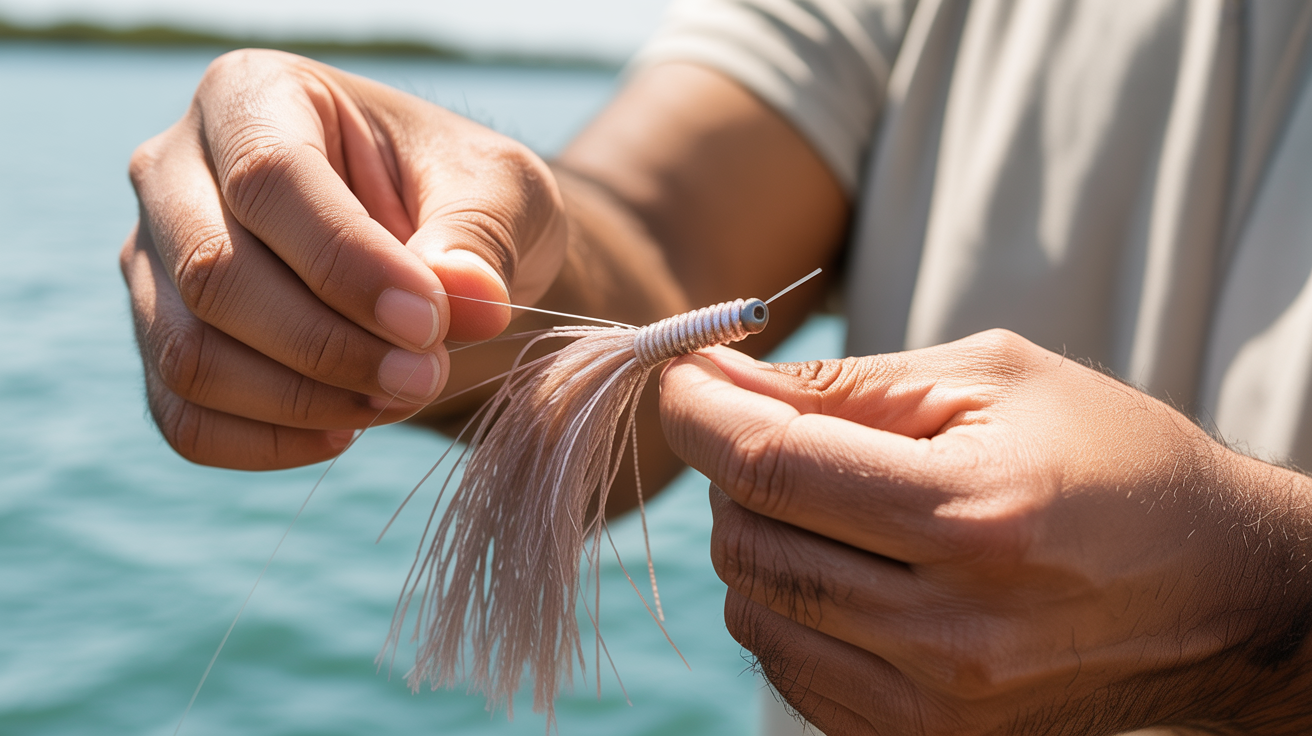
The Texas rig is one of those setups that earns its keep week after week. It's weedless, simple to assemble, and effective across more water types than almost anything else in freshwater fishing. If you fish for bass with soft plastics, you need this rig in your rotation.
Here's how to build one from scratch and when to reach for it.
At a Glance
- A Texas rig buries the hook point back into the plastic, so it's snag-resistant enough to drag through brush, grass, and stumps without constant hang-ups.
- Core parts: bullet weight, optional bead, EWG or straight-shank hook, and a soft plastic. No special knot, just your standard hook connection.
- Leave the weight unpegged for open water and light cover; peg it (toothpick, rubber peg, or bobber stop) when punching matted grass or skipping docks.
- Match hook size to bait size: 3/0 EWG for 4 to 5 inch baits, 4/0 to 5/0 for 6 to 8 inch worms and larger craws.
- The hookset has to be firm and sweeping, the buried point needs force to drive through the plastic and into the fish's jaw.
- Switch to a Carolina rig when the water opens up and you want the bait suspended off a hard, clean bottom instead of dragging through cover.
What Is a Texas Rig?
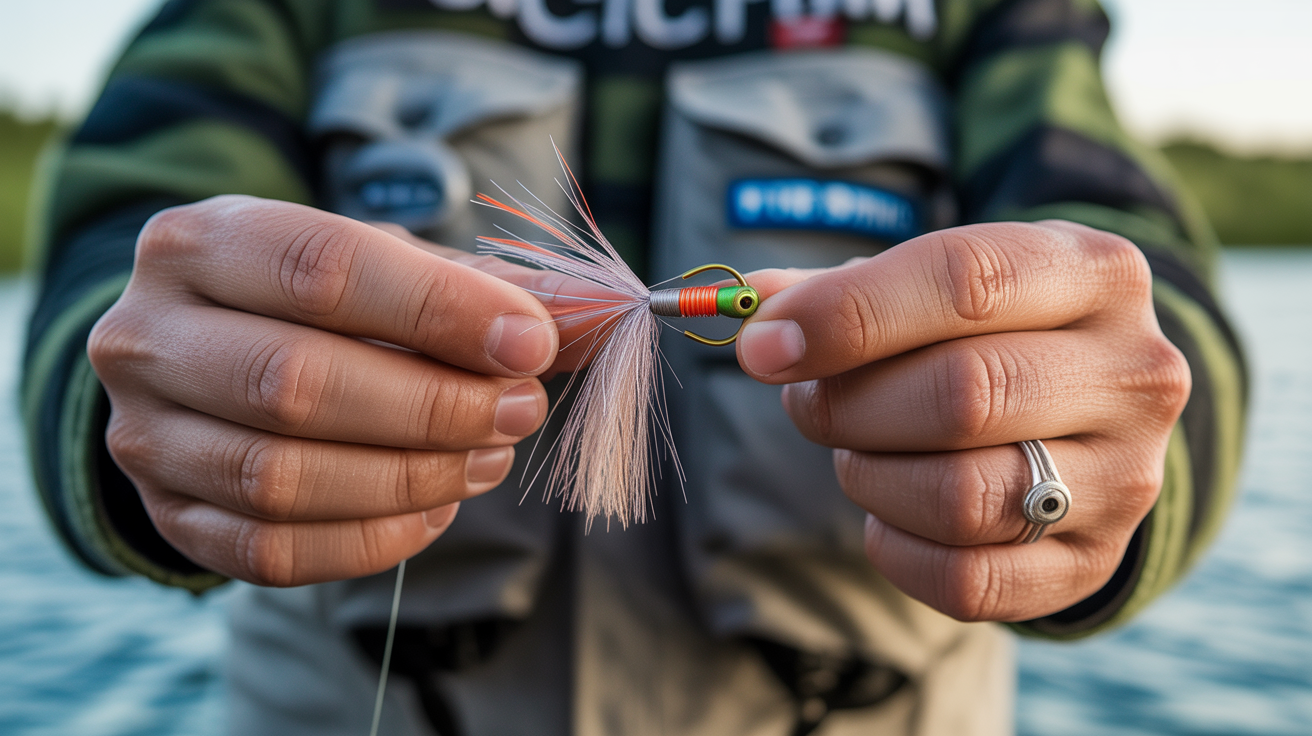
A Texas rig is a soft-plastic presentation that runs the hook point buried back into the bait, making it snag-resistant enough to drag through submerged brush, lily pad stems, and thick grass without constantly fouling. The weight slides freely on the line unless you peg it in place.
The components are minimal: a bullet-shaped slip sinker, an optional glass or plastic bead, an EWG (extra-wide gap) or straight-shank worm hook, and a soft plastic of your choice.
It's not a knot in the traditional sense, there's no new knot to learn beyond whatever you already use to attach a hook to line. If you need a solid terminal connection, the Palomar knot handles the mono-to-hook connection cleanly, and the improved clinch knot works fine on fluorocarbon leaders.
The reason this rig matters so much for bass fishing comes down to how bass actually use cover. Largemouth bass live in clear, vegetated lakes, ponds, and the backwaters of creeks and rivers, and adult fish rely on aquatic plants and submerged structure to ambush prey rather than chase it in open water, according to the U.S. Fish and Wildlife Service's largemouth bass species profile. A bait that can't get into that cover without snagging every third cast simply won't get bit as often. That's the entire case for the Texas rig in one sentence: it lets you fish where the fish actually live.
How to Build a Texas Rig: Step by Step
Step 1: Thread on the bullet weight
Slide a bullet-shaped tungsten or lead sinker onto your main line, point first. The tapered end should face down toward the hook. Common sizes run 1/8 oz to 1/2 oz, lighter for shallow water and finesse presentations, heavier when you need to punch through matted vegetation or fish deeper than 10 feet.
Tungsten is denser than lead, so a 3/16 oz tungsten sinker feels and falls more like a 1/4 oz lead weight. It also transmits bottom contact more clearly through the rod, which matters when you're trying to feel whether you're dragging across gravel, sand, or wood. Tungsten costs more per weight, often three to five times the price of lead, but most experienced Texas rig anglers consider the sensitivity trade worth it once they've fished both back to back.
Step 2: Add a bead (optional)
A small glass or hard plastic bead between the sinker and hook eye protects the knot from getting chipped by the sinker's brass insert. Some anglers skip it entirely; others swear by the subtle clicking sound the bead makes against tungsten. Worth trying both. If you're punching heavy cover with tungsten, the bead earns its place, tungsten is harder than lead and chips a knot faster on repeated hard hooksets.
Step 3: Tie on your hook
For most soft plastics, an EWG (extra-wide gap) hook in size 3/0 to 5/0 covers the range from 4-inch stick baits to 7-inch ribbon-tail worms. The wider gap gives the hook room to swing clear of the plastic on the strike. Straight-shank hooks in 1/0 to 3/0 work better for smaller baits like 3-inch finesse worms or compact creature baits.
Tie directly to the hook eye with a Palomar or improved clinch. 15 to 17 lb fluorocarbon is a common choice for Texas rigs in cover, it sinks, resists abrasion, and has very low visibility underwater. Braided mainline (30 to 50 lb) with a short fluorocarbon leader also works well when you need extra sensitivity and want the line to cut through grass rather than drag it.
Step 4: Texas (Texpose) the hook through the plastic
This is the weedless step, and it's worth doing carefully.
- Push the hook point straight into the top of the bait's head and out through the side, about 1/4 inch down from the tip.
- Pull the hook through until the eye is seated at the bait's nose.
- Rotate the hook 180 degrees so the point faces back toward the bait.
- Lay the hook alongside the bait to gauge where the point will re-enter, then push it through the body so the point just barely tucks back into the plastic, not buried deep, just skin-hooked enough to be snag-resistant.
The point should be flush with or very slightly below the bait's surface. If it's pulling the plastic into a curve or the bait looks kinked, back the hook out and re-rig. A straight bait falls and swims more naturally. A common beginner mistake is rushing this step, a crooked rig costs you strikes on every cast until you notice and fix it, so check the bait hangs straight before your first throw of the day.
Step 5: Decide whether to peg the weight
With the weight unpegged, it slides freely up the line while a fish runs with the bait, which can help with hooksets, the fish feels less resistance at first. This is the default setup for open-water and light-cover fishing.
Pegging locks the weight against the bait's head. You can use a toothpick broken off flush in the sinker's hole, a commercially made peg, or a small rubber bobber stop. Peg when:
- You're fishing matted grass or thick overhead cover and need the weight and bait to punch through as a single unit
- You're skipping docks or overhanging trees and the weight keeps sliding away from the bait mid-cast
- Wind or current is causing the weight to separate from the bait as it falls
For most situations with sparse cover, leave it unpegged.
Weight and Hook Sizing Reference
Use this as a starting point, then adjust based on how the bait feels falling through the water column on your first few casts.
| Bait Size | Hook Type & Size | Weight Range | Best Use |
|---|---|---|---|
| 3-inch finesse worm | Straight-shank 1/0–2/0 | 1/8–3/16 oz | Sparse cover, clear water, finesse presentations |
| 4–5 inch stick bait | EWG 3/0 | 3/16–1/4 oz | Skipping docks, open pockets, shallow flats |
| 6–8 inch worm | EWG 4/0–5/0 | 1/4–3/8 oz | Laydowns, brush piles, moderate cover |
| 7–10 inch ribbon-tail | EWG 4/0–5/0 | 3/8 oz | Deeper water, wind, need for extra fall speed |
| Creature bait / craw | EWG 4/0–5/0 | 1/4–1/2 oz | Flipping heavy cover, matted grass |
| Any bait, matted surface grass | EWG 4/0–5/0, pegged | 1/2–3/4 oz | Punching through thick canopy to open water below |
Soft Plastics That Work on a Texas Rig
Almost any soft plastic will work, but a few formats are especially well suited:
- Straight-tail worms (6 to 10 inch): The classic choice. They fall slowly, have a subtle action on the drop, and are easy to rig straight. Good in water temps above 55°F when bass are actively feeding.
- Ribbon-tail worms (7 to 10 inch): The curled tail adds more vibration and displacement, which can help when fish need a little more stimulus to commit.
- Creature baits and craws: Bulkier profile, good for flipping into heavy cover. The appendages flutter on the drop.
- Stick baits (4 to 5 inch, like a Senko-style): Rigged weedless Texas-style, these baits fall nearly horizontally and shimmy on the drop with minimal angler input, effective when fish are sluggish.
Color follows general soft-plastic logic: green pumpkin, watermelon red, and black-blue in clear to moderately stained water; chartreuse accents or dark solid colors in murky water. As a rough rule, if you can see your bait more than 2 feet down when you dangle it off the boat or dock, you're in clear-water color territory. If you lose sight of it within a foot, go darker and bulkier.
Where a Texas Rig Shines
Heavy cover and laydowns
The buried hook point lets you drag through submerged brush piles, fallen trees, and stump fields without constantly snagging. Position the cast to land just past the cover and drag or hop the bait through it.
Grass and weeds
Milfoil, hydrilla, and coontail can foul a bare hook on nearly every cast. A Texas rig moves through them with far fewer hang-ups. Eurasian watermilfoil in particular grows fast once established, elongating from shoots in fall and reaching the surface early in spring to form dense canopies that shade out everything beneath, according to the USGS Nonindigenous Aquatic Species database. That canopy is exactly the kind of surface mat that stops a bare hook cold and is where a heavier, pegged Texas rig punches through to the open water and bass holding underneath.
Use a heavier weight (3/8 to 1/2 oz) when penetrating thick mats, and go lighter (1/8 to 3/16 oz) for sparse or submerged grass.
Shallow flats and pockets
In water 2 to 8 feet deep with mixed cover, stumps, isolated patches of grass, scattered rock, a Texas rig lets you probe multiple structure types without retying. Slow it down in cold water; speed up the retrieve in warm.
How to Fish and Work a Texas Rig
The most common method is the drag-and-hop. Cast past your target, let the bait sink on a semi-slack line (watch the line, strikes often happen on the fall), and then drag the rig along the bottom with the rod, periodically lifting the tip to hop the bait a few inches. Let it fall back on a controlled slack before the next move.
Pay attention to how the weight makes contact with the bottom. A change in feel, from soft mud to gravel, or from open bottom to wood, often indicates where fish are staging.
The lift-and-drop is more aggressive: raise the rod tip from 8 o'clock to 11 o'clock, then let the bait fall on a semi-slack line while dropping the rod back down. Repeat. This works well over laydowns and in deeper water.
Slow down your presentation when the water is cold or after a front moves through. Fish in post-front conditions often want the bait nearly motionless, a subtle twitch followed by a long pause, sometimes 15 to 30 seconds between movements when fish are truly locked down.
A pitfall worth naming: overworking the bait. New Texas rig anglers often hop and drag too quickly, treating it like a crankbait retrieve. The rig's whole appeal is the slow, deliberate fall and the extended pause. If you're not getting bit, the fix is usually to slow down further before you change baits entirely.
The Hookset
Because the hook point is buried in the plastic, you need a firm, sweeping hookset to drive the hook through the bait and into the fish's jaw. A fast-action rod in medium-heavy to heavy power gives you the backbone for this. When you feel a thump or notice the line moving sideways, reel down quickly to get a tight line, then sweep the rod hard to the side or straight up. A slack-line hookset on a Texas rig usually means a missed fish.
Braided mainline helps here too, since it has essentially no stretch, more of your hookset energy transfers directly to the hook point instead of getting absorbed by the line.
Texas Rig vs. Carolina Rig
Both rigs use a bullet or egg sinker with a soft plastic, but they behave differently.
On a Texas rig, the weight is right at the bait's head. The whole setup falls together, stays in contact with the bottom cover, and is built for close-quarters fishing.
On a Carolina rig, the weight is separated from the bait by a leader, typically 12 to 36 inches of fluorocarbon, with a swivel and bead between the weight and leader. The weight drags along the bottom while the bait floats up and trails behind. This excels on open, hard-bottom flats where you want to cover ground and let the bait hover and suspend above the bottom. It's less weedless than a Texas rig and harder to fish in thick cover, but deadly on bass and other species suspended just off clean bottom.
If you're unsure which to use: start with a Texas rig in cover-heavy water; switch to a Carolina rig when you're fishing large, open flat areas and want the bait elevated off the bottom. There's more detail on setups and comparisons in our guide to 5 knots every beginner should know, the basics carry across both rigs.
Tackle Theory is an independent freshwater-fishing resource. Our guides are researched and written in-house; we are not affiliated with, endorsed by, or sponsored by any tackle brand or retailer. Fishing regulations, seasons, and size limits vary by location, always confirm current rules with your state or provincial fish and wildlife agency before you fish.
FAQ
What size weight should I use for a Texas rig?
Start with 3/16 oz for shallow water (under 6 feet) with light cover, and move to 1/4 oz or 3/8 oz in deeper water or thicker vegetation. Use 1/2 oz when punching through matted surface grass. In very calm, clear, shallow conditions, 1/8 oz can be worth trying for a slower, quieter fall. If you're second-guessing the size, err lighter first, a slower fall draws more strikes in most conditions, and you can always size up if you're not reaching bottom or the wind is pushing your line around.
What hook size is best for a Texas rig?
It depends on your plastic. A 3/0 EWG hook pairs well with 4 to 5 inch stick baits and smaller creature baits. A 4/0 or 5/0 EWG suits 6 to 8 inch worms and larger craws. Straight-shank hooks in 1/0 to 2/0 work for finesse-sized baits. The goal is a hook whose gap clears the bait so the point can swing free on the strike.
Do I need fluorocarbon for a Texas rig?
Not strictly, but it helps. Fluorocarbon sinks, has less stretch than monofilament (which helps with hooksets), and is harder for fish to see. In heavy cover you can also run straight braid, it cuts through grass and telegraphs bottom contact well. Mono is serviceable, especially for beginners who find it easier to manage, but fluorocarbon is worth the upgrade once you're fishing this rig regularly.
Can I use a Texas rig for fish other than bass?
Yes. The Texas rig works on any soft-plastic-eating species. Walleye will take a Texas-rigged finesse worm worked slowly along the bottom. Pike occasionally hit larger ribbontails rigged this way. Crappie and panfish are too small to fish it effectively, their mouths can't clear the wide-gap hook on a strike.
When should I peg my sinker?
Peg when the cover is dense enough that an unpegged weight would separate from the bait and get stuck above it in the weeds or brush. Punching through matted grass mats is the most common reason. For most other fishing, sparse weeds, open water, rocky bottom, leave it free-sliding so the fish feels less resistance when it picks up the bait.
Can I fish a Texas rig on spinning gear instead of a baitcaster?
Yes, especially with lighter weights (1/8 to 1/4 oz) and smaller baits. A medium to medium-heavy spinning rod handles finesse-sized Texas rigs well and is often easier for beginners to cast accurately. Heavier weights and bulkier creature baits for punching mats are where baitcasting gear starts to have a real advantage, since it handles the extra weight and provides more direct hookset leverage.
Why does my Texas rig keep sliding into a curve instead of sitting straight?
This almost always comes down to hook placement. If the hook point re-enters the plastic even slightly off-center or at the wrong angle, the bait bows to one side as it falls, which looks unnatural and can cause it to spin and twist your line. Back the hook out, lay it alongside the bait again to double-check the exit point, and re-rig. It takes an extra 15 seconds and noticeably improves how the bait swims.