Species Guides
How to Catch Largemouth Bass: A Beginner's Guide
Learn how to catch largemouth bass with beginner-friendly tips on where they hold, what they eat, the best baits, simple rigs, and when to fish.
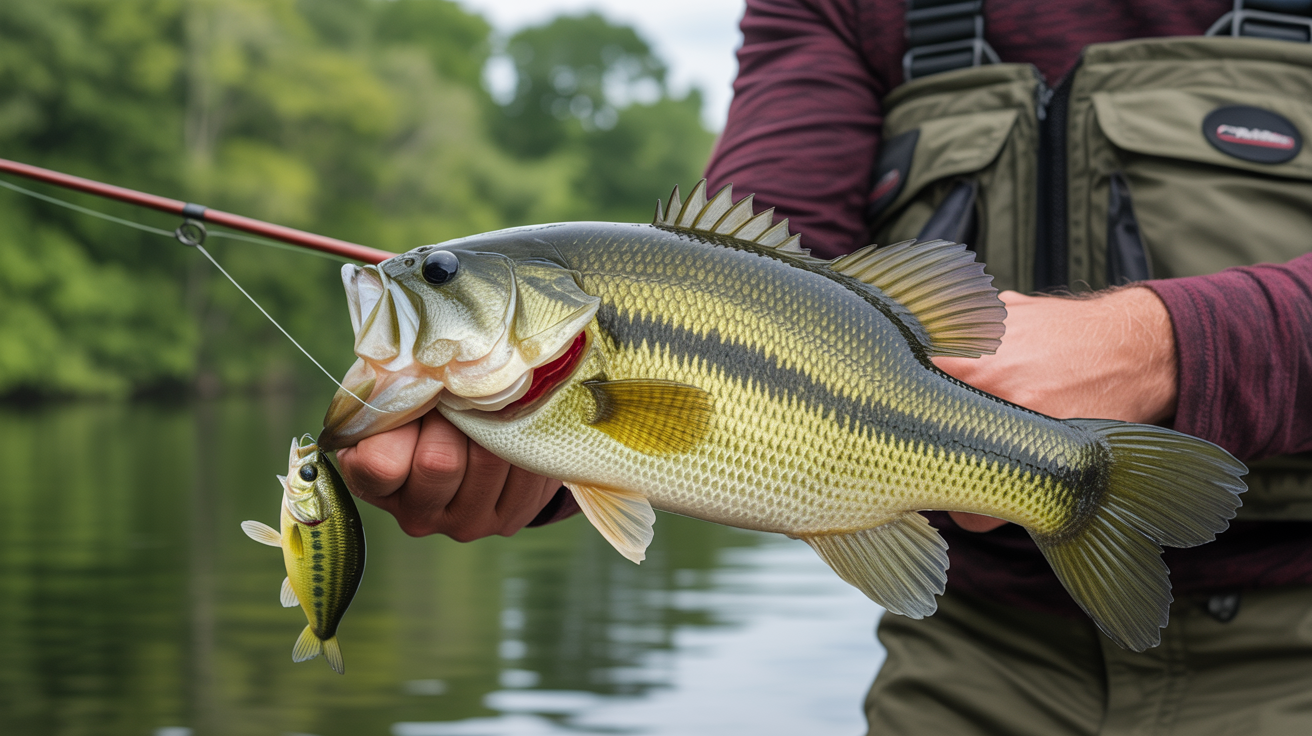
Largemouth bass are probably the most forgiving fish you can chase as a beginner. They're widespread across North America, they eat a wide variety of things, and when conditions are right they'll slam nearly anything that moves. That said, there's real skill to finding them consistently, and understanding a few basics about where they live, what they eat, and how to present a bait will make the difference between a blank afternoon and a memorable day on the water.
This guide covers everything a new bass angler needs: where bass hold through the seasons, which baits and lures to start with, the simplest rigs to tie, and a practical starting setup.
Before anything else: bass fishing regulations vary widely by state and province. Size limits, daily creel limits, and closed seasons all differ by water body. Always check with your local fish and wildlife agency before you head out.
Where Largemouth Bass Hold
Bass are ambush predators. They almost never suspend out in open water, they relate to structure and cover, using it to hide from prey and shelter from current and bright light. Learning to read the water is the single biggest upgrade you can make as a new bass angler. (For a deeper look at this concept, see our guide on fishing structure and cover.)
Cover vs. Structure
Cover is anything physical that bass can hide in or around: submerged vegetation (hydrilla, milfoil, lily pads), fallen timber, dock pilings, rock piles, brush piles, and overhanging trees that shade the bank.
Structure is the shape of the bottom: points, humps, creek channels, ledges, drop-offs, and the transition zones where hard bottom meets soft mud. Bass use both, but for beginners, visible cover on a bank is usually the easiest starting point.
Seasonal Location Changes
Bass move around the water column and around the lake based on water temperature and spawning cycles. Here's a simplified breakdown:
| Season | Water Temp | Where Bass Hold | Notes |
|---|---|---|---|
| Early Spring | 48–58°F | Shallow flats, black-bottom coves, near spawning areas | Bass warming up, feeding actively |
| Spawn | 58–68°F | Shallow sand or gravel near vegetation | Beds in 1–6 ft; fish are protective, not hungry |
| Post-Spawn | 68–74°F | Deeper edges near spawning flats, dock shade | Females recover; males guard fry |
| Summer | 75–85°F | Deep structure, shaded docks, early-morning shallows, grass edges | Midday bass go deep or under cover |
| Fall | 60–72°F | Shallowing up following baitfish; points, creek mouths | Aggressive feeding before cold; great window |
| Winter | Below 50°F | Deep, slow water; rock bluffs, main-lake humps | Slow presentations needed; fish are lethargic |
The single most useful pattern for beginners: fish shallow early in the day (first two hours of light) and late in the evening, and target shaded cover during midday heat. Bass move to shade when the sun climbs high.
What Largemouth Bass Eat
Largemouth bass are opportunistic. Bluegill and other sunfish make up a large part of their diet in most lakes, along with shad, perch, crawfish, frogs, mice, and even small ducks when the fish are big enough. They also eat insects, worms, and anything that looks alive and vulnerable.
The practical takeaway: your lure doesn't need to look exactly like a real creature. It needs to move in a way that triggers a reaction. Bass strike out of hunger, aggression, and territorial instinct, all of which work in your favor.
Best Beginner Baits and Lures
You don't need a tackle box full of options. Three categories cover most situations a beginner will encounter.
Soft Plastic Worms and Creature Baits
A 4-inch or 5-inch straight-tail or ribbon-tail worm in watermelon, green pumpkin, or black-blue is as close to a guaranteed bass lure as exists. Soft plastics are slow, they're quiet, and they can be dragged through the exact spots where bass sit. A 7-inch worm fished on a Texas rig (see below) is particularly effective around heavy vegetation and laydowns.
Creature baits, stubby, paddle-shaped soft plastics, work the same way and imitate crawfish, which bass absolutely love. Crawfish-colored options (brown, orange-tipped, or red-orange) excel around rocky banks and hard bottom.
Spinnerbaits
A 3/8 oz or 1/2 oz tandem-blade spinnerbait (one Colorado blade, one willow blade) covers water fast and works year-round in stained or murky conditions. The blades flash and thump, and the fish don't need to see it clearly to find it. Throw it along weedlines, past dock corners, or parallel to rocky banks at a medium steady retrieve. If you feel the blades stop ticking for a second, that's often a strike, set the hook.
White and chartreuse are strong starting colors in darker water. In clearer water, natural shad patterns (silver and white) tend to outperform.
Topwater Lures
There's no more exciting way to catch bass than on the surface. A popper or a hollow-body frog worked across lily pads at first light will produce strikes that look violent. Hollow-body frogs are especially useful in heavy vegetation where you'd snag almost anything else. Walk them slowly over the mats and pause near any opening or depression in the weeds.
A standard hard-body popper works better around cleaner water, near dock edges, over submerged grass, or along rocky banks. Pop it once or twice, pause, repeat. Bass often hit on the pause.
Simple Rigs Every New Bass Angler Should Know
Texas Rig
The Texas rig is the most versatile bass setup you'll tie. Thread a bullet-shaped tungsten or lead sinker (3/16 oz to 3/8 oz) onto your line, tie on a straight-shank or EWG (extra-wide gap) hook in size 3/0 to 5/0, and rig a soft plastic worm or creature bait weedless (the hook point buried in the plastic). Cast it into grass, under docks, or alongside laydowns. Let it hit the bottom, then drag it slowly with occasional hops. The weedless setup lets you fish places other rigs can't go.
For line: 14–17 lb fluorocarbon is the standard choice on a Texas rig. It sinks, has low stretch, and is nearly invisible in clear water. In heavy vegetation, some anglers go up to 20–25 lb braided line to horse fish out of the weeds.
Drop Shot Rig
A drop shot is a finesse approach, effective when bass are sluggish or in clear water where they're being picky. Tie your hook (a size 1 or 1/0 drop-shot hook) directly to your main line with a Palomar knot, leaving a 12–18 inch tag end below the knot. Attach a small drop-shot weight to the tag end. Rig a small (3-inch) straight-tail worm or finesse bait through the nose onto the hook so it hangs horizontally.
Lower it to the bottom near structure, keep the line semi-tight, and shake your rod tip. The weight stays on the bottom while the bait quivers above it at a fixed depth. It's excellent around dock posts, rocky points, and anywhere you can see fish holding tight without chasing.
Spinnerbait, No Rig Needed
A spinnerbait comes pre-rigged as a complete lure. Tie it directly to 12–15 lb monofilament or fluorocarbon with an improved clinch knot or Palomar knot and you're ready. No sinkers, no separate hooks.
Time of Day and Light Conditions
Bass fishing has a rhythm tied to light. The two to three hours after sunrise are usually the most productive time on any water body. Bass push into the shallows to feed, the water is still cool, and topwater and spinnerbaits work well because the fish are active.
Midday in summer is tough. Bass retreat under cover, thick grass mats, deep dock shadows, submerged timber. Slow presentations work better: a Texas-rigged worm dragged into the shade of a laydown, or a drop shot near the base of a dock post.
The evening bite picks back up as the sun drops. It's often shorter than the morning bite but can be explosive, especially on summer topwater.
Overcast days extend the feeding window significantly. Cloud cover reduces light penetration and bass leave cover earlier and stay shallow longer. Wind-blown banks also concentrate baitfish (and bass) because the surface movement washes food into a defined area.
For a broader look at how timing affects different species, see our crappie fishing for beginners guide, where light and timing follow similar principles.
A Quick-Start Setup for Bass Fishing
You don't need to spend a lot to get on the water effectively.
Rod: A 6'6" to 7' medium-heavy spinning rod or casting rod with fast action. Spinning gear is easier for beginners, you'll avoid backlash and can make accurate casts with lighter lures.
Reel: A 2500 or 3000 size spinning reel with a smooth drag. Look for a gear ratio in the 6:1 range, which handles both slow plastics and faster retrieves for spinnerbaits.
Line: 12–15 lb monofilament is forgiving for beginners and fine for most situations. When you're ready to step up, 10–12 lb fluorocarbon main line (or 30 lb braid with a 12–15 lb fluoro leader) will improve sensitivity and reduce visibility.
Starter lure selection:
- One pack of 5-inch straight-tail worms in watermelon and black-blue
- One 3/8 oz spinnerbait in white/chartreuse
- One small hard-body popper
- Assorted bullet weights (3/16, 1/4, 3/8 oz) and EWG hooks (3/0, 4/0)
That's enough to fish any season in any weather condition. Add a hollow-body frog when you encounter lily pad mats.
If you're comparing bass to other sport fish in terms of difficulty and gear overlap, our trout fishing guide covers a different end of the freshwater spectrum, worth reading once you've got bass figured out.
FAQ
What is the best bait for largemouth bass?
For beginners, a 4–5 inch soft plastic worm rigged Texas-style is the most reliable starting point. It works year-round, in any water clarity, and can be fished in heavy cover without constant snags. A white or chartreuse spinnerbait is a close second for covering water quickly and triggering reaction strikes.
How deep should I fish for largemouth bass?
It depends on the season and time of day. In spring and fall, bass are often in 2–8 feet of water near shallow cover. In summer, midday bass may be 15–25 feet deep on structure. As a beginner, start by fishing the visible cover in 3–10 feet of water during low-light periods, you'll encounter bass in that range far more often than in open deep water.
What pound test line should I use for bass?
For most beginners, 12–15 lb monofilament is a solid all-around choice. It handles soft plastics, spinnerbaits, and topwater lures without issue. If you're fishing around heavy vegetation or dock structure where you need to pull fish out fast, bumping up to 17–20 lb fluorocarbon or 30 lb braid makes sense.
Do I need a boat to catch largemouth bass?
No. Many productive bass waters have accessible banks, piers, and shoreline structure that you can fish from shore. Bass often hold tight to the bank, laydowns, dock corners, and weed edges near the shore are prime targets. Bank fishing for bass is a legitimate and enjoyable approach; a boat just gives you access to more water.
What size largemouth bass can I keep?
Size limits and daily bag limits vary by state, province, and sometimes by individual water body. Most jurisdictions set a minimum size somewhere between 10 and 15 inches, but slot limits and trophy regulations exist on many quality fisheries. Always look up the specific rules for the water you're fishing with your local fish and wildlife agency before you keep any fish.