Knots & Rigs
The Ned Rig: A Simple Finesse Setup That Always Catches
Learn how to build and fish a ned rig for bass. Covers jighead weight, stick-bait choices, light line setup, and the slow retrieve that gets bites when nothi...
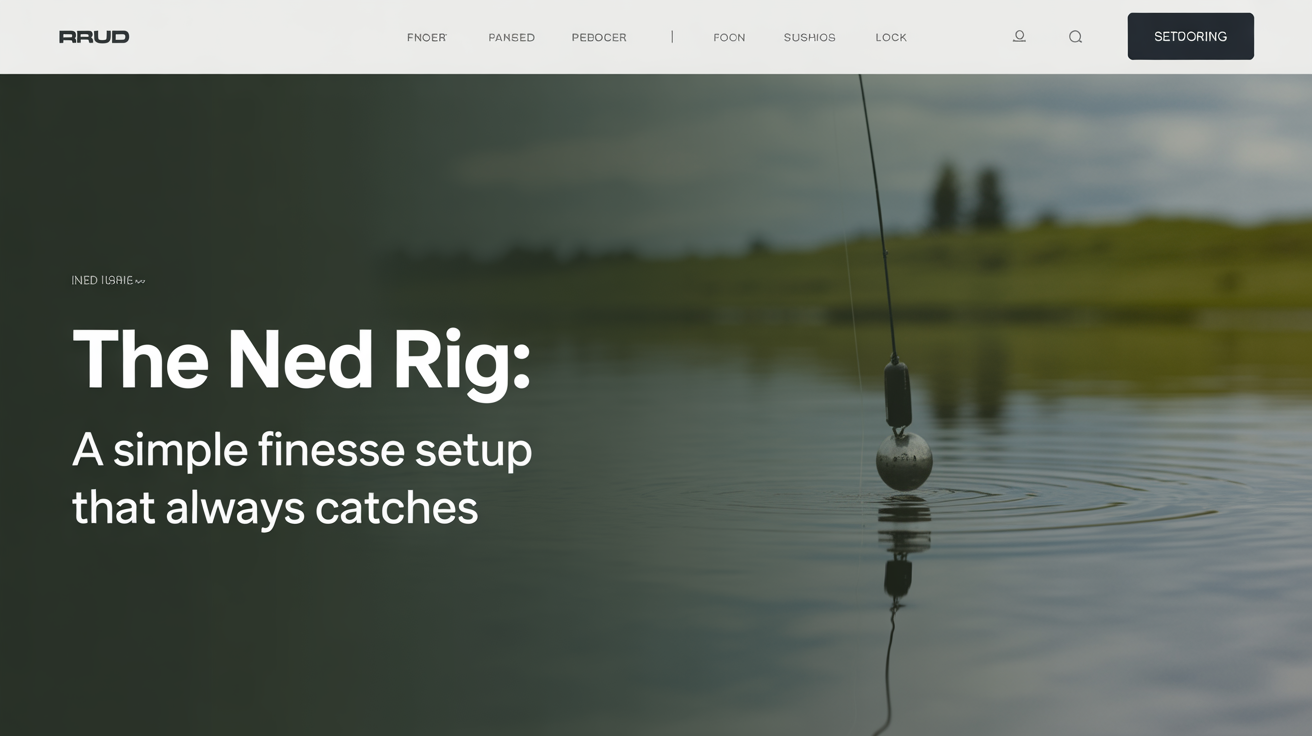
The ned rig is a small mushroom jighead tipped with a short soft-plastic stick bait, and it catches bass and panfish on days when bigger presentations fail completely. If you have ever watched the water go quiet in summer heat or winter cold, this is the setup that still gets bites.
What Is a Ned Rig
The ned rig came out of the Midwest finesse fishing scene and was popularized by outdoor writer Ned Kehde. The concept is simple: use a very small jig, a very short bait, very light line, and let the bait sit almost motionless on the bottom. That combination mimics small forage and works even on heavily pressured water where bass have seen every larger bait available.
The two core components:
- Mushroom jighead -- A round or mushroom-shaped lead head with an upward-facing hook. The wide base keeps the bait standing upright on the bottom, which is the visual trigger that makes this rig different from a standard finesse jig.
- Short stick bait -- A soft plastic stick bait cut or purchased at 2.5 to 3.5 inches. ElaZtech-style floating plastics work especially well because they are buoyant, so the tail lifts off the bottom and waves with any current or subtle rod movement.
The combination of an upright jighead and a floating plastic tail creates a small, vertical profile that bass find hard to ignore, even when they are not actively feeding.
Ned Rig Setup: Gear and Components
Getting the ned rig setup right means matching light gear throughout. Using heavy tackle defeats the purpose because it kills the subtle action the rig depends on.
Rod
A medium-light to light spinning rod between 6 feet 6 inches and 7 feet works best. A spinning rod is required here, not a baitcaster. The light lure weights used with a ned rig will not load a casting rod properly. Look for a rod with a moderate-fast to fast tip that has enough sensitivity to feel a light bite on the bottom.
Reel
A 2500 to 3000 size spinning reel with a smooth drag is the standard choice. Nothing exotic is needed. The drag should be set light enough that a big fish will not break the line on the initial run.
Line
Light line is essential. Most experienced ned rig anglers use one of these setups:
| Line Type | Typical Strength | Notes |
|---|---|---|
| Fluorocarbon main line | 6-10 lb | Low visibility, sinks, good sensitivity |
| Braid main + fluoro leader | 10-15 lb braid / 6-8 lb fluoro | Longer casts, good feel, leader reduces visibility |
| Monofilament | 6-10 lb | Budget-friendly, slight stretch, works fine |
Eight-pound fluorocarbon is a reliable starting point for most clear to slightly stained water. In very clear water or when bites are especially finicky, dropping to 6-pound line gets more strikes.
Jighead Weight
Jighead weight controls how fast the rig falls and how it behaves on the bottom. Use the lightest weight that still lets you feel the bottom.
- 1/15 to 1/10 oz -- Shallow water under 8 feet, slower fall for extra-cautious fish
- 1/8 oz -- General-purpose weight, covers most situations from 6 to 15 feet
- 3/16 to 1/4 oz -- Deeper water, current, or windy conditions where you need to feel the bottom
Start at 1/8 oz and adjust from there. Going lighter often improves results in clear water or cold conditions.
How to Fish a Ned Rig
The ned rig retrieve is almost the opposite of reaction baits. Slow everything down.
Basic drag-and-pause retrieve:
- Cast to your target area and let the bait sink on a semi-slack line. Watch the line on the fall because bass often pick up the bait before it hits the bottom.
- Once it hits bottom, let it sit for 5 to 10 seconds. The floating tail will wave and stand up, and that can be enough to trigger a bite.
- Drag the bait along the bottom with a slow, steady pull of the rod, moving it 6 to 12 inches at a time.
- Pause again for 5 to 10 seconds.
- Repeat back to the boat or bank.
The key is patience. Most anglers move the bait too quickly. Bass often pick the bait up during the pause, not the movement, so giving it time to sit is where the bites happen.
Detecting bites:
Ned rig bites can be subtle. The line may go slightly slack, you may feel a small tick, or the line may start moving sideways. Keep light contact with the bait and set the hook with a firm sweep of the rod rather than a sharp snap. A sweep hook set keeps tension on the fish and is less likely to pull the bait away from a bass that has the bait's tail but not the hook.
Knot recommendation:
Because you are using light fluorocarbon or mono, a reliable knot is critical. The Palomar knot is the most reliable choice for light line to jigheads. It retains close to the full line strength when tied correctly. If you prefer an alternative, the improved clinch knot also works well and is easy to tie in low light. A review of five beginner knots can help you pick whichever feels most natural to tie consistently.
Why the Ned Rig Works in Tough Conditions
Most fishing techniques rely on triggering a reaction strike from an active bass. The ned rig takes a different approach: it presents a bait that is so small and non-threatening that inactive fish will still pick it up.
Three situations where it outperforms other techniques:
Post-frontal fishing. After a cold front passes through, barometric pressure rises and bass often go inactive and tight to the bottom. Larger presentations get ignored. A ned rig placed right in front of a fish's face is hard to pass up even when the fish is not in a chasing mood.
High-pressure water. On lakes with heavy fishing traffic, bass become conditioned to lures. Smaller profiles and natural presentations get more strikes than the same big swimbaits or jerkbaits that worked earlier in the season.
Cold water. In late fall and winter when water temperature drops below 50 degrees, bass metabolism slows. They will not chase fast-moving baits. A ned rig sitting on the bottom in their face is one of the few presentations that consistently produces in those conditions.
The ned rig also works well in rocky, hard-bottom areas where a Texas-rigged worm might get hung up constantly. The upward-facing hook on a mushroom jighead is naturally weedless against horizontal bottom obstructions, though it will still hang on vertical rock faces.
Where to Target Bass with a Ned Rig
The ned rig shines on specific bottom types and depth ranges.
Best spots:
- Hard, rocky bottom in 5 to 20 feet of water
- Gravel points and channel edges
- Transition areas from mud to rock or sand to gravel
- Shallow flats with scattered rock or chunk rock
- Around submerged wood in open water
Cast to the edge of visible structure and work the bait along the bottom back toward where you are standing or sitting. Focus on depth changes because that is where bass often hold, using the drop as a highway between shallow feeding zones and deeper resting areas.
Ned Rig for Bass: Species and Size Expectations
The ned rig is best known as a bass technique, particularly for largemouth and smallmouth bass. Smallmouth are especially susceptible to it because smallmouth tend to feed on smaller forage and are often found on the rocky bottom the rig excels at working.
Largemouth bass caught on a ned rig tend toward the average-size fish rather than giants. The small hook and light wire are not ideal for fish over 4 to 5 pounds where a bigger hook gap would be helpful. That said, ned rigs do catch large bass, and on tough days a medium fish beats no fish.
The rig also catches spotted bass, rock bass, bluegill, and crappie on the same setup. If you are fishing an area with mixed species, be ready for anything to grab it.
Always check your state or provincial fishing regulations for current size limits, season dates, and any gear restrictions on the specific water you are fishing. Rules vary by location and can change from year to year. Your state fish and wildlife agency website is the correct place to confirm current rules before you fish.
Frequently Asked Questions
What size ned rig should a beginner start with?
Start with a 1/8-ounce mushroom jighead and a 3-inch stick bait. That combination casts well on light spinning gear, feels natural on the bottom, and is a good all-around size for most freshwater bass fishing situations.
Do you need special plastics for a ned rig?
No, but floating plastics made from ElaZtech or similar buoyant material work better than standard soft plastics. The floating tail lifts off the bottom and moves in the water. Standard soft plastics will still catch fish but they tend to go limp on the bottom rather than standing up.
Is a ned rig good in weeds?
It is not the strongest choice in heavy weed cover. The upward-facing hook will snag grass fairly easily. In open water, rocky bottom, and sparse vegetation it is very effective. For thick weeds, a Texas-rigged worm is a better starting point.
What line should I use for a ned rig?
Six to ten-pound fluorocarbon is the most common choice. It is low visibility, sinks, and has good sensitivity. If you want longer casts or are fishing with braid, attach a 12 to 18-inch fluorocarbon leader using a double uni knot or Alberto knot.
How do I know when a bass bites the ned rig?
The bite is often subtle. Watch for your line to go slack suddenly, move sideways, or twitch. You may also feel a light tick or soft pressure. Keep moderate contact with the bait and set the hook any time something feels different. When in doubt, sweep the rod and find out.