Species Guides
How to Catch Bluegill and Other Panfish
A beginner's guide to catching bluegill and panfish: the right hook sizes, best baits, where to find them, and simple rigs that work.
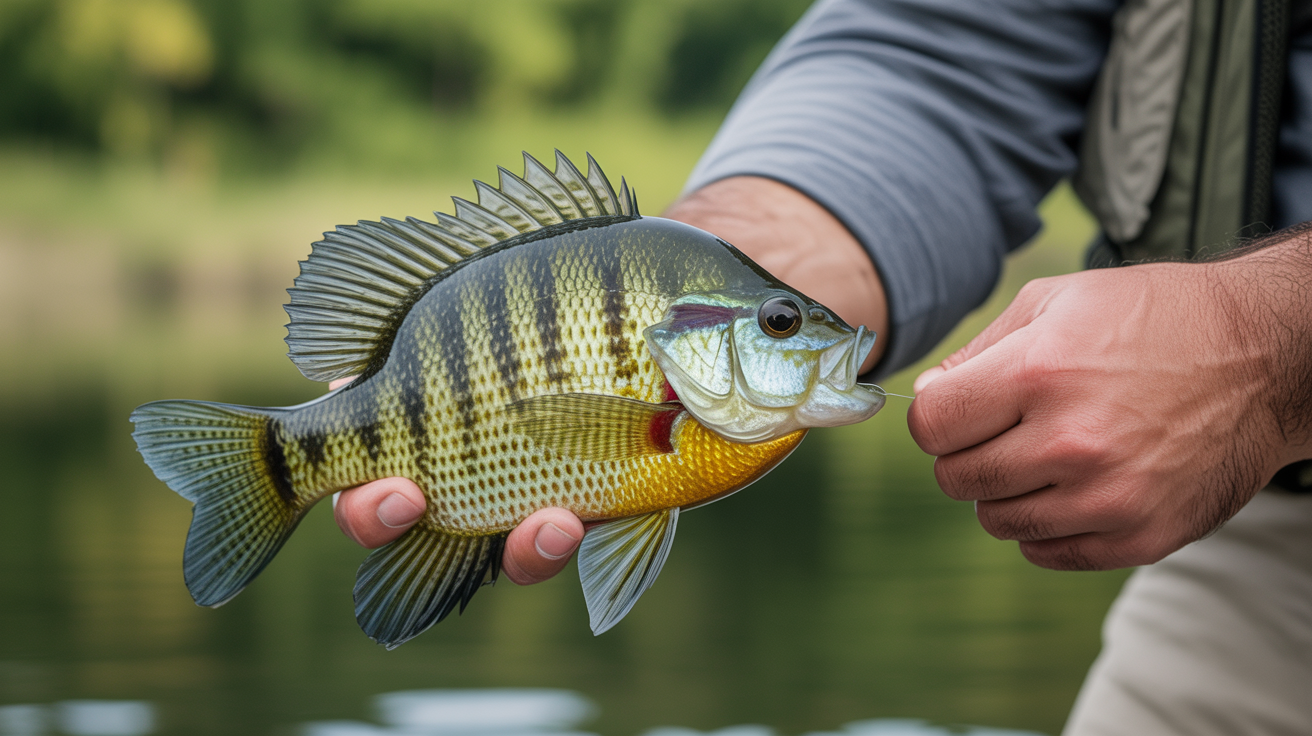
Bluegill are one of the easiest fish to catch on light tackle, and they're found in almost every freshwater lake, pond, and slow-moving river across North America. If you want a productive afternoon of fishing without a lot of fuss, learning panfish basics will put fish in your hand consistently.
What Are Panfish?
"Panfish" is a casual category rather than a scientific one. It refers to small, edible freshwater fish that fit comfortably in a frying pan. Bluegill are the most widely distributed example, but the group includes:
- Bluegill (Lepomis macrochirus) -- the standard, found coast to coast
- Pumpkinseed -- similar to bluegill, more colorful, common in the Northeast and Midwest
- Redear sunfish -- also called shellcrackers; favor deeper, cooler water
- Crappie (black and white) -- slightly larger, more schooling behavior, love brush piles
- Rock bass -- aggressive biters, prefer rocky structure and clear streams
- Yellow perch -- cool-water fish common in northern lakes
All of these species share similar habits: they hold tight to structure, feed actively at certain times of day, and bite readily on small presentations. Most gear advice that works for bluegill works for the whole group.
Check your state's regulations before you go. Most states have no minimum size limit for bluegill and a generous daily creel, but crappie rules vary, and some waters have special restrictions. Your local fish and wildlife agency's website will have current rules.
Where to Find Bluegill and Panfish
Reading water is half the game. Panfish rarely roam open water except during a hatch or when following bait schools. Most of the time they hold close to something.
Structure to Target
- Dock pilings and boat docks: Shade and structure in one place. Bluegill stack under docks from spring through fall.
- Submerged brush piles and fallen trees: Crappie in particular love woody debris. Cast tight to the wood, not three feet away.
- Weed edges: Bluegill patrol the outer edge of lily pad beds and cattails during morning and evening feeds.
- Drop-offs near shallow flats: In summer heat, larger bluegill move to slightly deeper water (6 to 12 feet) during midday. Target the edge where a flat drops off.
- Gravel or sandy shallows in spring: Bluegill build circular nests on clean bottom in late spring. Look for fanned-out depressions in clear, shallow water -- 1 to 4 feet. These fish bite aggressively when on beds.
Timing
Bluegill feed most actively in the morning (first two hours after sunrise) and again in the late afternoon into dusk. Midday in summer can be slow unless you move deeper. On overcast days the bite often holds longer through midday.
Gear for Panfish Fishing
You do not need heavy equipment. Light tackle is more fun and more effective for panfish.
Rod and Reel
A 5.5 to 6.5-foot ultralight or light spinning rod paired with a size 1000 or 2000 spinning reel is the standard setup. If you have a longer rod (7 feet), you get a little extra casting distance on open water, which helps when docks are occupied or fish are spooky.
Line
4-pound monofilament covers most panfish situations. Some anglers prefer 6-pound mono if they're fishing around brush where snags are common. Fluorocarbon in 4 to 6 pounds works well in clear water because it's less visible. Avoid braided line as your main line for panfish unless you add a mono or fluoro leader -- the zero-stretch of braid can tear small hooks free on the bite.
Hooks
Hook size matters more than most beginners expect. Bluegill have small mouths. The go-to range is size 6 to size 10 wire hooks. A size 8 Aberdeen hook (long-shank, thin wire) is a reliable all-purpose choice -- it sets easily, and the thin wire makes it simple to unhook small fish without digging. For crappie, a size 4 is fine since their mouths are bigger.
If you're fishing for the whole panfish group and aren't sure what will show up, a size 6 covers both bluegill and crappie comfortably.
Best Bait for Bluegill
Live bait and small artificial presentations both produce fish. Here is a comparison of the most reliable options:
| Bait | Best For | Notes |
|---|---|---|
| Nightcrawler pieces | Bluegill, perch, crappie | Use a small pinch, not a whole worm -- bluegill will steal a full worm without getting hooked |
| Wax worms | Bluegill, pumpkinseed | Soft and productive; especially good in cold water |
| Red wigglers | All panfish | Smaller than nightcrawlers, good hook size match |
| Crickets | Bluegill during summer | Cast near weed edges; bluegill hit crickets hard |
| Small jigs (1/32 to 1/16 oz) | Crappie, bluegill | Marabou or curly-tail grubs; best around brush piles |
| Inline spinners (size 0-1) | Rock bass, crappie | Retrieve slowly near structure |
| Soft plastic larvae (1-2 inch) | Bluegill | Fish under a bobber; easier to keep on the hook than live wax worms |
For most beginners, nightcrawler pieces under a bobber is the fastest route to fish. Buy a container, pinch off pieces roughly the size of your thumbnail, and thread the hook through twice so the bait doesn't slip off.
Basic Rigs for Panfish
Bobber and Bait Rig
This is the most common panfish setup and it works. Thread a small slip bobber or clip-on float onto your line, add a small split shot sinker 6 to 8 inches above the hook, and tie on your size 6 or 8 hook. Set the bobber so the bait hangs 1 to 3 feet deep. Cast near structure and wait. When the bobber dips or moves sideways, set the hook with a short, firm lift of the rod tip.
Drop Shot for Deeper Fish
If bluegill are holding 8 to 12 feet deep on a drop-off, a simple drop shot gets bait to them efficiently. Tie a size 8 hook 12 to 18 inches above a small drop shot weight. The hook rides up off the bottom where fish are more likely to see it. Lower it straight down near a dock piling or along a break.
Jig Under a Bobber
A 1/32-ounce marabou jig under a small float is one of the deadliest crappie setups in existence. Twitch the rod tip slightly every few seconds to give the jig a subtle action. Crappie often hit on the pause.
Catching and Releasing (or Keeping)
Bluegill are excellent table fare. If you plan to keep fish, check your local creel limit and place fish in a cooler with ice immediately. They deteriorate quickly in warm water.
If you're releasing fish, wet your hand before handling to protect their slime coat. Small panfish can be unhooked quickly -- hold the fish firmly but without squeezing, back the hook out, and slide the fish back into the water. If a fish is gut-hooked (the hook went deep), cut the line close to the hook rather than digging it out. Small fish with a hook inside will often survive; a torn gill will not.
Panfish are a great introduction to cleaning your own fish. Their firm white flesh fillets easily. If you want to practice cleaning a catch and getting comfortable with conservation practices, the skills transfer directly to bigger species.
Once you have panfish dialed in, it's natural to start targeting larger species. Largemouth bass often share the same structure as the panfish you're already catching -- the same dock, the same weed edge. Smallmouth bass favor cleaner, rockier water but hit small jigs similar to what you'd throw for crappie. Trout require colder water and different presentations, but the light tackle you use for panfish translates well.
Frequently Asked Questions
What size hook should I use for bluegill?
Size 8 is a good starting point for most bluegill. If the fish seem small or are biting short, drop to a size 10. If you're mixing in crappie or larger sunfish, a size 6 works. Aberdeen hooks in thin wire are the most forgiving for beginners because they're easy to set and easy to remove.
What is the best time of year to catch bluegill?
Late spring through early fall is the most productive window. Bluegill are most accessible (and easiest to find) during the spawn in late May and June when they move to shallow gravel flats. Summer mornings and evenings stay productive. In colder months they slow down and move deeper, though they can still be caught with smaller, slower presentations.
Can I catch panfish without live bait?
Yes. Small jigs, spinners, and soft plastic larva imitations all catch bluegill and crappie. Jigs in white, yellow, or chartreuse in 1/32 to 1/16-ounce sizes are the most consistent artificial option. That said, live bait still tends to outproduce artificials on slow days.
Do I need a fishing license to catch bluegill?
In most states and provinces, yes. A standard freshwater fishing license covers panfish. Some states offer free or reduced-cost licenses for youth anglers or seniors. A few states have designated free fishing days where no license is required. Always confirm with your state's fish and wildlife agency before fishing.
Why do I keep losing bait without hooking fish?
Two common causes: the hook is too large, or you're using too much bait. Bluegill have small mouths and will nibble bait off a big hook without committing. Drop to a size 8 or 10 hook and use a piece of worm no bigger than your thumbnail. When the bobber dips, wait a half-second before lifting the rod -- bluegill sometimes tap the bait before fully taking it.