Species Guides
Crappie Fishing for Beginners
Learn how to catch crappie with simple gear: light line, small jigs, slip bobbers, and seasonal patterns from spring spawn to winter brush piles.
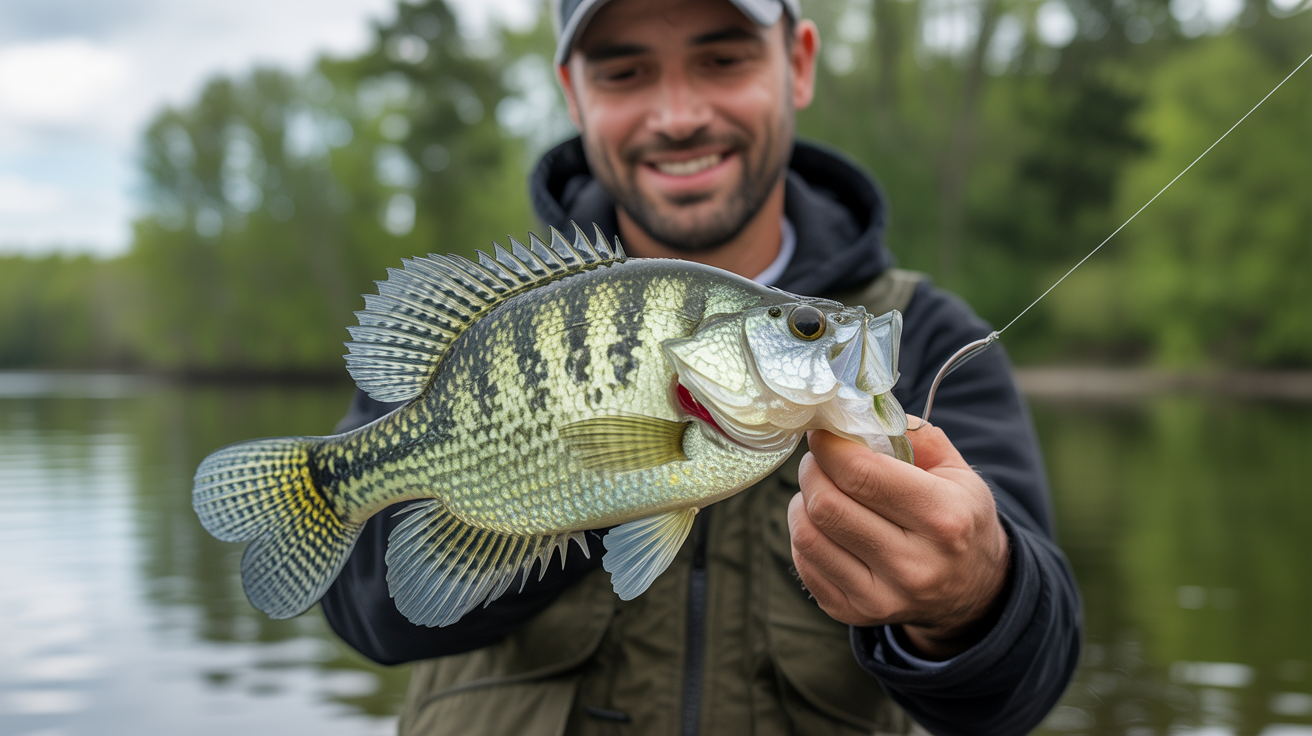
Crappie are among the most beginner-friendly fish in freshwater. They school in predictable spots, eat simple baits, and, when you find them, produce fast action on light tackle. The main challenge is locating the school. Once you do, a 1/16 oz jig or a minnow under a slip bobber will fill a bucket.
This guide covers where crappie hold by season, what to put on the hook, how to rig it, and a technique called spider rigging that turns a slow morning into a productive one.
Crappie size limits and daily creel limits vary widely by state and body of water. Always verify current regulations with your local fish and wildlife agency before you fish, and carry a valid fishing license.
Where Crappie Live: Reading Cover and Structure
Crappie are cover-oriented fish. They sit tight to anything that breaks up open water and holds small baitfish. If you can find the cover, you can find the fish.
Brush Piles
Sunken brush piles are the most reliable crappie magnet in most lakes. Fish hold on the outer edge in low-light periods and move deeper into the pile when light gets bright. Many public lakes have mapped brush piles maintained by the state, check your fish and wildlife agency's lake maps before heading out. On private or unfamiliar water, look for surface debris that hints at submerged wood below.
Docks and Piers
A dock gives crappie shade, overhead cover, and a vertical structure to suspend against. Fish the shaded side during midday and work the outer corners and pilings rather than casting directly under the deck. Crappie often hover at a specific depth along a dock piling; vary your bobber stop until you find the depth where the fish are sitting.
Standing Timber and Flooded Vegetation
Reservoirs with standing timber are classic crappie water. Fish the upper two-thirds of submerged trees in spring, and follow them down toward the base as water warms through summer. In natural lakes, flooded brush and emerging lily pad stems in spring attract spawning fish at depths of two to five feet.
For a deeper look at how to identify productive fish-holding locations, see our guide on fishing structure and cover and our piece on how to read water.
Gear: Keep It Light
Crappie have small, soft mouths. Heavy line and oversized hooks tear free on the hookset or spook fish in clear water. Light tackle isn't about sport, it's about catching more fish.
Rod, Reel, and Line
A 5.5- to 7-foot light-power, fast-action spinning rod pairs well with a small spinning reel. Longer rods (9–12 feet) are common for spider rigging from a boat, but a standard 6-foot spinning outfit handles every technique described here from the bank or a dock.
Spool with 4 to 6 lb monofilament or fluorocarbon. Mono is forgiving and floats slightly, which helps with slip-bobber presentations. Fluorocarbon disappears in clear water. Either works; 6 lb is a sensible starting point that handles the occasional larger fish without costing you bites.
Hooks
For live minnows, use a No. 2 or No. 4 Aberdeen hook. The long shank releases easily from a fish's mouth and the light wire bends free if you snag cover rather than breaking your line. For small soft plastics on a jighead, the hook is built in, match jighead size to lure size, not to your idea of how big a hook should be.
Best Baits for Crappie
Minnows Under a Slip Bobber
A live or freshly killed minnow suspended under a slip bobber is the most consistent crappie rig across seasons. The slip bobber, a hollow float that line runs through, lets you set depth precisely with a small bobber stop, cast without the awkward distance of a fixed float, and feel a subtle bite as the float lays flat rather than sinking.
Set the bobber stop so the minnow hangs 12 to 18 inches off the bottom when fish are shallow, or adjust to match wherever fish are marking on a depth finder. Hook the minnow just behind the dorsal fin for a natural horizontal posture. A small split shot 8 to 10 inches above the hook keeps the bait from swimming up into the bobber.
Jigs
A 1/16 to 1/32 oz leadhead jig tipped with a small curly-tail grub or tube body is the go-to lure for crappie. Light jigs sink slowly and match the size of the small shad and shiners crappie eat. Colors vary by water clarity: chartreuse and white in stained water; pink, white, or natural shad colors in clear conditions.
Work a jig with a slow lift-and-drop cadence around cover. Drop it alongside a piling, let it sink to the level where you think fish are holding, lift the rod tip six to eight inches, and let it fall on a semi-slack line. Most strikes come on the drop.
Seasonal Patterns: When and Where to Find Them
Crappie move with water temperature, and understanding that movement is what separates consistent anglers from lucky ones.
| Season | Water Temp | Typical Depth | Location | Productive Bait |
|---|---|---|---|---|
| Spring (spawn) | 58–68°F | 2–6 ft | Shallow brush, dock edges, flooded timber | Small jig, minnow under bobber |
| Early summer | 68–75°F | 8–15 ft | Outside edge of structure, channel drops | Jig on slower drop, minnow |
| Midsummer | 75–85°F | 15–25 ft | Deep brush piles, submerged timber bases | Tight to structure, slow jig |
| Fall | Cooling | 10–20 ft | Main-lake points, channel edges | Jig, small crankbait |
| Winter | Below 55°F | 20–30 ft | Deep brush piles, creek channel bends | Very slow jig or live minnow |
Spring Spawn
This is the easiest time to find crappie. When water temperature reaches 58 to 65°F, fish push shallow to spawn on firm, clean substrate near cover. Males fan nests in two to four feet of water along docks, brush, and emerging vegetation. Both sexes feed aggressively in the weeks leading up to the spawn. A small jig or minnow at three to five feet will work along any dock with shade in a lake with a healthy crappie population.
Summer: Following the Thermocline
After the spawn, crappie scatter and then regroup at depth around structure. Water temperatures above 75°F push them deeper, where oxygen levels and temperature are more stable. On most lakes that means 15 to 25 feet against brush piles, submerged points, or standing timber. A depth finder becomes genuinely useful here, look for suspended fish at a consistent depth rather than hugging the bottom.
Winter Patterns
Cold water slows crappie metabolism considerably. Fish move to the deepest accessible brush piles and move very little. The minnow under a slip bobber set just above a deep brush pile, twitched gently and left nearly motionless, outperforms active jigging when the water is cold. Bites are subtle, sometimes the bobber just drifts slightly sideways rather than going under.
Spider Rigging: A Boat Technique Worth Knowing
Spider rigging is a slow-trolling method where an angler uses multiple rods fanned out from the bow of a boat, six to eight rods at various lengths, to cover a wide swath of water at a controlled depth. Each rod holds a jig or minnow at the same depth, and the boat moves at barely a crawl. When one rod loads up, you note the depth and concentrate on that zone.
You don't need a specialized setup to experiment with the concept. From a canoe or small jonboat, two or three rods braced against the gunwale, each at slightly different depths around a known brush pile, covers the water column efficiently and teaches you quickly where the fish are sitting that day.
Finding Schools: The Most Important Skill
Crappie are schooling fish, and location matters more than technique. Here is a practical sequence for unfamiliar water:
- Ask locals. Bait shops near the lake often give honest information about what's working. A minnow tank is a good sign you're in the right place.
- Study lake maps. Look for labeled brush piles, channels, and coves with timbered banks.
- Work the obvious cover first. Dock rows and visible timber in the 4–12 foot range hold fish in spring. Start there.
- Move if you don't get a bite in 20 minutes. Crappie are either there or they're not. Don't over-invest in a dead spot.
- Once you catch one, slow down. The school is close. Drop the same bait to the same depth and work the surrounding ten feet of structure before moving.
Crappie from the same school tend to run similar sizes. If you catch several small fish, larger fish may be nearby at a slightly different depth.
FAQ
What's the best bait for crappie?
A live minnow under a slip bobber is hard to beat for consistency, especially in cold water or when fish are finicky. In warmer months or around thick cover where snags are a concern, a 1/16 oz jig on a light line is more versatile and snags less.
What size hooks should I use for crappie?
A No. 2 or No. 4 Aberdeen hook for live minnows. These have a light wire that's easy on the fish's soft mouth and bends free of snags. For jigheads with soft plastics, a 1/16 to 1/32 oz head with a hook sized proportionally to the grub body is standard.
How deep should I fish for crappie?
It depends on the season. In spring, two to six feet along shallow cover. In summer, 15 to 25 feet against structure. Winter fish move to the deepest brush piles available, sometimes 25 to 30 feet on lakes where structure exists at that depth. When in doubt, vary your slip bobber depth until you find the zone.
Can you catch crappie from shore?
Absolutely. Bank anglers do well casting to dock pilings, fallen trees, and visible brush in the two- to eight-foot range. A longer rod (7 feet or more) helps reach cover without disturbing fish, and a slip bobber lets you reach structure that would be otherwise inaccessible.
How many crappie can I keep?
Daily creel limits and minimum size requirements vary by state and sometimes by individual body of water. A common limit is 25 to 30 fish per day at eight to nine inches minimum, but those numbers change. Check your state fish and wildlife agency's current regulations before you fish. A valid fishing license is required in every state, see our overview of how to catch largemouth bass for more on navigating freshwater regulations alongside a different target species, or our trout fishing guide for a look at how technique shifts between species.
Tackle Theory is an independent freshwater-fishing resource. Our guides are researched and written in-house; we are not affiliated with, endorsed by, or sponsored by any tackle brand or retailer we mention. Fishing seasons, licenses, and size and creel limits vary by location and change often, always confirm current regulations with your local fish and wildlife agency.