Techniques & Tactics
How to Read Water: Finding Where Fish Hold
Learn how to read a lake or river for fishing — structure, cover, current seams, drop-offs, and more — so you know exactly where to cast first.
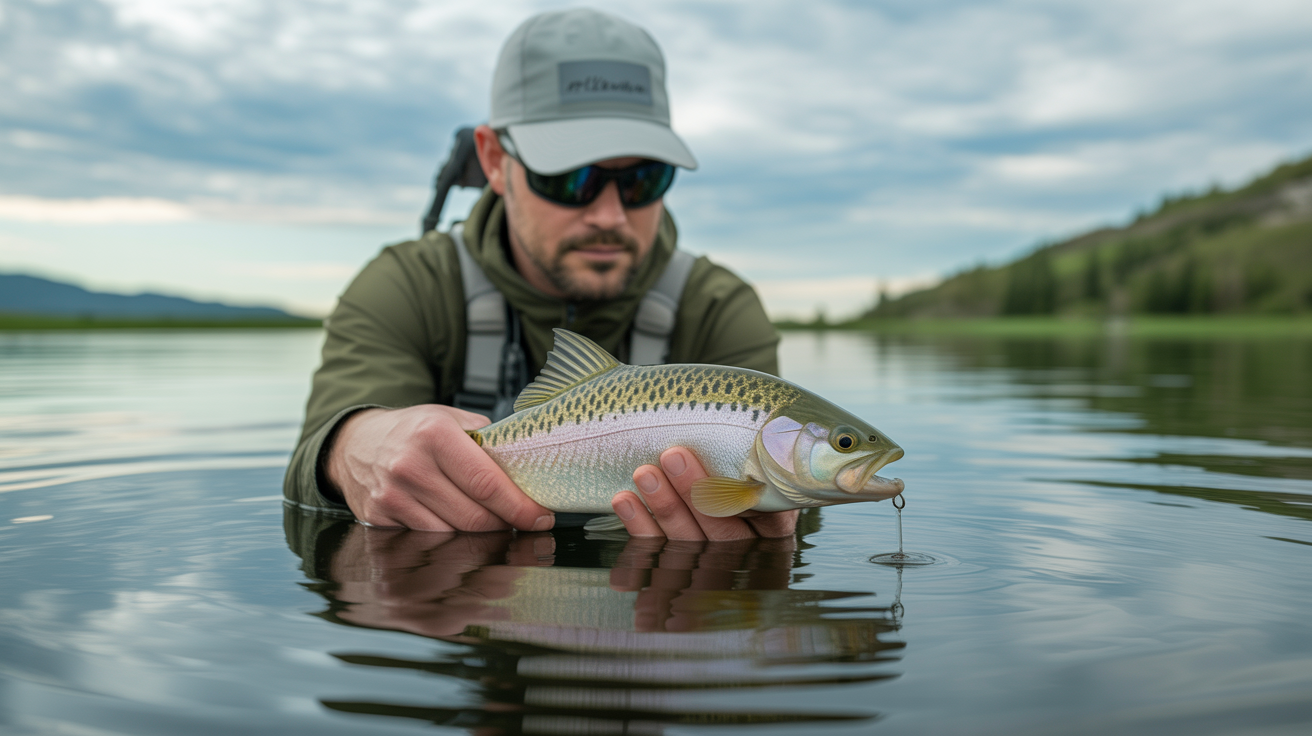
Most beginners spend more time casting at open water than at actual fish. The cast itself is fine; the targeting is what's off. Fish are not scattered randomly across a lake or river. They hold in specific places for specific reasons, comfort, safety, food, and once you understand those reasons, you stop guessing and start fishing deliberately.
This guide covers how to read both still water and moving water, what features to look for from the bank or the boat, and how to build a mental checklist before your first cast.
At a Glance
- Fish hold where oxygen, temperature, and food line up, not randomly. Look for edges: where shallow meets deep, weeds meet open water, or fast current meets slow.
- Structure (the bottom's physical shape) and cover (objects on top of it) work together. A bare point holds fewer fish than the same point with a weed line or rock pile on it.
- Warm water holds less dissolved oxygen than cold water, which is why shallow coves that look inviting in July can actually be nearly empty of fish.
- In rivers, current seams and eddies concentrate food and are usually visible as a foam or bubble line on the surface, cast right to that edge.
- Seasonal depth shifts are large, the same fish that held in 3 feet in May may sit in 15 feet by July on the exact same structure.
- Run a two-minute mental checklist before your first cast on new water: find the edge, the shade, the inflow, and the deepest accessible point.
Why Fish Hold Where They Do
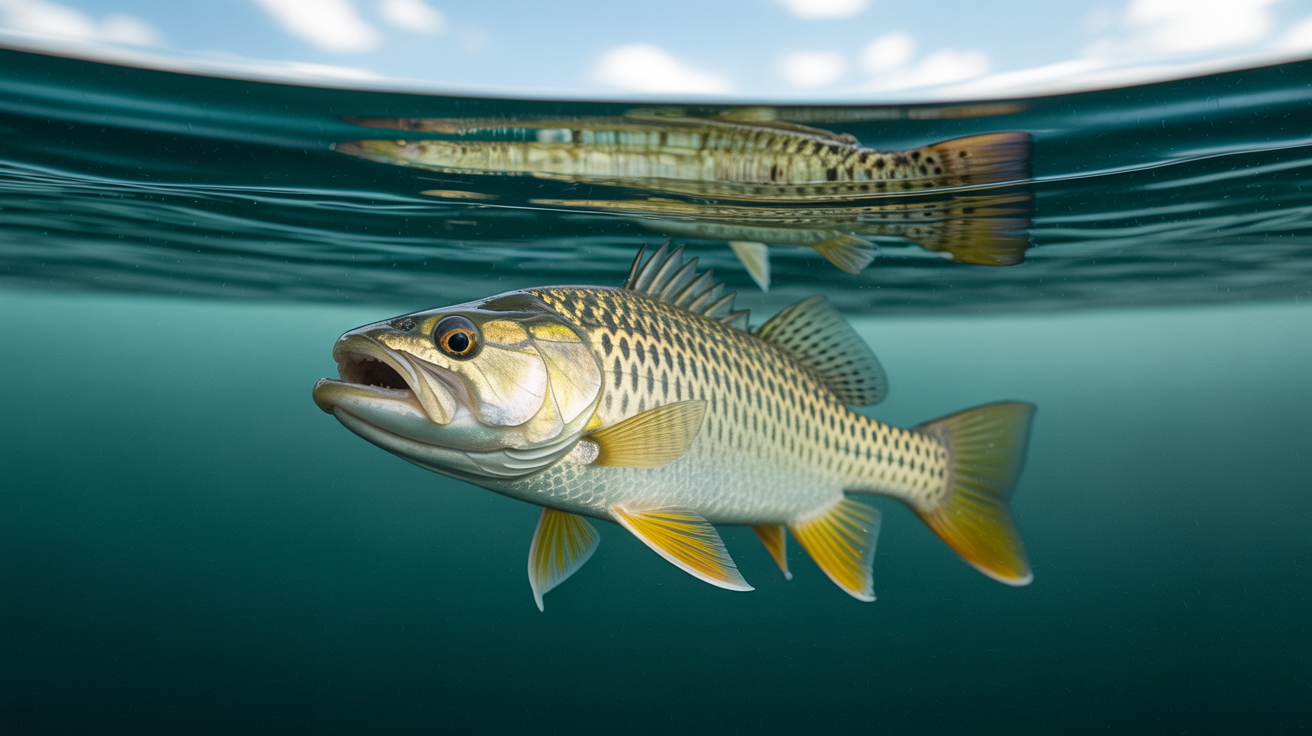
Fish are cold-blooded animals living in a three-dimensional environment. Every decision they make, where to rest, where to feed, where to hide, is driven by three basic needs: oxygen, temperature, and food.
Water that is too warm carries less dissolved oxygen. Cold water can hold substantially more dissolved oxygen than warm water, which is why dissolved-oxygen levels typically run high in winter and early spring and drop to a seasonal low by summer, according to the USGS Water Science School. A shallow cove on a hot July afternoon might look inviting but be nearly dead. Deep, cool water near an inflow, or the shaded side of a dock, can hold far more fish at midday than that sunny flat.
Low oxygen doesn't just make a spot unproductive, it changes fish behavior in ways you can sometimes see directly. When dissolved oxygen drops far enough, fish gulp air at the surface and crowd into shallow water even when that water is otherwise poor habitat, a stress response documented by the EPA's overview of dissolved oxygen and aquatic life. Species with the highest oxygen requirements are affected first, so a spot that looks fishless during a low-oxygen stretch may simply be holding only the most tolerant species, or nothing at all.
Food concentrations matter just as much. Baitfish school near cover, around structure transitions, and along edges where two types of habitat meet. Predators sit just off those edges, watching. The "edge" concept, where something changes, is the single most useful idea in reading water.
Understanding the difference between structure and cover helps sharpen your eye. Structure refers to the physical shape of the bottom: points, drop-offs, humps, channels. Cover is what sits on top of or next to that structure: weeds, timber, rocks, docks. Both matter, but they work together. A bare underwater point holds fewer fish than a point with a weed line running along its edge. For a deeper look at how these two concepts interact, see Fishing Structure and Cover: What They Are and Why They Matter.
Reading a Lake or Pond
Still water looks featureless from shore, but it rarely is. Here is what to look for.
Points, Coves, and Irregular Shorelines
A point is any piece of land that juts into the water. Underwater, that point usually continues as a gradually tapering shelf before dropping into deeper water. Fish use points as travel routes, they move shallow to feed along the top of the point, then slide back down the sides as light increases or conditions change.
Coves do the opposite. They funnel warm, shallow water and often trap baitfish. In spring, coves warm faster than the main lake, drawing spawning bass and panfish in first. By midsummer, that same cove can go stagnant, oxygen depleted and food scarce, exactly the pattern described above. Coves with a feeder creek or ditch running through them stay productive longer because moving water keeps oxygen levels up.
Irregular shorelines in general beat straight ones. Every bend, every rocky outcrop, every beaver lodge creates an edge that concentrates fish. Run a straight shoreline past a section with fallen timber and laydowns, the fish will be stacked in the timber.
Drop-offs and Depth Changes
A drop-off is where the bottom transitions from shallow to deep. It might be a gradual slope or a sudden ledge. Either way, it is highway for fish. Predators sit just above or just below the edge, facing shallow water, waiting for baitfish to stray too far from the safety of depth.
You can often spot a drop-off from shore by looking at the water color. Shallow areas appear lighter green or tan; deeper water looks darker blue or green. A clear line between the two usually means a quick depth change. On ponds, the transition might be only a few feet out from a grassy bank.
If you have a fish finder, drop-offs are easy to mark. Without one, a simple lead weight on your line, slowly dragged along the bottom, tells you a lot about depth changes beneath the surface. Count the seconds it takes the weight to hit bottom on successive casts, a jump from a two-count to a five-count means you just found the edge of the drop.
Weed Lines and Vegetation
Aquatic vegetation is one of the best fish-holding features in any lake. Weeds produce oxygen, attract insects and small baitfish, and give predators ambush cover. The outside edge of a weed line, where the weeds end and open water begins, is often more productive than the inside. That edge is the ambush point.
Look for specific weed types as well. Lily pad fields, milfoil beds, hydrilla, and cattail margins all hold fish, but in different ways. Lily pads create overhead shade that panfish and bass use on bright days. Submerged milfoil or hydrilla beds are more about the vertical edges and pockets within the mass. Cast to the pocket, not the middle of the mat.
Docks, Riprap, and Man-Made Cover
Docks create shade and attract small minnows that draw bigger fish. The best docks are the ones over deeper water, especially if they have a gangway or walkway extending toward the shore. Fish stage at the deepest dock corner during the hottest part of the day.
Riprap, the concrete or rock rubble lining causeways, dam faces, and bridge pilings, absorbs heat and harbors crawfish and small baitfish. Bass, walleye, and perch work riprap constantly. Cast parallel to the riprap face rather than straight at it; parallel presentations keep the bait in the strike zone longer.
Reading a River or Stream
Moving water adds current to the equation. Current costs fish energy. Everything a river fish does is a calculation: how much energy does this holding spot save me versus how much food comes within reach?
Current Seams
A seam is where fast water meets slow water. You can see them, a line of foam or bubbles on the surface marks where two current speeds collide. Fish sit in the slow water, right on the edge of the fast water, waiting for food to wash past. You get a narrow window to present a bait in the strike zone, so accuracy matters more in rivers than in still water.
The best seams are behind boulders, at the tail end of gravel bars, and on the inside edge of river bends. A large rock splits the current; the pocket immediately downstream of the rock is slow and oxygenated, often deep enough to hold trout or smallmouth bass stacked one behind another.
Eddies
An eddy is a circular current that forms behind an obstruction. Water flows downstream, wraps around the obstacle, and reverses, creating a slow clockwise or counterclockwise rotation. Dead leaves, insects, and baitfish all gather in eddies. A large eddy behind a bridge piling or a blowdown tree is a reliable holding spot year-round.
The seam between the eddy current and the main current is, again, the prime real estate. Stand upstream and cast to the seam's edge, letting the bait drift naturally.
Inflows and Tributary Mouths
Wherever a smaller stream enters a larger one, you get a temperature change, an oxygen surge, and a food funnel. In summer, cold tributary water sinking along the main channel bottom gives trout and bass a thermal refuge. In spring, warm tributary water pulls fish in to spawn earlier than the main stem.
The pool just downstream of a tributary mouth often holds fish even when the inflow itself is dry. The channel carved by that tributary creates depth and current irregularity that persists long after the flow stops.
Pools, Runs, and Riffles
Rivers naturally cycle through three habitat types. Riffles are shallow, fast, and noisy, oxygenated water that grows insect larvae on the bottom. Fish feed in riffles at dawn and dusk but rarely hold there in bright light. Runs are moderate-depth, moderate-speed sections between riffles and pools. They hold fish throughout the day and are the workhorses of a good river stretch.
Pools are deep, slow sections at river bends or below waterfalls. They hold the largest fish in any given reach. The head of the pool, where faster riffle water drops into the deeper pool, is the prime feeding station. The tail of the pool, where the bottom rises back up before the next riffle, concentrates fish as evening approaches.
Fish-Holding Features: Quick Reference
Use this as a cheat sheet for the first pass over unfamiliar water, lake or river.
| Feature | Where to Find It | Why Fish Hold There | Best Cast Angle |
|---|---|---|---|
| Point | Land jutting into a lake, continuing underwater | Travel route between shallow and deep | Cast along the taper, work both sides |
| Drop-off | Color change from light to dark water | Ambush edge between safety and feeding water | Perpendicular, working the break itself |
| Weed line (outside edge) | Where vegetation ends and open water starts | Ambush point, oxygen and baitfish concentration | Parallel to the edge |
| Current seam | Foam or bubble line on moving water | Food funnel with minimal energy cost | Cast upstream, drift through the seam |
| Eddy | Circular water behind an obstruction | Traps drifting food, calm rest spot | Cast to the seam between eddy and main current |
| Riffle | Shallow, choppy water over gravel | Insect production, feeding at low light | Swing across, focus on dawn and dusk |
| Pool (head) | Where fast water drops into a deep section | Prime feeding station, easy energy | Drift bait from the fast water into the slow |
How Season Changes What to Look For
Fish location shifts with water temperature, and temperature shifts with season. Spring fish are shallow and aggressive, they're spawning or post-spawn. The same bass you caught on a shallow flat in May will be sitting on a deep mid-lake hump by August.
In summer, find the thermocline. In stratified lakes, there's a band of water where temperature drops sharply, and the water below it can run too low in oxygen for most gamefish even though it's cooler, which is why fish stack just above that line rather than sitting in the coldest water available. Fish stack just above it, deep enough to be cool, shallow enough for sufficient oxygen. On rivers, summer fish move to shade: undercut banks, bridge shadows, deep pools fed by springs.
Fall reverses the pattern. Cooling surface water sinks, lakes turn over, and fish scatter. The transition is unpredictable, but once it stabilizes, bass and walleye push shallow again before ice-up.
Winter fish are slow and deep. They're not gone; they're just using minimal energy. Slow presentations near bottom structure, points, channel edges, submerged humps, are the answer. Understanding how these seasonal patterns compound with time-of-day movement (fish often feed at transitions: dawn, dusk, and before fronts) shapes your whole approach. See The Best Time of Day to Fish for a detailed breakdown of daily timing windows.
Weather shifts everything too. A rising barometer after a front often triggers feeding; the falling barometer just before a storm can be even better. How Weather and Barometric Pressure Affect Fishing explains the mechanisms behind those patterns if you want to go deeper.
Where to Cast First: A Mental Checklist
Before you make your first cast on any new body of water, work through this checklist. It takes about two minutes from shore.
- Find the edge. Where does shallow meet deep? Where does weedy bottom meet open sand? Where does fast water meet slow? Start there.
- Look for shade. On sunny days, every shaded bank, dock, and overhanging tree is worth a cast. Fish move to shade the same way you would.
- Find the inflow. Any creek mouth, culvert, or drainage pipe brings oxygenated water. Check it first in summer.
- Look for surface activity. Rings on calm water, baitfish flickering near the surface, birds working a spot, all signal feeding fish below.
- Check the wind side. Wind pushes surface food (and baitfish chasing it) to the windward shore. In still water, the windward bank is often more productive.
- Identify the deepest accessible point. When fish aren't shallow, they're deep. Know where the channel or hole is and how to reach it.
- Note the cover type. Timber, rocks, weeds, and docks fish differently. Match your rig to the cover, Texas-rigged soft plastics for thick weeds, crankbaits or swim jigs for open rock structure.
- Start moving. Don't commit too long to one spot on unfamiliar water. Cover water efficiently, hitting the best-looking features, until you find active fish.
A pitfall worth flagging: treating every feature as equal. A weed line with no baitfish activity and a weed line with baitfish dimpling the surface are not the same spot, even though both look identical on a map. Give a good-looking feature five to ten casts, then move on if nothing shows. Confidence in the checklist doesn't mean confidence in any one spot forever.
FAQ
How do I find fish in a lake I've never fished before?
Start with a map. Bathymetric (depth-contour) maps are available through state wildlife agencies and on fishing apps. Find points, submerged creek channels, and major depth transitions before you arrive. When you get there, look for the physical cues, weed edges, riprap, inflows, shade, and start at the ones that match the current season and time of day.
Do fish always hold near structure?
Not always, but structure and cover dramatically increase the odds. Open-water fish exist, suspended walleye, schooling white bass, and mid-lake trout are good examples, but they're harder to locate without electronics. For most freshwater species, something to hold next to is preferred. Even a single stick on an otherwise bare bottom can hold a crappie.
Where do fish go when it's hot?
Deep, cool water with adequate oxygen. In lakes, that means the thermocline zone, usually 15 to 30 feet depending on the lake. In rivers, it means spring-fed pools, deep runs, and shaded sections. Avoid shallow, stagnant coves in midsummer unless you're fishing very early morning when they haven't yet warmed.
What does a "good" spot look like on a river?
Something that breaks the current, creates slower water immediately downstream, and is close to feeding lanes. A single large boulder, a downed tree, a bridge piling, any of these will do. The key is the seam between the slow pocket and the fast main current. That's where the fish sit.
Does the same spot produce fish all year?
Usually not the same species at the same depth, but the spot itself often holds value year-round because the structure doesn't change. A point that holds bass in May at 3 feet might hold them at 15 feet in July. The physical feature is still the attractor; the fish just use a different part of it.
How can I tell if low oxygen, not just heat, is the reason a spot has gone quiet?
Watch for fish gulping at the surface or crowding into shallow water that would normally be too warm or exposed for comfort, both are classic signs of oxygen stress rather than simple heat avoidance. If you see that behavior, look for the nearest inflow, spring, or shaded deep pool, oxygenated water, not just cooler water, is what those fish are searching for.
Is it worth fishing a feature that looks perfect but has produced nothing after several casts?
Give any single feature a fair test, five to ten casts with at least one bait change, then move on. A great-looking spot with no current activity underneath it, no baitfish, no oxygen exchange, can be entirely empty despite looking ideal on the surface. Reading water gets you to the right neighborhood faster; confirming fish are actually home still takes some fishing.
Tackle Theory is an independent freshwater-fishing resource. Our guides are researched and written in-house; we are not affiliated with, endorsed by, or sponsored by any tackle brand or retailer mentioned. Fishing regulations, seasons, and size limits vary by location, always confirm current rules with your local fish and wildlife agency.