Techniques & Tactics
Fishing Structure and Cover: What They Are and Why They Matter
Learn the difference between fishing structure and cover, why fish use each, and how to find and fish both to catch more bass and freshwater species.
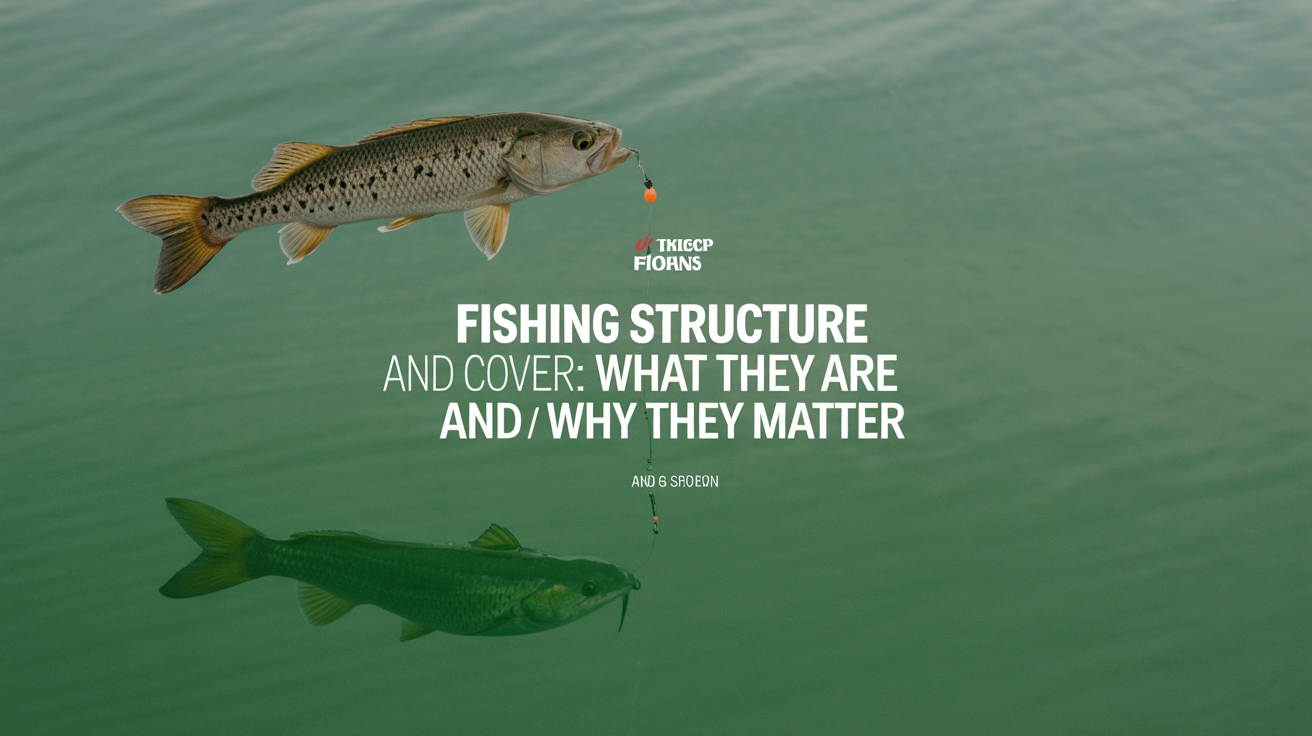
Ask a group of beginners where to cast and most will say "near the dock" or "by those weeds." That instinct is right, but it's mixing two separate ideas that are worth pulling apart. Structure and cover are not the same thing, and understanding the difference changes how you read any body of water.
Structure is the shape of the bottom. Cover is anything sitting on or above that bottom. Fish use both, but for different reasons, and once you can identify each type on a map or with your eyes, you'll consistently find yourself casting to productive water rather than fishing open nothing.
What Is Structure in Fishing?
Structure refers to changes in the lake or river bottom, contour features that alter depth and redirect water flow. These features don't need to hold physical objects; the shape itself is what matters.
A flat, featureless bottom gives fish no reason to congregate. But when the bottom suddenly drops, rises, or angles, fish orient to that change. Baitfish stack along depth transitions because they find comfort in specific temperature layers and current breaks. Predators follow the baitfish.
Common Types of Underwater Structure
Points extend from the shoreline into the water, tapering as they go deeper. Fish move up and down a point with changing light and temperature, shallow in low light, deeper when the sun is high. A point that drops sharply into deep water (a "hard break") is more valuable than one that gradually flattens out.
Humps and submerged islands are high spots surrounded by deeper water. In a reservoir, a flooded hilltop becomes a hump. Baitfish school over them; bass, walleye, and crappie cruise around the edges waiting. These features don't always show at the surface, which is why map work matters.
Drop-offs and ledges are sudden depth changes, a bottom that goes from 8 feet to 20 feet over a short horizontal distance. In summer heat, bass often suspend just off the lip of a ledge, using the cool water below while hunting along the edge above.
Creek and river channels cut through lake floors in reservoirs. The old river channel is often the deepest water in a given area. Fish travel these channels like highways, and the bends and elbows in the channel are natural stopping points.
What Is Cover in Fishing?
Cover is any physical object fish can relate to: weeds, timber, rocks, dock pilings, bridge supports, brush piles, flooded timber, lily pads. Unlike structure (which is about shape), cover is about objects that provide shade, ambush positions, or protection from current.
A bass holding in a laydown log isn't there because of a depth change, it's there because the log offers shade, an ambush angle on passing baitfish, and physical concealment. Remove the log and the fish may leave even if the depth is the same.
Cover Types and Why Fish Use Them
Laydowns are fallen trees, their branches still intact. Bass, pike, and crappie park tight against the trunk and use the branch tangle to corner prey. The root end near the bank is often shadier; the tip that extends into deeper water can hold fish in summer.
Aquatic vegetation, milfoil, hydrilla, lily pads, coontail, creates an entire ecosystem. Small fish hide in the stems; larger fish hunt along the outside edge or through gaps in the canopy. An underwater grass bed with a firm edge (where the weeds stop abruptly) is far more productive than a scattered patch because predators can pin baitfish against that wall.
Docks and pier pilings provide overhead shade and attract insects, which attract small fish, which attract larger ones. Shadow lines cast by the dock boards are visible from above and represent a defined ambush zone. Bass, bluegill, and crappie all use docks; panfish often suspend under the middle, while bass hug the corner posts.
Rocks and riprap absorb heat from sunlight and warm adjacent water slightly faster than surrounding areas in spring. Crayfish and gobies live in the gaps, which draws smallmouth bass in particular. A long riprap bank along a dam or causeway can hold fish all season.
Structure vs. Cover: A Quick Reference
| Feature | Type | Fish Reason | How to Find It |
|---|---|---|---|
| Point | Structure | Depth transition, migration route | Topo map, contour lines |
| Hump / submerged island | Structure | Isolated high spot, baitfish school | Depth finder, lake map |
| Drop-off / ledge | Structure | Thermal break, ambush edge | Depth finder contour |
| Creek channel | Structure | Travel corridor, current | Satellite map, sonar |
| Laydown log | Cover | Ambush, shade, concealment | Visual, polarized glasses |
| Grass bed | Cover | Baitfish refuge, oxygen | Visual, sonar grass returns |
| Dock | Cover | Shade, insect/baitfish magnet | Visual |
| Riprap | Cover | Heat retention, crayfish habitat | Visual |
How to Find Structure and Cover Before You Fish
The most effective anglers do half their work before the first cast.
Lake maps and satellite imagery show major structure. Topographic contour maps display depth lines; close-together lines mean a steep drop, spread-out lines mean a gradual slope. Free resources exist for most reservoirs managed by the Army Corps of Engineers or state fish agencies. Satellite view shows shallow-water grass beds and dock layouts.
A depth finder (fish finder) shows structure in real time. When you drive over a hump, the display will show the bottom rising and falling. When you cross a channel, the bottom drops out. Modern units also return sonar signals from dense vegetation, letting you map a grass bed's extent before fishing it. You don't need an expensive unit for this, a basic transducer mounted on any boat or kayak will show bottom contour reliably. See our guide on how to read water and find where fish hold for more on using these cues together.
Your eyes and polarized sunglasses reveal shallow cover that no map shows: a freshly fallen tree after a storm, a dock someone added last season, a new weed edge that grew in this summer. Walk the bank before you fish it. Wade out carefully in clear water and look down. Structure below about 6 feet disappears visually, but shallow cover is there to see if you slow down and look.
How to Fish Structure and Cover
Approach matters as much as lure choice.
Fishing Structure
When you're working a drop-off, cast to the shallow side and retrieve your lure across the ledge until it falls. The strike typically comes right at the lip. For humps, position your boat off to the side and cast up onto the high point, then work the lure down the slope, fish facing uphill get a better look at it.
On points, work from tip to base along both sides. Fish may be holding on the shady side or the windy side (wave action pushes baitfish). Cover both before moving on.
For underwater structure, a swimbait, crankbait, or Carolina rig that tracks the bottom naturally are good starting points. The lure needs to reach the bottom to telegraph the depth change through the rod.
Fishing Cover
Cover fishing demands precise casts. A lure that lands 3 feet from a laydown often won't draw the fish out; one that lands tight against the trunk, in the shadow of the branches, will. Practice accuracy before you practice distance.
Texas-rigged soft plastics are ideal for vegetation and wood, the weedless hook slides through branches and grass without fouling. Jigs work the same way. For open-water cover like dock pilings and riprap, crankbaits and jigs are both productive.
Retrieve speed through cover should be moderate to slow. Give the fish time to locate and strike. A fast retrieve through a laydown usually results in a snag, not a bite.
When Structure and Cover Overlap
The most reliably productive spots are where structure and cover coincide. A laydown on a point, timber that fell into the water right where the bottom transitions from 4 feet to 12 feet, checks both boxes. A grass bed growing along the edge of a drop-off is the same story. These spots hold fish longer and in higher numbers because they satisfy multiple needs at once: depth access, food, and concealment.
When you're on a new body of water, use your map to find structural features first (points, humps, channels), then look for cover sitting on top of or alongside that structure. That intersection is where you should start.
Timing Matters Too
Fish don't use structure and cover the same way all day or all season. Early morning and evening, fish often push shallower, onto points, into the weeds, tight to docks, because low light lets them hunt without exposure. Midday sun pushes them deeper or into heavier shade: thick cover, the shady side of a dock, the cool water off a ledge. See our guide on the best time of day to fish for a fuller breakdown of these daily patterns.
Weather shifts play into this too. A cold front can pull bass off shallow cover and suspend them near deeper structure for days. How weather and barometric pressure affect fishing explains the mechanism and how to adjust your approach when the bite stalls.
FAQ
What's the simplest way to remember the difference between structure and cover?
Structure is the shape of the bottom, points, humps, channels, drop-offs. Cover is an object sitting on or near that bottom, logs, weeds, docks, rocks. A ledge is structure; the brush pile sitting on the ledge is cover.
Do all freshwater species use structure and cover the same way?
Not exactly. Bass are strong cover users and will sit tight against laydowns, docks, and grass for long periods. Walleye rely more heavily on structural edges, particularly channel bends and rocky points, and tend to roam more than bass. Crappie use both but favor suspended cover like submerged brush and dock pilings. Catfish orient to channel structure and deep-water holes. The principle applies across species; the priority just shifts.
Can you fish structure effectively from the bank?
Yes. Many structural features, points, riprap banks, causeways, channel edges near shore, are accessible from the bank. Points are especially bankable: walk out to the tip, cast along both sides, and work back toward shore. For deeper structure like humps, you're limited without a boat, but channels often run near shore in reservoirs and rivers.
Do I need an expensive fish finder to locate underwater structure?
Not necessarily. Topo maps and satellite images show the major structural features of most public waters for free. A basic depth finder (even a clip-on kayak unit) will show you bottom contour in real time. The expensive units add GPS mapping and side-imaging sonar, which are genuinely useful, but they're not required for a beginner to find and fish productive structure.
Is fishing near cover always better than open water?
Cover concentrates fish, so it's a good starting point, but open water over structure (a hump, a channel edge, a flat that drops off) can hold large schools of suspended fish that cover-oriented anglers walk past all day. Don't ignore featureless-looking water if your map shows a contour change underneath.
Tackle Theory is an independent freshwater-fishing resource. Our guides are researched and written in-house; we are not affiliated with, endorsed by, or sponsored by any tackle brand, guide service, or retailer mentioned here. Fishing licenses, seasons, and size and creel limits vary by location and change often, always confirm current regulations with your local fish and wildlife agency.