Gear & Tackle
The 7 Best Beginner Lures That Catch Fish Almost Anywhere
A practical guide to the 7 lure types every beginner should own, with tips on when and how to use each one to catch fish in any freshwater water.
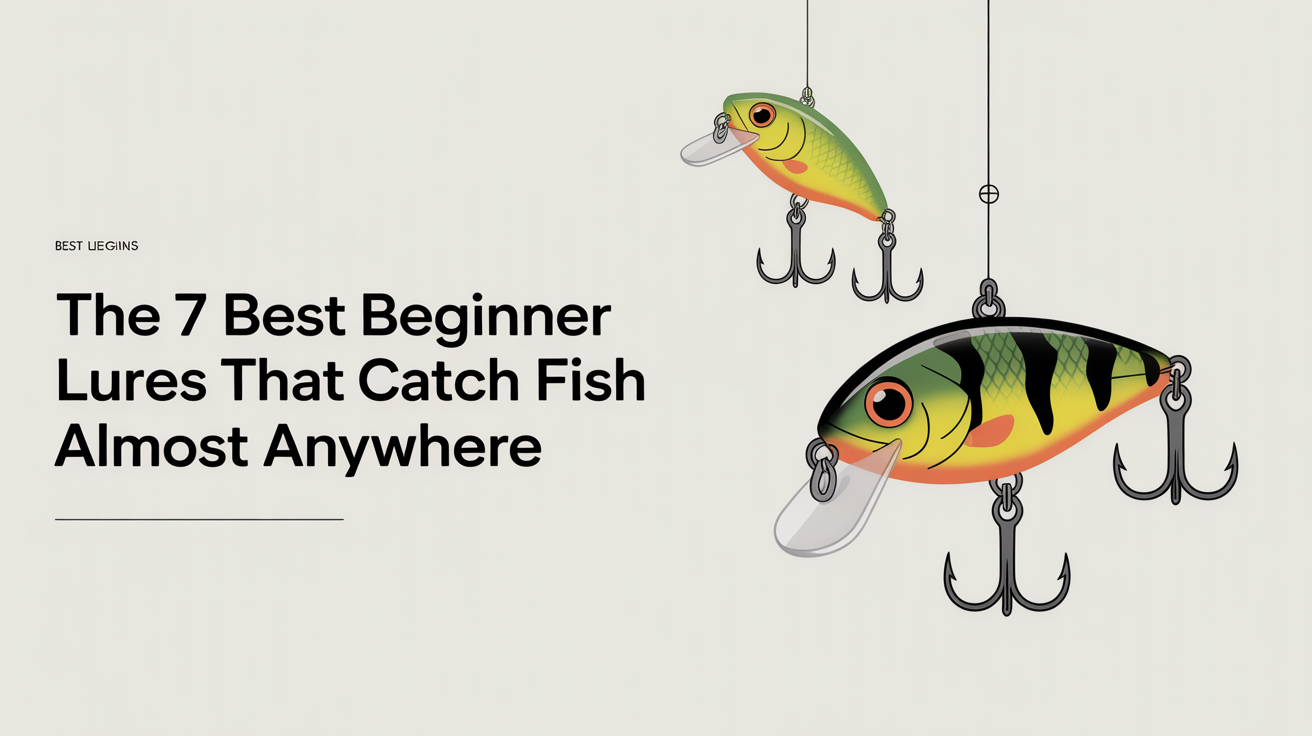
You do not need a tackle box full of lures to catch fish. Seven types will cover most freshwater situations you will encounter, and you can find all of them at any bait shop or sporting goods store.
What Makes a Lure Good for Beginners
The best fishing lures for beginners share a few traits:
- Forgiving to cast. Easy to control means fewer tangles and fewer lost lures in trees.
- Works at a range of speeds. If the lure catches fish whether you reel fast or slow, there is less to worry about.
- Catches multiple species. A lure that works on bass, panfish, and trout gives you more chances on any given day.
- Affordable and available. You will lose lures to snags. Keeping costs low early on means you can learn without frustration.
No single lure is best in all conditions, which is why a small, varied selection beats owning a lot of one type. The rod, reel, and line you pair them with matters too. See how to choose a fishing rod length, power, and action explained and fishing line explained: mono vs braid vs fluorocarbon if you are still putting together your first outfit.
The 7 Lure Types to Start With
1. Inline Spinner
An inline spinner has a metal blade that rotates around a central shaft as you retrieve it, creating flash and vibration. Fish feel it and see it at the same time, which makes it one of the easiest lures to produce strikes with.
Best for: Trout in streams and rivers, panfish, and bass in clear water.
How to use it: Cast across or slightly upstream, let it sink just below the surface, then reel at a steady pace. The blade needs moving water over it to spin, so keep tension on the line. If you slow down too much, the blade stalls.
Tips for beginners: Start with 1/8 oz or 1/4 oz. Gold blades tend to work in murky water; silver in clearer water. Watch the rod tip for vibration that tells you the blade is spinning.
2. Soft Plastic Worm
A soft plastic worm rigged on a hook is one of the most effective lures ever made for bass, and it works on plenty of other species too. The soft, flexible body moves naturally in the water with almost no input from you.
Best for: Largemouth and smallmouth bass, especially around structure like docks, logs, and weed edges.
How to use it: Rig the worm on a hook with a small bullet sinker above it (a Texas rig) or weightless when fish are shallow. Cast near cover, let it sink, then hop it along the bottom by lifting the rod tip and letting the worm fall. Most strikes happen on the fall.
Tips for beginners: Six-inch worms in natural colors like green pumpkin or watermelon red work across a wide range of conditions. A Texas rig lets you drop the lure into heavy cover without snagging.
3. Curly-Tail Grub
A curly-tail grub is a smaller soft plastic with a curled tail that wiggles on its own as you retrieve it. It is one of the most versatile lures in freshwater fishing and often gets overlooked in favor of flashier options.
Best for: Crappie, perch, bluegill, and bass. Especially effective in cold water when fish are slow.
How to use it: Thread it onto a small jig head (1/16 to 1/4 oz depending on depth) and retrieve slowly near the bottom or through open water. You can also let it sit almost still and barely twitch the rod tip. The tail keeps moving even when the lure is barely moving.
Tips for beginners: White and chartreuse work in most water. Match the jig head weight to depth: lighter for shallow, heavier for deep water or current.
4. Lipless Crankbait
A lipless crankbait is a hard lure shaped like a small baitfish. It has no diving bill, sinks when you stop reeling, and produces a tight wobble and rattle on the retrieve. That rattle is useful when fish need something extra to zero in on.
Best for: Bass in open water, over submerged grass, or near points and drop-offs. Also productive for walleye and pike.
How to use it: Cast it out, let it sink to the desired depth, then reel at a steady pace. You can also yo-yo it: reel fast, pause and let it fall, then reel again. The fall often triggers strikes from fish that are following.
Tips for beginners: A 1/2 oz size is a good starting point. Red crawfish and chrome patterns produce consistently. Keep it moving to avoid snagging the treble hooks on bottom.
5. Spinnerbait
A spinnerbait is a bent wire lure with one or two spinning blades on one arm and a weighted head with a skirt on the other arm. It looks nothing like a real fish, but bass eat it regularly. It is also one of the most snag-resistant lures available, which makes it useful around heavy cover.
Best for: Largemouth bass, pike, and pickerel around weeds, laydowns, and flooded brush.
How to use it: Cast near cover and reel at a pace that keeps the blades spinning. You can run it just under the surface so the blades bulge the water, or let it sink and slow-roll it along the bottom.
Tips for beginners: A 3/8 oz or 1/2 oz with a single Colorado blade handles most situations. White or chartreuse skirts are reliable. Slow down in cold water; speed up in warm water.
6. Weedless Frog
A hollow-body frog with two upturned hooks is designed to slide across lily pads, algae mats, and other thick surface cover that would snag most other lures. It creates a topwater disturbance that pulls bass out from beneath the cover.
Best for: Largemouth bass in heavy surface vegetation. Best in summer when water temperatures are warm and bass are holding in weeds.
How to use it: Cast onto the mat or pad and walk it across the surface by twitching the rod tip while reeling in slack. When a fish blows up on it, wait a beat before setting the hook. Many beginners miss fish by striking too fast. Let the fish pull the frog under before you swing.
Tips for beginners: Heavier braid (30 lb or more) is the right choice here for pulling fish out of thick weeds. Spinning reel vs baitcaster: which should you buy first covers when a baitcaster makes sense for frog fishing.
7. Small Jig
A round-head or football-head jig with a simple soft plastic trailer is the most flexible tool on this list. It catches more species of fish than almost anything else and works from early spring through late fall.
Best for: Bass, walleye, crappie, and panfish. Works at any depth.
How to use it: Cast it out and let it fall to the bottom. Hop it by lifting the rod slowly and letting it fall back. Most bites happen as the jig falls, so watch for the line to move sideways or jump.
Tips for beginners: A 1/4 oz jig handles a wide range of conditions. Match the trailer to the fish you are targeting: a small paddle tail for bass, a tube or grub for panfish. Natural colors like brown, green, and black work best in clear water.
A Starter Lure Selection at a Glance
| Lure Type | Best Species | Best Conditions |
|---|---|---|
| Inline Spinner | Trout, Panfish, Bass | Clear water, rivers, streams |
| Soft Plastic Worm | Bass | Near structure and cover |
| Curly-Tail Grub | Crappie, Perch, Bass | Cold water, open water |
| Lipless Crankbait | Bass, Walleye, Pike | Open water, points, flats |
| Spinnerbait | Bass, Pike | Weeds, flooded brush |
| Weedless Frog | Largemouth Bass | Lily pads, algae mats |
| Small Jig | Bass, Walleye, Panfish | Any depth, any season |
Quick Tips to Improve Your Results
Vary your retrieve. If a steady pace is not working, try pausing, speeding up, or adding short twitches. Fish do not always respond the same way.
Match color to water clarity. Natural colors like brown or silver tend to work in clear water. Bright colors like chartreuse or white are more visible in murky conditions.
Handle hooks carefully. Treble hooks on hard lures can embed quickly. Use pliers or forceps to remove hooks from fish and to handle lures.
Check local regulations before you fish. Some waters restrict lure types, hook styles, or target species. Confirm the rules with your state or provincial fish and wildlife agency before heading out.
Frequently Asked Questions
How many lures do I actually need to start? Three to four is enough. One soft plastic worm, one inline spinner, and one small jig cover most freshwater situations. Add the others as you learn what kind of water you fish most.
Do lure colors really matter? They can, but they are often overemphasized. Use natural colors like brown or silver in clear water and brighter colors like chartreuse or white in murky water or low light. When in doubt, ask at a local bait shop what is working on that specific water.
Should I use live bait instead of lures as a beginner? Both work. Live bait like worms and minnows is effective and simple. Lures let you cover more water faster and create less mess. Many anglers use both depending on the day.
What line should I use with these lures? Monofilament in the 8 to 12 lb range handles most of these lures well. Braided line is better for frog fishing in heavy cover. See fishing line explained: mono vs braid vs fluorocarbon for a full breakdown.
Why am I getting hits but not catching fish? A few common causes: the hook is dull (run a fingernail across the point to check), you are setting the hook too early or too late, or the hook size is off. With soft plastics, make sure the hook is fully embedded through the body so the lure sits straight.