Gear & Tackle
Spinning Reel vs. Baitcaster: Which Should You Buy First?
Spinning reels are easier to learn and handle more situations. Baitcasters reward patience with casting distance and power. Here's how to choose.
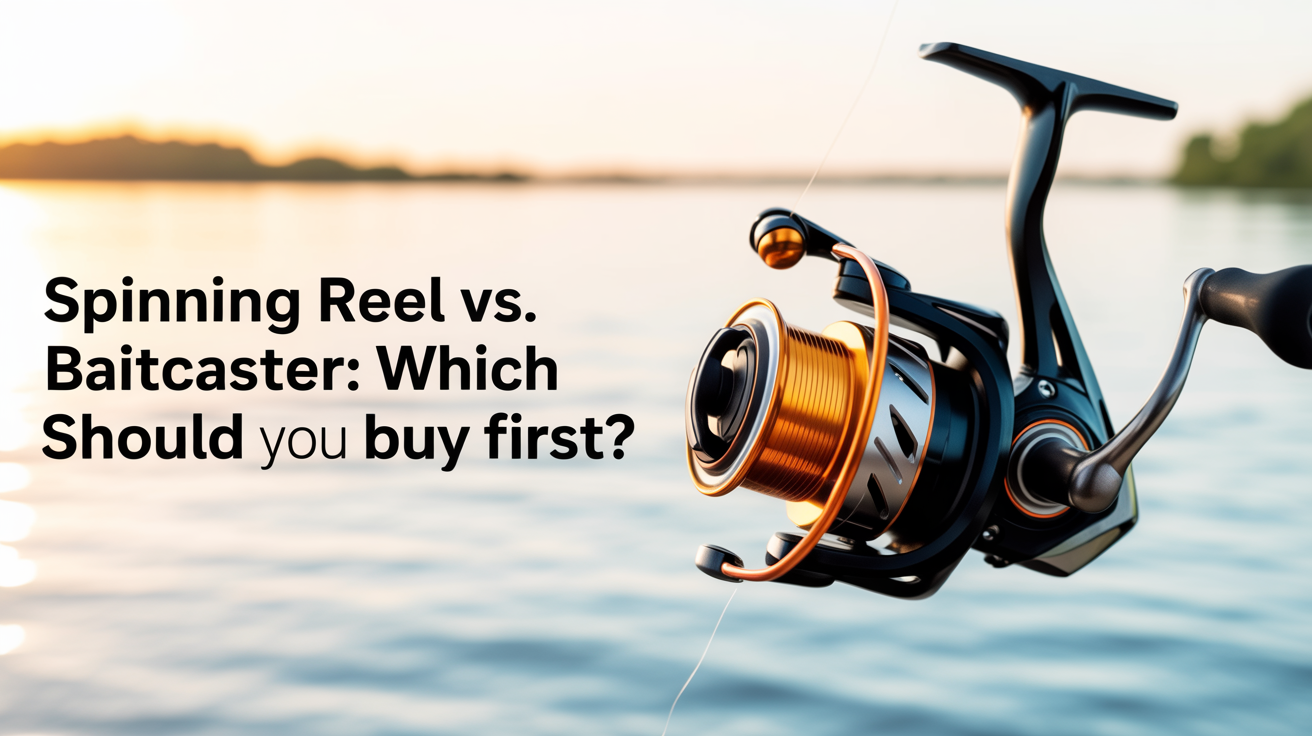
The answer is almost always a spinning reel. But that one-sentence summary skips everything worth knowing: why baitcasters exist, what they do better, and exactly when a spinning reel stops being the right tool for the job. If you want to buy smart and not waste money on gear you can't use yet, it helps to understand what actually separates these two designs.
At a Glance
- Start with a spinning reel. It's forgiving, handles the widest range of beginner presentations, and has no backlash risk to learn around.
- A baitcaster's spool rotates during the cast, which is what gives it power and accuracy, and also what causes backlash if you don't feather it with your thumb.
- Spinning reels dominate under 1/4 oz; baitcasters take over from 3/8 oz to 2 oz.
- Baitcasters win on casting accuracy and torque once you've put in the practice hours to develop thumb control.
- Entry-level spinning reels run cheaper ($30–$80) than entry-level baitcasters ($50–$120).
- Graduate to a baitcaster once you're consistently fishing 3/8 oz and heavier presentations in cover.
How Each Reel Works
A spinning reel hangs below the rod. The spool is fixed, it doesn't rotate when you cast. Instead, line peels off the front of the spool in loose loops, guided by a wire bail that snaps open before the cast and closes on retrieve. The drag stack sits inside the reel body, and a rotating rotor wraps new line onto the spool as you crank.
A baitcasting reel sits on top of the rod. Its spool rotates to release line during a cast and spools line back up during retrieve. That rotating spool is both the source of a baitcaster's power and the cause of its infamous problem: if the spool spins faster than the lure is pulling line off it, the excess line piles up in a tangle called a backlash, or "bird's nest." The reel has a magnetic or centrifugal braking system to resist that overrun, but dialing it in takes time and attention.
Learning Curve: Where Beginners Actually Struggle
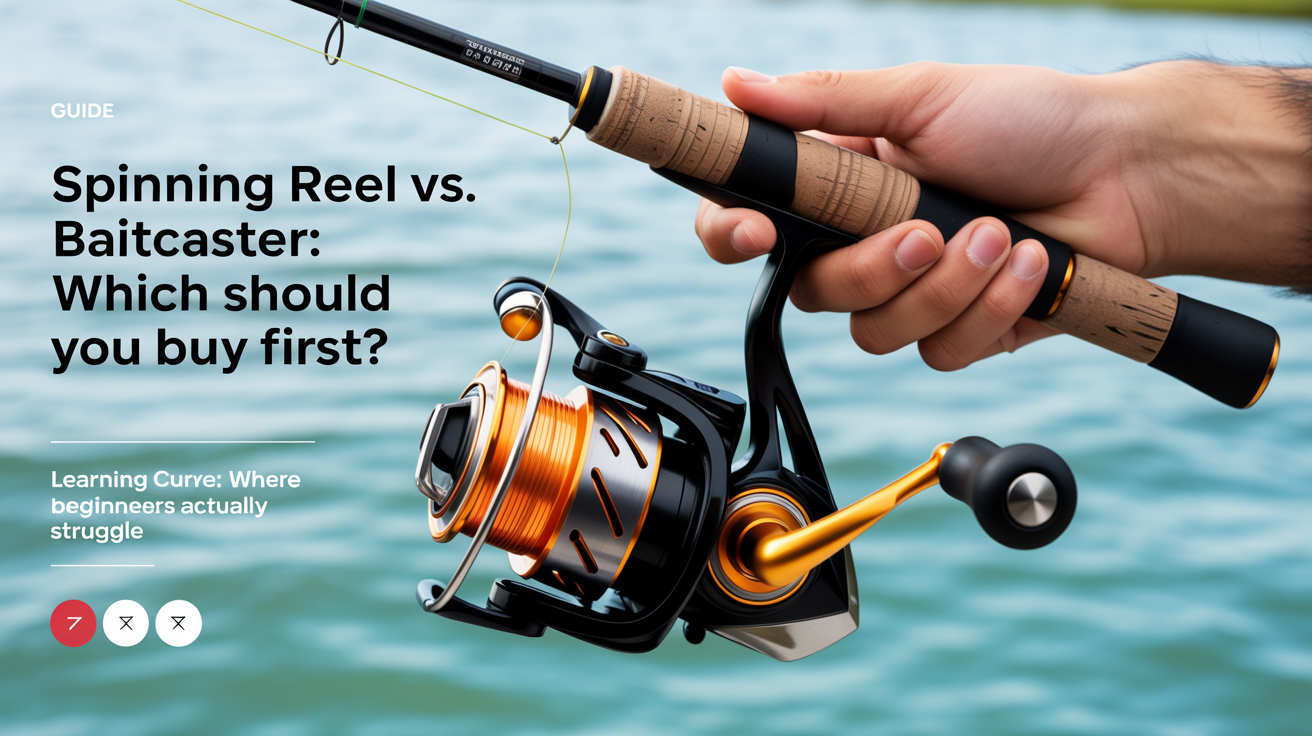
On a spinning reel, backlash is nearly impossible. You open the bail, hold the line against the rod with your index finger, cast, and release your finger at the right moment. The motion is forgiving. Most beginners can make a functional cast their first hour on the water.
Baitcasters require you to feather the spool with your thumb throughout the cast, applying just enough pressure to keep line from piling up, without so much pressure that the lure falls short. Take Me Fishing's guide to casting a baitcaster puts real weight on this thumb technique, recommending firm, consistent pressure on the spool through the whole cast to help prevent overwinding. Get the timing wrong and you spend ten minutes picking out a nest. Experienced anglers do this instinctively, but it takes many hours of deliberate practice to get there. Most guides suggest learning to cast a baitcaster in a park or yard before taking it fishing, because untangling line on the water burns fishing time fast.
There's also the braking system setup. Before casting a baitcaster with an unfamiliar lure, you adjust the magnetic or centrifugal brakes (often a dial on the side plate) plus the spool tension knob (the small dial near the handle) to match the lure's weight. Heavier lures need less braking; lighter lures need more. A beginner who doesn't know this will be frustrated by constant backlashes or a spool so tight the lure barely moves.
Lure Weight Range and Line Capacity
Spinning reels handle light lures well. A 2500-size spinning reel with 6–10 lb monofilament or 10–20 lb braid casts a 1/8 oz jig cleanly. Ultralight spinning setups go down to 1/32 oz for panfish and trout. That range of lure weights is where most beginner freshwater fishing happens. Take Me Fishing's guide to choosing a fishing reel draws the same basic line: spinning reels are built for small lures and light baits, while baitcasters are built to handle heavier ones.
Baitcasters struggle with anything under about 1/4 oz. Below that threshold, the lure can't pull enough line to keep the spool turning properly, and backlashes become nearly constant. Their strength is on the heavier end: 3/8 oz to 2 oz lures, which covers most bass and pike presentations. A low-profile baitcaster paired with 12–17 lb fluorocarbon handles swimbaits, crankbaits, jigs, and soft plastics that would strain a spinning outfit.
Line capacity follows a similar pattern. A 3000-size spinning reel holds roughly 200 yards of 10 lb mono, plenty for most freshwater fishing. A medium baitcaster holds similar footage on 14 lb monofilament and handles heavier braid or fluorocarbon without the line-twist issues that spinning reels sometimes develop. For more on choosing the right line for each setup, see Fishing Line Explained: Mono vs. Braid vs. Fluorocarbon.
Power, Casting Distance, and Accuracy
Baitcasters win on casting distance and accuracy with heavier lures. The direct spool-to-lure connection means you can feel subtle resistance changes throughout the cast, and an experienced angler can stop the spool with a thumb press the instant the lure lands, placing it within inches of a target. That kind of precision matters when you're pitching a jig under a dock or casting alongside a fallen tree.
Baitcasters also have a mechanical advantage at the hook set. The gear system on a quality baitcaster tends to provide higher torque than a comparably priced spinning reel, which matters when cranking a big bass out of heavy cover on 50 lb braid.
Spinning reels excel at two things: casting light lures long distances, and handling situations where a lure needs to fall naturally and slowly through the water column. A 1/8 oz drop-shot rig fishes much better on a spinning setup than a baitcaster. So does a small tube bait or finesse worm.
Side-by-Side Comparison
| Criterion | Spinning Reel | Baitcasting Reel |
|---|---|---|
| Learning curve | Low, beginner-friendly | High, thumb control required |
| Backlash risk | Virtually none | Real risk until technique develops |
| Light lures (under 1/4 oz) | Excellent | Poor |
| Heavy lures (3/8–2 oz) | Adequate | Excellent |
| Casting accuracy | Good | Better with practice |
| Casting distance (heavy lures) | Good | Better |
| Torque/power on retrieve | Moderate | High |
| Typical entry-level price | $30–$80 | $50–$120 |
| Rod position | Below rod | On top of rod |
| Line twist | Possible (load carefully) | Minimal |
A Worked Example: Kitting Out Your First Two Combos
If you're buying two setups to cover most freshwater situations for a year, a realistic budget split looks like this:
| Setup | Reel Size | Line | Approx. Cost | Covers |
|---|---|---|---|---|
| Primary spinning combo | 2500–3000 | 8 lb mono or 15 lb braid | $80–$150 (rod + reel) | Panfish, trout, finesse bass, walleye |
| Second spinning combo (optional) | 1000–1500 | 4–6 lb mono | $50–$90 | Ultralight panfish and trout |
| First baitcaster (add later) | Low-profile, 7.1:1 | 12–17 lb fluorocarbon | $100–$180 (rod + reel) | Heavier bass presentations, cover |
Most beginners are better served putting the full budget into one good spinning combo first, then adding a baitcaster once they've outgrown what light tackle can do, rather than splitting a tight budget three ways on day one.
What to Buy First
Start with a spinning reel. A 2500 or 3000 size from any reputable mid-range manufacturer, paired with a medium-light or medium rod in the 6'6"–7' range, covers the widest variety of beginner situations: bass, panfish, trout, walleye, catfish on lighter tackle. You can fish 6 lb mono for panfish and 15 lb braid for bass on the same reel with a line swap. There's no thumb technique to develop, no braking system to tune, you pick it up and fish.
For more on matching a reel to the right rod, see How to Choose a Fishing Rod: Length, Power, and Action Explained.
When you're comfortable loading a spinning reel without twist, casting accurately, and managing drag, skills that usually take a full season to develop, you'll also know whether you need a baitcaster. If you're mostly throwing light finesse presentations, you may never need one. If you're getting into heavier bass fishing with 1/2 oz jigs, big crankbaits, or topwater plugs in the 3/8–3/4 oz range, that's the moment to add a baitcaster to your lineup. For loading your spinning reel correctly first, see How to Spool a Spinning Reel Without Line Twist.
When to Graduate to a Baitcaster
A few signs that you're ready:
You've maxed out what a spinning reel does well. If your target presentations are 3/8 oz and heavier, big swimbaits, heavy Texas rigs, deep crankbaits, a baitcaster will handle them more comfortably and give you more casting distance.
You want better accuracy on specific targets. Once you develop thumb control, you can drop a lure into a 12-inch gap in dock pilings from 30 feet away, consistently. Spinning reels can get close but the mechanics don't allow the same precision.
You're fishing heavy cover where you need maximum power. Thick vegetation, submerged timber, and dock posts require high line weights (20–50 lb braid) and the torque to horse fish out quickly. Baitcasters handle that better.
Don't buy a baitcaster as your first reel because someone told you "pros use them." Pros use them because they've spent thousands of hours developing thumb control, and because they also own several spinning setups for situations that call for lighter presentations. The reel that helps you catch more fish now is the better reel.
Maintenance Differences You'll Live With
The two designs also diverge in upkeep, which matters once you own one for a full season rather than a single trip.
Spinning reels are largely sealed units from a maintenance standpoint. Rinse the reel with fresh water after saltwater or brackish trips, oil the bail spring and handle knob once or twice a season, and replace the line before it gets brittle. Beyond that, there's little for a beginner to service. The drag stack is enclosed, and a mid-range reel can run a full year of regular fishing with almost no attention.
Baitcasters need more hands-on care because their performance depends on precisely tuned moving parts. The centrifugal or magnetic brakes, the spool bearings, and the cast-control knob all benefit from periodic cleaning and a drop of reel oil on the spool spindle, dirt or dried grease in the braking system is a common, overlooked cause of backlash that beginners mistake for a technique problem. A baitcaster that suddenly starts backlashing after months of trouble-free casting is often a maintenance issue, not a skill regression.
Neither reel is high-maintenance in an absolute sense, spinning reels are simply more forgiving of neglect, which is one more reason they suit a first purchase.
FAQ
Can a beginner use a baitcaster from day one?
You can, but expect to spend the first few sessions mostly picking out backlashes rather than fishing. If you're patient and willing to practice casting in a yard before hitting the water, it's doable. Most people find they learn fishing fundamentals faster on a spinning reel first.
Do baitcasters work with braided line?
Yes, and braided line is common on baitcasters for heavy cover applications. Use at least 30 lb braid to avoid the line cutting into itself on the spool. A fluorocarbon leader tied with a double uni knot keeps the connection stealthy in clear water.
Is a more expensive baitcaster easier to use?
Somewhat. Higher-end baitcasters have better magnetic braking systems with more precise adjustments, which makes dialing in a new lure weight faster. The core skill, thumb control, still takes time no matter how much you spend. A $120 reel will not prevent backlashes for a beginner the way experience does.
What gear ratio should I look for?
For spinning reels, a 6.2:1 ratio is a solid all-around choice. For baitcasters, a 7.3:1 ratio works well for most bass presentations; drop to 5.4:1 for slow-rolling heavy lures like deep crankbaits that require steady resistance. The ratio tells you how many times the spool rotates per handle turn, higher is faster.
Can I use a baitcaster for trout or panfish?
It's technically possible but impractical. The lure weights trout and panfish fishing requires (1/32–1/8 oz) are below what most baitcasters handle cleanly. A light spinning setup is simply the right tool for those species.
How long does it actually take to get comfortable with a baitcaster?
Most anglers who practice deliberately, casting in a yard or open field with a practice plug rather than a hook, get through the worst of the backlashes within a few sessions, roughly 200 to 300 casts. Full comfort across different lure weights and wind conditions usually takes a full season of regular fishing. The learning curve is steep at first and then flattens fast; anglers who quit after one frustrating trip are usually a week away from it clicking.
Is a left-handed or right-handed retrieve better for baitcasters?
Most baitcasters are designed for a right-hand retrieve, meaning you cast and thumb the spool with your right hand, then switch the rod to your left hand to reel. Left-handed retrieve models exist and let you keep the rod in your dominant casting hand throughout. Neither is objectively better; the right choice is whichever matches how you already hold a rod, since relearning hand-to-hand switches under fishing pressure is its own small learning curve.
Tackle Theory is an independent freshwater-fishing resource. Our guides are researched and written in-house; we are not affiliated with, endorsed by, or sponsored by any tackle brand or retailer we mention. Fishing licenses and regulations vary by location, always confirm current rules with your local fish and wildlife agency.