Gear & Tackle
How to Choose a Fishing Rod: Length, Power, and Action Explained
Learn how rod length, power, and action work together so you can pick the right fishing rod for your target species, lures, and water.
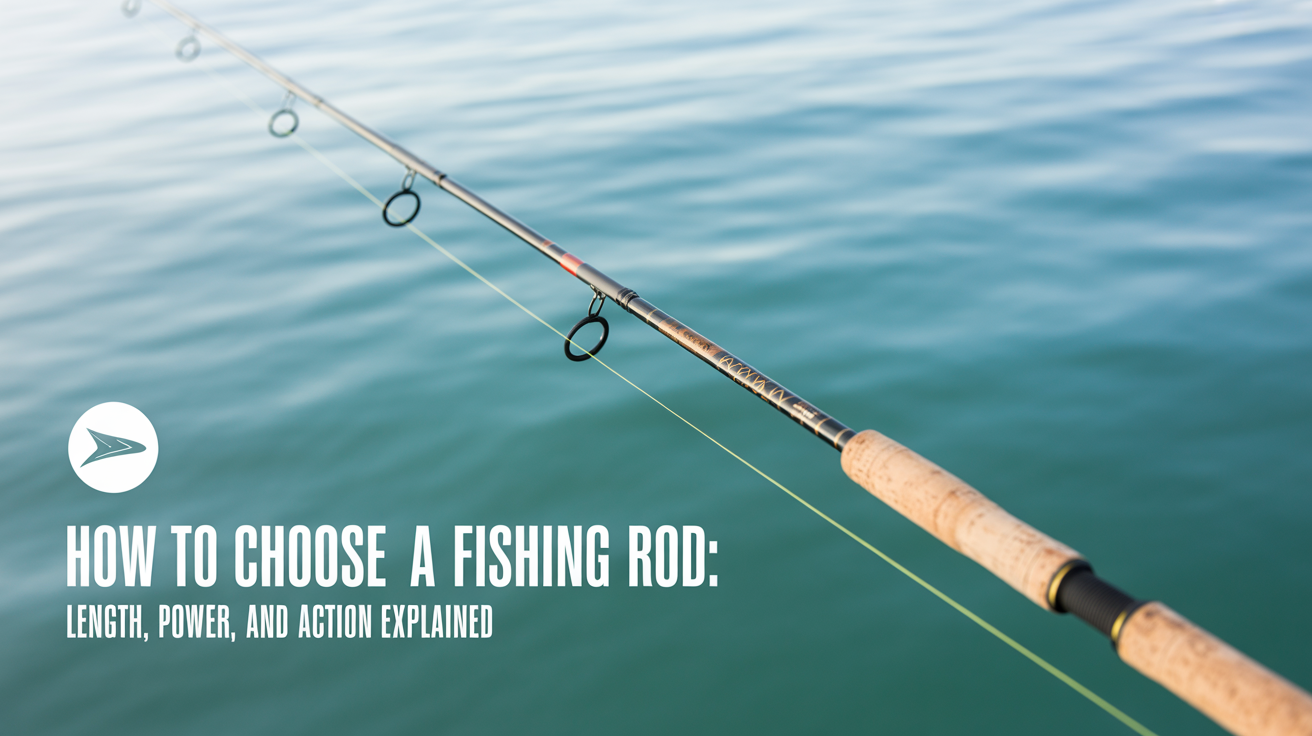
Walk into any tackle shop and the rod wall can stop a beginner cold. Dozens of blanks, all labeled with cryptic specs like "M/F" or "MH-Fast," prices running from $30 to $300. The good news: once you understand three things (length, power, and action) the rest of the decision gets simple. This guide breaks down each one and shows you how they work together in practice.
What Rod Length Actually Does
Rod length runs from about 5'6" on the short end to 8' and beyond for specialized applications. For freshwater beginners, the useful range is 6' to 7'6".
A longer rod casts farther. The extra lever arm loads more energy into the blank on the back-cast and releases it over a wider arc. A 7' rod will consistently outcast a 6' rod when everything else is equal. That matters when you're fishing a big open lake from a boat dock or pitching topwater baits across a flat.
A shorter rod gives you more accuracy and control in tight spaces. A 6'6" spinning rod is much easier to manage when you're wading a brush-choked stream, casting under overhanging tree limbs, or fishing from a kayak where a long rod becomes unwieldy.
Practical starting points by situation:
- Bank fishing, open water, largemouth bass or walleye: 7' to 7'6"
- Panfish, small streams, kayak fishing: 6' to 6'6"
- General-purpose spinning setup that handles most freshwater scenarios: 6'6" to 7'
Most beginners start with a 7' rod and find it works fine for 80% of what they do.
Rod Power: Matching the Rod to Your Target
Power (also called "weight") describes how much force it takes to bend the rod. It tells you what size fish, lures, and line the rod is designed to handle. Manufacturers use these labels, roughly in order from lightest to heaviest:
| Power | Typical Lure Weight | Line Range | Common Targets |
|---|---|---|---|
| Ultralight (UL) | 1/32 – 1/8 oz | 2–6 lb mono | Trout, panfish, small perch |
| Light (L) | 1/16 – 1/4 oz | 4–8 lb mono | Crappie, small bass, trout |
| Medium-Light (ML) | 1/8 – 3/8 oz | 6–10 lb mono | Bass, walleye, trout |
| Medium (M) | 3/16 – 5/8 oz | 8–12 lb mono | Bass, walleye, pike (smaller) |
| Medium-Heavy (MH) | 3/8 – 1 oz | 10–17 lb mono | Bass, pike, larger walleye |
| Heavy (H) | 1/2 – 2 oz | 14–25 lb mono | Big bass, catfish, pike |
The lure weight column is the most useful number for beginners. If you're throwing a 1/4 oz spinnerbait, a medium or medium-light rod puts you squarely in the right range. Using a heavy rod with that same lure means the rod never loads properly on the cast; using an ultralight means you risk snapping the tip on a hard hookset.
Power also affects your hookset. A medium-heavy rod drives a big worm hook through a bass's mouth reliably. That same rod used for crappie with light jigs will feel like wrestling fish with a broomstick, and you'll tear the hook free more often than not.
Rod Action: Where the Blank Bends
Action describes where along the blank the rod flexes when pressure is applied.
- Fast action: bends in the top third, roughly the first 12–18 inches. Very sensitive tip; backbone stays stiff. Good for single-hook presentations (jigs, Texas rigs, drop shots) where you need to feel light bites and drive the hook home quickly.
- Moderate-fast action: bends in the top quarter to third. A common middle-ground that handles both lures and live bait well.
- Moderate action: bends through the top half. More forgiving arc; excellent for treble-hook lures (crankbaits, swimbaits) because the rod absorbs the fish's head shakes instead of ripping the hooks free.
- Slow action: bends almost to the handle. Rarely seen in modern freshwater rods. Mostly specialized for ultralight trout fishing.
A fast-action rod telegraphs every tap and nibble straight to your hand, which is genuinely useful when bass are picking up a finesse worm and dropping it before you react. A moderate rod paired with a crankbait acts as a shock absorber and keeps the fish pinned through the whole fight. Using a fast rod with a shallow-diving crankbait will cost you fish at the net.
How Length, Power, and Action Work Together
These three specs aren't independent. A good rod for a specific job stacks them in a way that makes sense:
Bass jig fishing: 7' or 7'3", medium-heavy, fast action. The length helps with the longer pitching casts into cover. The MH power drives the hook into a bass's hard jaw. The fast action means you feel the tick of a bite through a foot of water.
Crankbait fishing: 7' to 7'6", medium, moderate or moderate-fast action. The moderate action loads up on the cast and cushions the fight so the fish can't use the resistance to throw the hook.
Trout on a stream: 6'6" to 7', light or medium-light, moderate-fast. The lighter power loads on small 1/8 oz spinners; the moderate-fast action gives enough feel for strikes without being too stiff for the small fish involved.
Panfish and crappie: 6' to 6'6", ultralight or light, moderate-fast. Anything heavier kills the fun and makes it harder to cast tiny jigs.
Spinning vs. Baitcasting Rods
This guide applies to both rod types, but the blank is designed for the reel it pairs with. Spinning rods have larger, ring-style guides and the blank is held with the guides facing down. Baitcasting rods have smaller, closer-set guides and are held guides-up.
For beginners, spinning gear is the standard starting point. It's much more forgiving to cast, handles light lures better, and is easier to learn. The comparison between spinning reels and baitcasters covers the reel side of this decision in detail if you're trying to figure out which setup makes sense right now.
Once you pick a rod, you'll need to load it with the right line. A medium rod rated for 8–12 lb mono doesn't pair well with 20 lb braid; staying in the rated range affects both casting and sensitivity. The guide to mono, braid, and fluorocarbon walks through the tradeoffs so you can match the line to the rod and the presentation you're planning.
What to Look For on the Blank
The printed specs on most rods live either on the rod itself just above the handle or on a sticker near the butt cap. Here's what to find before you buy:
- Lure weight range (e.g., 1/4–3/4 oz): more useful than the power label in isolation
- Line weight range (e.g., 10–17 lb): tells you what the blank is engineered to work with
- Length: printed in feet and inches
- Action: fast, moderate-fast, moderate (not all manufacturers print this; check the product page)
Guides (the rings the line runs through) and the reel seat material matter for durability but are less important than the core specs for beginners. A $60 rod with the right power and action for your fishing will outperform a $200 rod with the wrong specs every time.
A Simple Decision Framework
If you want one rod to get started with, work through these questions:
- What species? Panfish and trout push you toward light/ultralight. Bass and walleye point to medium or medium-heavy.
- What lures? Single hooks (jigs, worms, live bait rigs) favor fast action. Treble-hook lures (crankbaits) favor moderate.
- Where are you fishing? Open water or long casts: 7' or longer. Tight cover, kayak, streams: 6' to 6'6".
- What reel? Spinning setups handle lighter power classes better; baitcasting handles medium-heavy and up more comfortably.
For most freshwater beginners targeting bass or walleye with a spinning reel, a 7' medium-power fast-action spinning rod covers the widest range of situations. Add a 6'6" medium-light moderate-fast rod later and you can handle crankbaits, lighter jigs, and finesse fishing without compromise.
Once you've got the rod matched and spooled up, spooling the reel correctly is worth a few minutes of attention before you head out. Line twist is one of the most common causes of casting problems on new setups.
Tackle Theory is an independent freshwater-fishing resource. Our guides are researched and written in-house; we are not affiliated with, endorsed by, or sponsored by any tackle brand or retailer we mention. Fishing licenses, seasons, and regulations vary by location and change frequently — always confirm current rules with your state or provincial fish and wildlife agency before heading out.
FAQ
What rod is best for a beginner?
A 7' medium-power fast-action spinning rod handles the widest range of freshwater situations and pairs well with a mid-size spinning reel. It works for bass, walleye, and lighter pike fishing without being too specialized to learn on.
What does "M/F" mean on a fishing rod?
"M/F" stands for Medium power and Fast action. Rod manufacturers often abbreviate both specs together. You might also see "MH-Mod" for medium-heavy power with moderate action, or "ML-MF" for medium-light with moderate-fast.
Can I use a bass rod for trout?
A medium or medium-heavy rod is usually too stiff to feel the light bites and enjoy the fight from smaller trout. A light or medium-light rod in the 6' to 7' range is much better matched to the lure weights (1/8 to 3/8 oz) and line (4–10 lb) that trout fishing calls for.
Does rod material matter for beginners?
Fiberglass rods are durable and forgiving but heavier. Graphite (carbon fiber) rods are lighter, more sensitive, and more common in modern rods. Composite rods blend both. For beginners, a basic graphite rod in the $40–$80 range performs well and is worth the modest upgrade over entry-level fiberglass.
How do I know if a rod is rated for the lure I want to throw?
Check the printed lure weight range on the blank. If your lure weight falls within that range, the rod will cast it properly and load correctly. A 3/8 oz jig on a rod rated 1/4–5/8 oz is right in the zone. That same jig on an ultralight rated 1/32–1/8 oz will strain or potentially break the tip under a hard cast or big fish.