Gear & Tackle
Sinkers, Swivels, and Bobbers: A Beginner's Tackle Box
Learn which sinkers, swivels, bobbers, and hooks belong in a starter tackle box. Plain guide to terminal tackle for freshwater beginners.
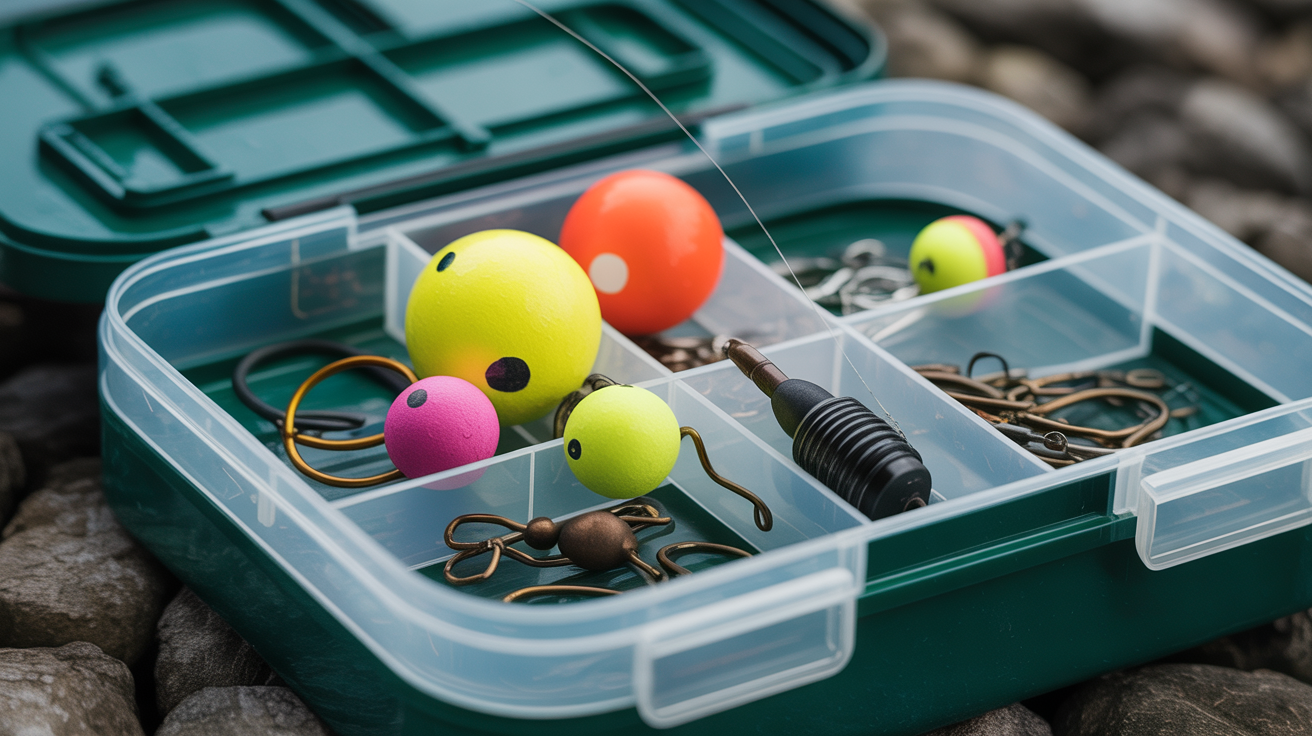
Terminal tackle is the collection of small hardware at the end of your line: the hooks, weights, connectors, and floats that actually contact the fish and the water. You need far less than the tackle wall at a sporting-goods store implies.
What Terminal Tackle Actually Means
The term "terminal tackle" covers everything tied or clipped onto the business end of your fishing line. Hooks, sinkers, swivels, and bobbers all fall under this label. Understanding what each piece does, and why, makes it much easier to buy only what you need and skip everything you don't.
Your main line runs from the reel down through the rod guides. At some point along that line, you attach a combination of terminal components to present bait or a lure at the right depth and position. A simple panfish rig might be just a hook, a split-shot sinker, and a bobber. A bottom rig for catfish might use a heavier weight, a swivel, and a leader with a hook. Both setups use the same basic building blocks.
Before picking any gear, make sure your rod and reel can handle the line weight you plan to use. See our guide to how to choose a fishing rod and our breakdown of fishing line types for context on the full setup.
Types of Fishing Sinkers
Sinkers add weight so your bait reaches the depth where fish are holding. They come in many shapes, but beginners can cover nearly every freshwater situation with three or four styles.
Split Shot Sinkers
Split shot are small, round lead or tin weights with a split slot that clamps onto your line. You pinch them on with pliers or your fingernail, and most versions have tabs that let you remove and reuse them. They come in a range of sizes measured by weight. A size BB or size 7 split shot is a good starting point for panfish and trout in still water or slow current.
When to use them: Light presentations close to the surface, rigs where you want minimal added weight, or any time you need to fine-tune how fast bait sinks.
Egg Sinkers (Slip Sinkers)
An egg sinker is oval-shaped with a hole through the center so the line runs freely through it. Because the line slides, a fish can pick up the bait and move without immediately feeling the weight of the sinker. That reduces dropped bites.
When to use them: Bottom fishing for catfish, carp, or bass when you want a semi-slack presentation. Pair with a barrel swivel below the sinker to stop it above your leader.
Bullet Sinkers
Bullet sinkers are cone-shaped with the point facing forward, which helps them slide through weeds and submerged brush without snagging. They are the standard weight for Texas-rigged soft plastic lures used for largemouth bass.
When to use them: Fishing soft plastics in heavy vegetation or woody cover.
Bank Sinkers
Bank sinkers are teardrop-shaped with a molded loop at the top. They hold the bottom in current better than rounder designs because of their shape. Common sizes run from half an ounce to three ounces.
When to use them: River fishing for catfish, carp, or walleye where current would drag a lighter weight downstream.
Swivels: Small Parts That Solve Real Problems
A swivel is a two-ring connector with a rotating center pin. The rotation prevents your line from twisting, which matters more than it sounds. Twisted line tangles, curls off the spool, and weakens at knot points.
Barrel Swivels
A barrel swivel has a plain ring on each end with a rotating barrel in the middle. You tie your main line to one end and a leader to the other. The standard size range for freshwater is sizes 10 through 4 (smaller numbers mean larger swivels). Size 7 or 8 works for most panfish and bass rigs.
When to use them: Any bottom rig where a sinker sits above the swivel, keeping it from sliding down to the hook. Also useful on spinner rigs and live-bait setups that create line twist.
Snap Swivels
A snap swivel combines a barrel swivel with a small wire clip. The clip opens to let you change lures quickly without retying. The downside is that snaps add a small amount of hardware near the lure, which can affect the action of lighter lures.
When to use them: When you want fast lure changes, or when fishing spinners and spoons that generate significant line twist.
Do You Always Need a Swivel?
No. A swivel is a tool for specific problems, not a requirement on every rig. A basic bobber-and-hook setup for bluegill does not need one. Add a swivel when your rig has a sliding sinker that needs to be stopped, or when your lure or bait spins in a way that twists the line.
Bobbers and Floats
A bobber holds your bait at a set depth and signals a bite by moving, dipping, or going under. The word "bobber" is used interchangeably with "float" in most freshwater fishing circles.
Round Plastic Bobbers
The classic red-and-white round bobber clips onto the line with a spring-loaded button. They are cheap, visible from a distance, and work fine for shallow presentations up to about six feet. The drawback is that a large round bobber creates drag when a fish pulls it, which can cause fish to drop the bait.
Best for: Kids learning to fish, casual bluegill and crappie trips, slow or still water.
Slip Floats
A slip float has a hollow center so the line runs through it freely. You set the depth by placing a small bobber stop (a rubber band or knot tied to the line) above the float. When you cast, the rig folds down for distance, then the bait sinks to the stop depth after landing. Slip floats are more sensitive than round bobbers and work at any depth.
Best for: Crappie fishing over deeper brush piles, walleye presentations, or any time you need more than six feet of depth.
Pencil or Waggler Floats
Long and thin, these floats sit mostly below the surface with a small tip showing. They react to very light bites because there is less resistance when a fish pulls the tip under. They are common in European-style float fishing and work well for timid panfish.
What to Put in a Starter Tackle Box
A compact first tackle box does not need to cover every scenario, just the most common freshwater situations. Here is a practical starting list:
| Item | Quantity / Notes |
|---|---|
| Split shot sinkers (assorted, size 4 to BB) | One dispenser pack |
| Egg sinkers (1/4 oz and 1/2 oz) | 6 of each |
| Bank sinkers (1/2 oz and 1 oz) | 4 of each |
| Barrel swivels (size 7 or 8) | 12 to 20 |
| Snap swivels (size 7) | 6 to 10 |
| Round bobbers (1-inch and 1.5-inch) | 4 of each |
| Slip floats | 4 to 6 |
| J-hooks (size 8, 6, and 4) | 1 small pack of each |
| Circle hooks (size 2/0 for catfish/bass) | 6 to 8 |
| Extra monofilament leader (8 lb test) | One small spool |
| Needle-nose pliers | 1 pair |
| Line clipper or scissors | 1 |
Keep hooks in individual compartments or hook holders. Loose hooks in a box create a hazard every time you reach in. Always pinch barbs on hooks when practicing catch and release, and handle fish with wet hands when possible.
For advice on the reel that will work alongside this terminal tackle, our guide to spinning reels vs. baitcasters covers which type makes the most sense for beginners.
Check your state or provincial regulations before fishing. Bag limits, size restrictions, and rules about bait types vary by location and change each season. Your local fish and wildlife agency is the definitive source.
Frequently Asked Questions
What is the difference between a sinker and a weight? Nothing. The terms are interchangeable in freshwater fishing. "Sinker" is the older and more common term; "weight" is used more often in bass fishing and in discussions of soft-plastic rigging. Both refer to any piece of metal added to a rig to pull the bait down.
Can I use saltwater terminal tackle in freshwater? Yes. Saltwater hooks tend to be heavier and larger than most freshwater situations need, but they work fine. Stainless hardware holds up well in freshwater. If you already own saltwater gear, there is no need to replace it.
How do I know what size hook to use? Hook sizes run on two scales that meet in the middle. For smaller hooks, higher numbers mean smaller sizes: a size 12 is smaller than a size 6. For larger hooks, a zero is added and the scale reverses: a 1/0 (one-aught) is smaller than a 4/0. For panfish like bluegill, sizes 6 through 10 cover most situations. For bass, sizes 1 through 1/0 on J-hooks are a common range. For catfish, 2/0 through 4/0 circle hooks work well.
Do I need fluorocarbon leader material? Not at the start. Monofilament leader in 6 to 10 pound test handles most beginner freshwater situations. Fluorocarbon is less visible underwater and more abrasion resistant, which matters in clear water or when fishing near rocks and timber. Once you are fishing regularly, a small spool of fluorocarbon is worth adding. For now, mono is fine.
Are lead sinkers safe to use? Lead sinkers are legal in most freshwater states and provinces, but some specific waters restrict them due to concerns about waterfowl that ingest lost sinkers. Check local rules before you fish. Tin and bismuth alternatives are available in the same shapes as lead at a higher cost. Always confirm what is permitted on the water you are fishing.