Techniques & Tactics
How to Set the Hook and Fight a Fish
Learn how to set the hook fishing, fight a fish without losing it, and land it cleanly. A practical beginner guide covering bites, hook sets, drag, and netting.
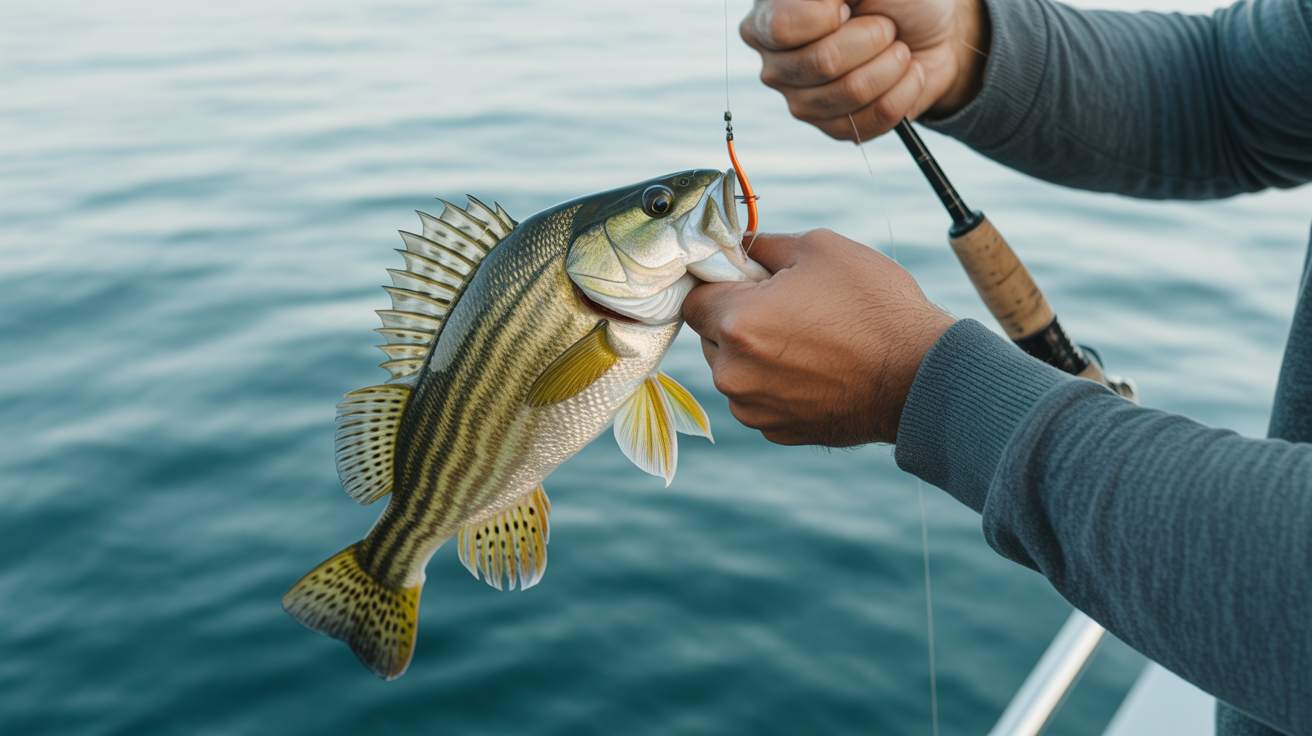
Getting a fish on the hook and keeping it there are two separate skills. Miss either one and the fish is gone before you even see it.
Detecting the Bite
You cannot set the hook on a bite you do not feel. That sounds obvious, but a lot of beginners miss strikes because they are not watching or feeling the line closely enough.
Watch your line. A slack line that suddenly tightens, a twitch, or a sideways movement often means a fish picked up your bait before you felt anything through the rod.
Feel for pressure, not just taps. Some fish, like crappie, bite gently. Others, like bass or catfish, thump hard. Get in the habit of keeping light contact with your line by resting a finger on it just above the reel.
Watch the rod tip. Even small bites show up as a slight bounce or dip. Sensitivity improves with lighter line and a faster-action rod, but any rod will telegraph a firm bite.
Pay attention to where you are fishing. Fish hold near structure: points, drop-offs, weed edges, and submerged timber. When your lure passes through a strike zone, slow down and stay alert. If you want to understand why fish are in those spots, read how to read water and find where fish hold and fishing structure and cover: what they are and why they matter.
Setting the Hook: Three Methods
Not every bite calls for the same hook set. Using the wrong technique at the wrong moment loses fish.
The Snap Set
This is the standard hook set for most freshwater fishing with J-hooks: bait, soft plastics, spinners, and crankbaits.
When you feel the bite, lower the rod tip slightly (take up slack), then sweep the rod firmly upward and to the side in one smooth, fast motion. You want to move the rod tip a foot or two quickly. The goal is to drive the hook point through the fish's jaw.
Do not yank like you are starting a lawn mower. A short, sharp sweep is more effective than a wild overhead swing, and it keeps you in better control of the fight.
The Sweep Set
A longer, slower sweep works well for fishing with live bait when you want to give the fish a moment to take the bait fully before moving the hook. It is common with catfish, larger panfish using nightcrawlers, and when fishing a slip bobber rig.
Watch for the bobber to go down and stay down, or feel for sustained pressure, then sweep the rod low and sideways in a wide arc. This sets the hook without jerking the bait out of the fish's mouth.
The Reel Set (Circle Hooks)
Circle hooks work differently. If you snap set on a circle hook, you will pull it right out of the fish's mouth.
When using a circle hook, wait until you feel steady weight on the line, then reel down to remove slack and apply steady pressure. The rod should load up on its own. The hook's geometry does the work, rotating into the corner of the mouth as the fish moves away. This technique is common for catfish, carp, and live-bait setups in general. Circle hooks also make releasing fish easier because they almost always hook in the lip rather than the throat.
Quick reference:
| Situation | Hook Type | Technique |
|---|---|---|
| Lures (spinners, crankbaits, soft plastics) | J-hook | Snap set |
| Live or cut bait, waiting for bite | J-hook | Sweep set |
| Catfish, carp, live bait | Circle hook | Reel set (no snap) |
Setting Your Drag Before You Fish
The drag is the brake system on your reel. Set it right before you start, not after a fish has already broken off.
A properly set drag lets line peel out smoothly when a fish runs hard, which keeps the line from snapping. A drag that is too tight will break the line. A drag that is too loose will not let you apply pressure.
A simple starting point: With the rod held level, pull line off by hand. You should need moderate effort, but it should give before your line's breaking point. If your line is 10-pound test, the drag should slip at roughly 3 to 4 pounds of steady pull.
Adjust the drag knob until it feels right, then do not touch it once a fish is on. Tightening the drag mid-fight is one of the most common reasons beginners break off fish.
Fighting a Fish: Rod Tip Up and Steady Pressure
Once the fish is hooked, the fight is about applying consistent pressure without snapping the line or ripping the hook out.
Keep the rod tip up. A high rod tip loads the rod, which acts as a shock absorber when the fish surges or changes direction. If you drop the rod tip flat, you lose that cushion and put direct strain on the line.
Pump and reel. To bring a fish in, lift the rod from about horizontal to vertical (pumping), then reel as you lower it back toward horizontal. Repeat. Do not reel while the fish is running or pulling hard; you will just twist the line and wear out the drag.
Let the drag do its job. When a fish makes a strong run, ease up and let it go. Hold steady pressure with the rod but do not crank against a running fish. When it stops or turns, resume pumping and reeling.
Do not horse the fish. Horsing means cranking hard and forcing the fish toward you without working the rod. It rips hooks, snaps light line, and breaks fish off. Patience wins more fish than brute force.
Turn the fish. If a fish is running toward structure like a dock, rock pile, or weed bed, use sideways rod pressure to change its direction. Pivot the rod to the side rather than pulling straight back. A fish turned sideways tires faster and is easier to steer.
Landing the Fish
Getting the fish to the bank or the boat is the last step, and it is where many beginners lose fish they have already fought well.
Use a net when you have one. Lead the fish headfirst into a net held just under the water's surface. Do not chase the fish with the net or scoop from behind. Let the fish swim in. A wet mesh net is better for fish you plan to release because it is gentler on their slime coat.
No net? Lip-land or cradle. For bass, grip the lower jaw firmly with your thumb and forefinger. The fish goes still when you do this. For trout, pike, or fish with teeth, use a wet hand to cradle the fish from underneath. Never grip a pike or muskie by the lower jaw; their mouths do not hinge the same way and you risk injuring the fish.
Do not lift a large fish by its lip. A heavy bass held vertically by the jaw with one hand can dislocate its jaw. Support the body with your other hand or keep the fish in the water as much as possible.
Handle hooks safely. Use needle-nose pliers or a hook remover to back the hook out. For deep-hooked fish you are releasing, it is often better to cut the line close to the hook rather than digging it out. Most hook materials corrode and pass in time.
If you want to plan your next outing around when fish are most active and likely to feed, the best time of day to fish breaks it down by season and conditions.
Always check regulations. Size limits, creel limits, and gear restrictions vary by state, province, and individual water. Confirm current rules with your local fish and wildlife agency before you go.
Frequently Asked Questions
How hard should I set the hook? Firm and quick, but not wild. A crisp upward or sideways sweep of the rod is enough to drive a sharp J-hook home. Massive swings often pull the lure away from the fish or snap light line. With circle hooks, skip the snap entirely and just reel down steadily.
Why do I keep losing fish right at the boat or bank? Most fish lost at close range come down to slack line. As the fish gets near you, beginners often drop the rod tip and create slack, which lets the hook fall out. Keep the rod up, keep tension on the line, and do not stop reeling too soon.
What drag setting should I use for bass? A starting point for most bass fishing with 12-pound monofilament is a drag that slips at around 4 to 5 pounds of pull. Tighten it slightly for heavier cover where you need to stop a fish quickly. Loosen it when fishing finesse presentations with lighter line.
Do I need to set the hook right away when I feel a bite? With lures, yes: set immediately. With live or cut bait on a J-hook, give the fish a count or two to take the bait before sweeping. With a circle hook, wait for steady pressure and then just reel. Reading the type of bite matters more than reacting as fast as possible.
How do I keep from snapping my line when a big fish runs? Do not reel against a running fish. Let the drag slip and hold the rod at roughly 45 degrees. Once the fish stops, resume pumping and reeling. If your drag keeps slipping even on small fish, the setting may be too loose; if your line keeps breaking, it is likely too tight or the line itself is old and brittle.