Cleaning & Conservation
How to Remove a Deeply Hooked Fish
Learn how to remove a deep hook safely, when to cut the line instead, and how to set up your tackle to prevent gut-hooked fish from the start.
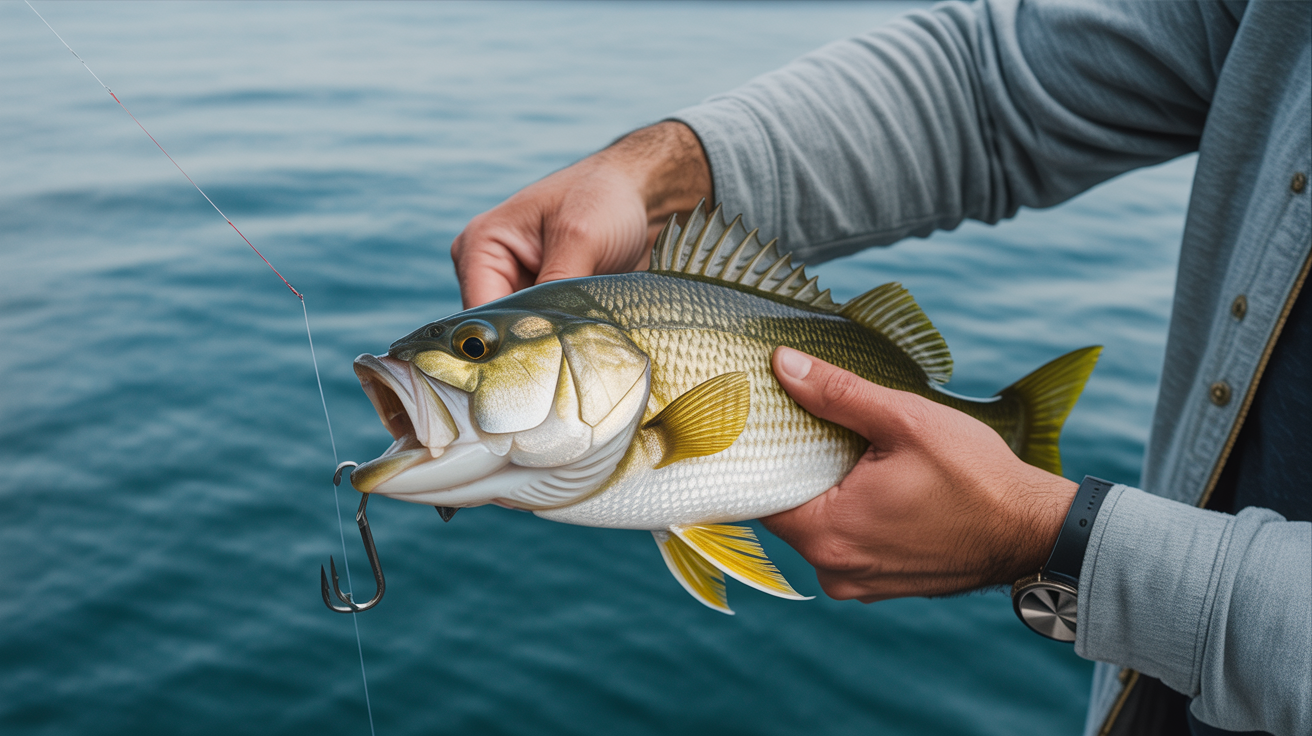
When a fish swallows a hook, you have two real options: work the hook out carefully, or cut the line and leave it. Knowing which to choose, and how to do each one, is what this guide covers.
What "Deeply Hooked" Actually Means
A fish is considered deeply hooked when the hook has traveled past the mouth into the throat or stomach. There are a few levels:
- Lip or jaw hooked -- the hook is visible in the mouth, point and bend exposed. Easy to remove.
- Throat hooked -- the hook is inside the throat but you can still see or reach it with a tool. Harder but manageable.
- Gut hooked -- the fish has swallowed the hook entirely into the stomach. The line disappears into the fish. This is the situation most people mean when they talk about a gut hooked fish.
The depth of the hook determines your approach. A gut hooked fish that you plan to release is almost always better served by cutting the line than by digging the hook out. If you're keeping the fish, you have more options.
When to Cut the Line and Leave the Hook
This is the most important decision in the whole process, so it comes first.
Cut the line if:
- The hook is in the stomach or deep in the throat and you cannot see it clearly
- The fish is bleeding from the gills
- The fish is small relative to the hook size
- You plan to release the fish
Fish have stomach acid that can dissolve a hook over days to weeks, depending on hook material. Stainless steel takes the longest. Bronze and carbon-steel hooks rust out faster, which is one reason many anglers who practice catch and release avoid stainless hooks. Monofilament inside a fish, on the other hand, does not break down and can cause lasting gut problems, so always cut the line as short as possible -- right at the hook eye if you can.
Research from fisheries biologists consistently shows that deeply hooked fish released with the hook left in place survive at higher rates than those that had the hook forcibly extracted from the stomach or throat. The extraction causes more trauma than the hook itself.
Try to remove the hook only if:
- It is in the lip, jaw, or clearly visible in the mouth
- You have the right tools and can work quickly (under 30 seconds ideally)
- The fish is not bleeding heavily
- You plan to keep the fish regardless of the outcome
If you are keeping the fish, deeply hooked or not, see our guide on how to clean and fillet a fish: a step-by-step guide once you're back at the cleaning station.
How to Remove a Hook You Can Reach
For hooks in the lip, jaw, or shallow throat, here is what works.
Tools to Have on Hand
| Tool | Best For |
|---|---|
| Long-nose pliers | Any hook in a medium or large fish |
| Needle-nose pliers | Smaller fish, tight angles |
| Disgorger/hook remover | Thin-wire hooks, smaller species |
| Dehooking tool (T-bar style) | Fast, one-handed use from a boat |
| Scissors or line cutters | Cutting line when extraction isn't right |
A disgorger is a simple plastic or metal rod with a notch at the tip. You slide it down the line until the notch catches the hook bend, then push forward to back the hook out. They cost very little and take up no space in a tackle bag. If you fish for panfish or trout with light wire hooks, a disgorger is faster than pliers most of the time.
The Extraction Steps
- Keep the fish in the water or in a wet hand. Do not let it flop dry on the ground or boat deck.
- Get a firm but gentle grip on the fish, especially around the body to limit thrashing.
- If using pliers, grip the bend of the hook, not the shank or line. This gives you more control and a cleaner angle.
- Back the hook out the way it went in. The point traveled in one direction -- reverse that path.
- If the hook has a barb, you may need to back it slightly deeper first to free the barb from tissue before pulling out. This is the same principle as removing a hook from your own skin.
- Work quickly and smoothly. Jerky movements cause more tissue damage.
If the hook does not move after gentle, steady pressure, stop. Continuing to force it will tear more tissue. At that point, cut the line.
For circle hooks, which curve back toward the shank, the removal angle is slightly different -- you typically rotate the hook rather than backing it straight out. The point follows the curve.
When a Fish Bites Through Bait and You Cannot See the Hook
Sometimes you'll reel in a fish where the line simply enters its mouth and disappears. Before assuming it is gut hooked, check the line angle. If it angles toward the jaw corner, the hook may be lodged in jaw tissue rather than the stomach. Shine a light into the mouth and use long-nose pliers to feel for the hook.
If you cannot locate it within 15 seconds, cut the line.
Handling a Gut Hooked Fish You Are Releasing
If you have decided to cut the line and release, here is how to give the fish the best chance:
- Cut the line as close to the hook as possible. Less line left inside means less chance of it tangling with internal structures.
- Keep the fish in the water during the whole process. Do not hold it in the air while you work.
- Once the line is cut, hold the fish upright in the water and let it recover at its own pace. Do not just drop it and walk away. Support it gently until it swims away under its own power.
- If the fish is bleeding from the gills, its odds are not good regardless of what you do. Release it anyway -- some will survive.
For more detail on proper release technique after any hook removal situation, see our guide on catch and release: how to do it so fish survive.
How to Prevent Deeply Hooked Fish
The best way to deal with a gut hooked fish is to not create one. A few tackle choices make a real difference.
Use circle hooks. Circle hooks are specifically designed to slide out of the throat and catch in the corner of the mouth. The point curves back toward the shank, so when a fish swallows it and runs, the hook backs out and catches at the jaw. They do require a different hookset -- do not jerk the rod, just reel steadily and let the hook set itself. Once you adjust, circle hooks dramatically reduce deep hook rates.
Set the hook sooner. With J-hooks and live or cut bait, the longer you wait to set, the deeper the fish takes the bait. If you are fishing with bait and your goal is catch and release, set the hook as soon as you feel the take rather than waiting for the fish to fully run with it.
Use barbless hooks. Crimp the barb flat with pliers. Barbless hooks back out of tissue much more easily, and the drop-off rate during the fight is lower than most people expect -- especially in calm water. Many catch-and-release anglers use barbless hooks exclusively. Check your local regulations, as some waters require barbless hooks.
Match hook size to bait and species. An undersized hook relative to the bait it is attached to gets swallowed more easily. If small fish are stealing your bait and you keep finding the hook is being swallowed, upsize your hook or use a larger piece of bait.
If you plan to keep your catch, check the how to keep fish fresh after you catch them guide to make sure they stay in good condition from hook to table.
Frequently Asked Questions
Can a fish survive with a hook left inside it?
Yes, many do. Fish released with hooks in the stomach survive at reasonable rates, particularly when the hook is a non-stainless material that corrodes over time. The bigger risk is the trauma of trying to remove it. Survival depends on species, water temperature, and how long the fight lasted. Stainless hooks take much longer to break down, so if catch and release matters to you, it is worth switching away from stainless.
What is the fastest way to remove a hook from a small panfish?
A disgorger is the fastest tool for small fish with thin-wire hooks. Slide the notched tip down the line to the hook bend, press gently forward to disengage the barb, then back the hook out. A few seconds once you have practiced it. Keep one clipped to your vest or tackle bag.
Is it safe to use your fingers to remove a deeply swallowed hook?
Not usually. You risk both cutting your fingers on the hook point and causing more bleeding in the fish. Long-nose pliers give you reach and control that fingers do not. If the hook is truly deep, fingers will not reach it anyway.
Do regulations ever require releasing fish even if they are gut hooked?
Yes. Many catch-and-release-only waters require you to release fish regardless of condition. Some waters also have specific rules about bait fishing or hook types that are designed to reduce deep hooking. Check your state or provincial fishing regulations before you go out. Rules vary by water and change from year to year.
Does the type of bait matter for how often fish get gut hooked?
Live bait and cut bait tend to result in deeper hookups than artificial lures because fish hold onto them longer. Lures are usually set when the fish strikes, so the hook ends up in the mouth more often than in the throat or stomach.