Cleaning & Conservation
How to Keep Fish Fresh After You Catch Them
Keep your catch table-ready with ice slurry ratios, bleeding tips, and storage basics — from the water to your cooler in the right order.
The difference between a great fish dinner and a mediocre one often has nothing to do with how you cooked it. It comes down to what happened in the first 30 minutes after the fish came out of the water. Warm temperatures, rough handling, and delayed chilling all degrade flesh fast. Get the basics right and even a modest catch eats like a real meal.
This guide covers the full chain from hook to cooler: keeping fish alive when you plan to release them, dispatching humanely when you're keeping them, and storing the fillets at the right temperature the whole way home. Check your local regulations on size and creel limits before you keep anything, and only keep what you'll actually eat.
Keeping Fish Alive vs. Dispatching Humanely
Before you decide anything else, decide whether you're keeping the fish. If you're not, get it back in the water quickly with minimal handling. Our guide on catch and release covers that in detail.
If you're keeping the fish, the clock starts the moment it clears the water. A fish that thrashes in a bucket or on a stringer for 20 minutes before dying is already building up lactic acid in its muscles, which softens the flesh and shortens how long it stays good. The cleanest option is a quick dispatch right away.
How to Dispatch a Fish Quickly
The fastest method is a firm strike to the top of the skull, just behind the eyes, with a small club or a smooth rock. This is called "bonking" and it renders the fish unconscious instantly. One solid hit to the right spot is more humane than letting a fish slowly suffocate in a bucket.
For species like trout, you can also pitch the fish headfirst onto a hard surface. It sounds rough but it's faster than the alternatives. The goal is to stop stress hormones from flooding the flesh before you can chill it.
Bleeding Fish for Better Flavor
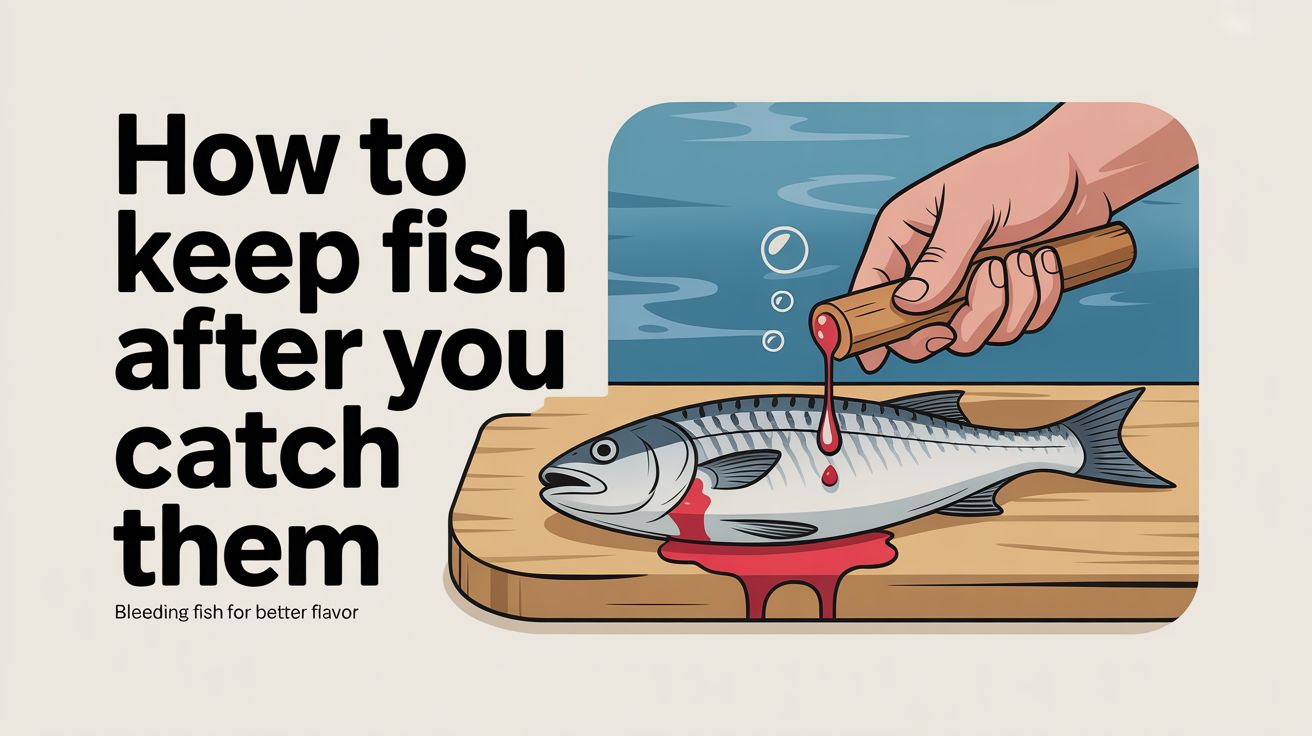
Bleeding a fish right after dispatch is a simple step most beginners skip, and it makes a real difference in flavor, especially with trout, walleye, and catfish.
After dispatching, cut through the gill arch on one side with a sharp knife, then put the fish in a bucket of cold water or directly into your cooler for a few minutes. The heart will keep pumping briefly and flush blood out of the flesh. Blood breaks down quickly in warm conditions and gives fish that "fishy" taste that puts people off. Bleed the fish and the meat comes out lighter, cleaner, and milder.
This step matters most in warm weather. In cold weather (water and air both under 50°F), it's still worth doing but less critical.
Ice and the Ice Slurry Method
Cold is the single most important factor in fish freshness. Bacterial growth roughly doubles for every 10°F rise in temperature above 32°F, so getting fish to near-freezing quickly is not optional if you want to eat well.
Ice Slurry vs. Dry Ice
A standard cooler with dry ice on top is common but not ideal. Ice touching one side of the fish while the other side is exposed to 80°F air in a boat still leaves warm spots. An ice slurry solves this.
Fill your cooler with a mix of ice and just enough water to make a slushy consistency, roughly a 2:1 ratio of ice to water by volume. The water fills all the gaps around the fish and pulls heat out of the flesh from every surface at once. Slurry temperature sits right around 32°F and drops fish core temperature far faster than dry ice.
Pour in the water before your fish go in. Fish submerged in slurry cool to safe temperature within minutes rather than an hour or more in a dry cooler.
Cooler Setup Tips
- Pre-chill your cooler before the trip if possible. An empty cooler in a hot car has absorbed enough heat to melt your first bag of ice in 45 minutes.
- Keep the cooler out of direct sun, ideally in the shade or under a boat seat.
- Drain meltwater periodically. Fish sitting in warm water at the bottom of a half-melted cooler are not adequately chilled.
- Add more ice as needed. Plan on roughly 1 pound of ice per pound of fish, plus another pound for the cooler itself.
Stringers and Livewells
Both are options for keeping fish alive between catches, but they come with real limitations.
Stringers
A stringer threaded through the lip keeps fish swimming alongside the boat or bank. In cool water (under 65°F or so) this works reasonably well for short periods. In warm summer water, most panfish, bass, and walleye will die within an hour on a stringer. Dead fish on a warm stringer decompose fast.
Never string fish through the gills. The lip-clip method is kinder and lets the fish breathe. Even so, a fish stressed on a stringer for two hours produces worse table fare than one dispatched immediately and put on ice.
Livewells
An aerated livewell is the better option on a boat. It keeps water temperature more stable and gives fish room to move. If you're running a tournament and need to weigh fish later, a livewell is the right tool. For a keep-and-eat trip, still dispatch and ice fish as soon as practical rather than leaving them in the livewell all day.
Add ice to the livewell if the water temperature climbs above 70°F. Warm livewell water is just a slow stringer.
Gutting Soon After Dispatch
You don't have to fillet fish on the water, but gutting them is worth doing if you have a few minutes and a clean surface. The gut cavity holds bacteria and digestive acids that accelerate spoilage. A fish that's bled, gutted, and iced within 30 minutes of dispatch will still be excellent 24-48 hours later. One that's kept whole and iced will be fine too, but gutting buys you extra margin.
Pack the emptied body cavity with ice as well as surrounding the fish. The inside of the cavity is a warm air pocket otherwise.
Our full guide on how to clean and fillet a fish walks through the gutting and filleting process step by step.
Transporting Fish Home
A well-iced cooler in the car is fine for trips up to 4-5 hours. Keep the cooler in the back seat or trunk out of direct sun, and resist opening it repeatedly to check on things. Every time you open it, warm air gets in.
For longer drives, stop and add ice if the slurry is getting thin. Gas stations and grocery stores usually carry bags. A cooler with good insulation (at least 2 inches of foam) will hold temperature much better than a cheap thin-walled box.
When you get home, fillet and refrigerate or freeze the fish within an hour or two. Don't leave a cooler of fish sitting in the driveway while you run errands.
What Not to Do
| Bad Practice | Why It's a Problem |
|---|---|
| Leaving fish in warm water in a bucket | Bacteria multiply fast above 40°F; quality drops in under an hour |
| Dry stringer in direct sun | Fish dies slowly under heat stress; lactic acid ruins texture |
| Putting fish directly on ice without water | Slower cooling, potential freezer burn on skin |
| Skipping the bleeding step | Blood in the flesh breaks down and produces strong off-flavors |
| Waiting until you're home to gut the fish | Gut bacteria and acids start degrading flesh from the inside |
| Freezing fish in plain water in a zip bag (trapped air) | Freezer burn develops within a week; use a vacuum sealer or water-pack method |
FAQ
How long can fish stay on ice before they go bad?
A properly bled and gutted fish kept in a 32°F ice slurry will hold quality for 24-48 hours easily. Whole, ungutted fish on ice will last 12-24 hours before quality starts to decline noticeably. These are not hard safety cutoffs, bacterial growth is very slow at 32°F, but the texture and flavor are best within that window.
Can you keep fish fresh without a cooler?
For short trips under 2 hours in cool weather (air under 60°F), a wet burlap sack or newspaper wrapping can delay spoilage. It's not ideal and shouldn't be your regular approach. A cheap foam cooler with ice is a worthwhile investment, it costs less than one bad meal.
What's the best way to freeze fish you caught yourself?
The vacuum seal method is best, but water-packing works well if you don't have a sealer. Place the fillets in a zip freezer bag, fill with cold water until the fish is submerged, squeeze out air, and seal. Frozen this way, most freshwater fish will keep 4-6 months without significant quality loss. Label the bag with the species and date.
Do I need to scale fish before putting them on ice?
No. Scaling and filleting can wait until you're home. The priority order on the water is: dispatch, bleed, gut (optional but useful), ice. Scaling is a kitchen task.
Is it safe to eat fish that died on a stringer for a few hours in warm weather?
It depends on how warm. If the water was above 70°F and the fish has been dead for more than an hour, spoilage has begun. A sour or ammonia smell means discard it. If it smells normal and the flesh is still firm, you can cook it, but cook it that same day and don't push it into the next morning. When in doubt, throw it out.
Tackle Theory is an independent freshwater-fishing resource. Our guides are researched and written in-house; we are not affiliated with, endorsed by, or sponsored by any tackle brand or retailer mentioned. Fishing licenses, seasons, and creel limits vary by location, always confirm current regulations with your local fish and wildlife agency.