Species Guides
Catfish Fishing: Bait, Rigs, and Where to Find Them
Learn how to catch catfish with the right bait, rigs, and spots. A beginner's guide to channel, blue, and flathead catfish in freshwater.
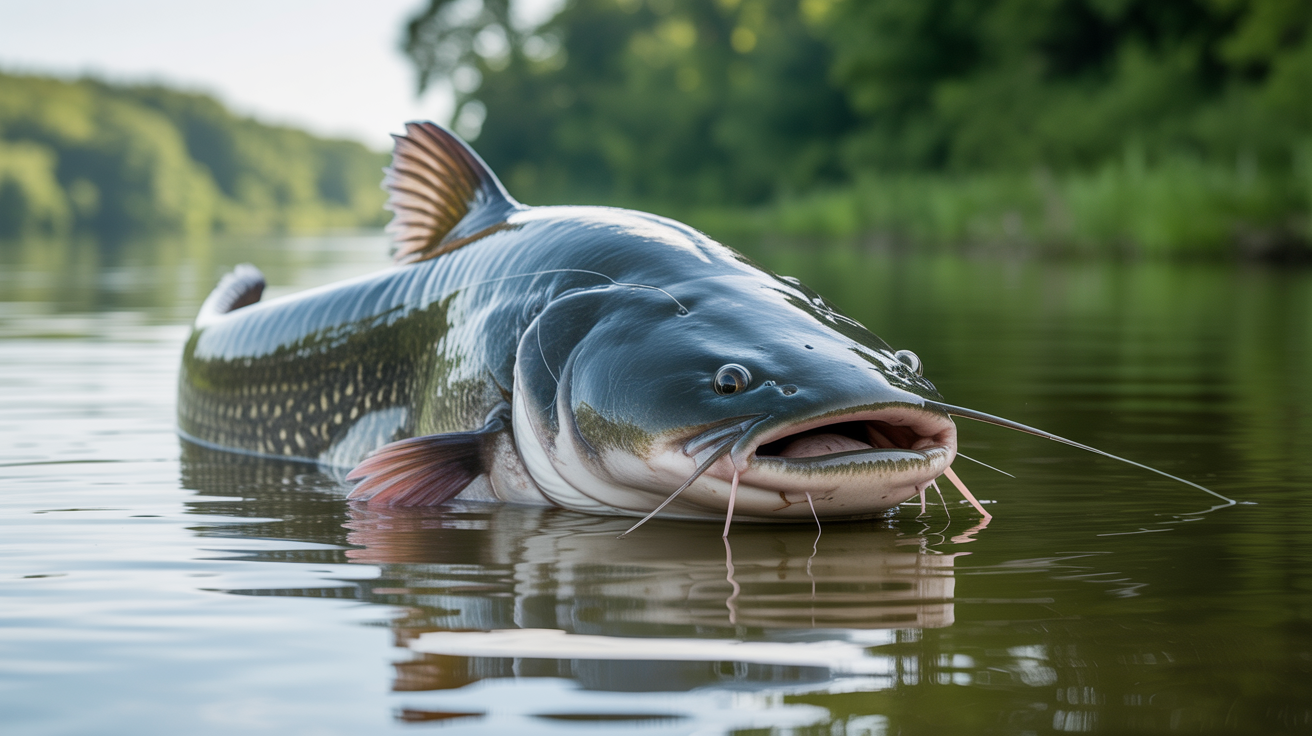
Catfish are one of the most accessible fish for beginners. They're widespread across North American rivers, lakes, and reservoirs, they feed in low light and murky water, and they respond to simple setups that don't cost much to put together.
Know the Three Species You'll Likely Encounter
Most freshwater catfish anglers in North America deal with three species: channel catfish, blue catfish, and flathead catfish. They look different, grow to different sizes, and prefer different food sources.
Channel catfish are the most common species in the country and the one most beginners catch first. They have a forked tail, an undercut jaw, and dark spots on smaller fish that fade as they grow. Most run 1 to 5 pounds, though fish over 10 pounds are possible in productive water. Channel cats eat a wide variety of baits, which makes them forgiving for anglers just starting out.
Blue catfish are the largest of the three. A mature blue has a uniformly slate-blue back, a straight-edged anal fin, and a deeply forked tail. They thrive in large rivers and major reservoirs, where fish in the 20 to 40 pound range are not unusual and the species can reach over 100 pounds.
Flathead catfish are built differently: a wide, flat head, a protruding lower jaw, and a square or slightly notched tail. They're ambush predators that strongly prefer live bait. Most are caught at night near heavy cover like logjams and undercut banks.
Where to Find Catfish
Location is the biggest factor in catfish success. Putting bait in the right spot matters more than any particular bait or rig. Catfish hold near structure and seek out current breaks where they can rest and feed without fighting the full force of the water.
In rivers:
- Deep pools directly below riffles and rapids hold channel cats year-round
- Outside bends where current cuts deep and deposits silt attract blues
- Logjams, root balls, and collapsed banks are flathead territory
- Below dams is one of the most reliable spots in any river system, especially for blues and channels
In lakes and reservoirs:
- Points where submerged creek channels meet the main basin
- The first deep water adjacent to a shallow flat
- Submerged timber and rocky structure in 10 to 25 feet of water
- In summer, catfish move to deeper water during the middle of the day and shift shallower after dark
Catfish rely on smell as much as sight, which makes them catchable in murky water, at night, and in conditions that shut down other species. Find the structure and get bait near the bottom and you're set up to catch fish.
Best Bait for Catfish
The right bait depends on the species you're targeting and what's available locally.
| Bait | Best for | Notes |
|---|---|---|
| Cut shad or skipjack | Blue catfish | Oily fish like shad release scent fast; fresh works better than frozen |
| Chicken liver | Channel catfish | Very effective but soft; wrap in mesh or use a bait holder hook |
| Nightcrawlers | Channel catfish | Reliable year-round, especially in spring and early summer |
| Prepared stink baits | Channel catfish | Dip baits and punch baits sold in jars; smelly but effective |
| Live bluegill or sunfish | Flathead catfish | Check local regulations before using live baitfish |
| Live suckers or creek chubs | Flathead catfish | Big profile baits attract big flatheads |
Cut bait spoils quickly in warm weather, so keep it in a cooler until you need it. Chicken liver is hard to keep on a hook; a small mesh bait bag or a wrap of bait elastic helps it stay put.
Catfish Rigs
You don't need complicated tackle to catch catfish. Two rigs cover nearly every situation a beginner will face.
Slip Sinker Rig
This is the most widely used catfish setup. Thread an egg sinker or no-roll sinker onto your mainline, then tie a barrel swivel to stop it. From the other end of the swivel, add 12 to 18 inches of leader line and a hook. When a catfish picks up the bait and moves, the line runs through the sinker without the fish feeling resistance. That lack of resistance improves your hook-set rate.
Use 1 to 3 ounces of weight in slack water. In fast current, go heavier until the rig holds bottom without dragging.
Three-Way Rig
Tie a three-way swivel to your mainline. From one ring, run a short dropper (6 to 12 inches) with a bell sinker attached. From the third ring, run your leader line (18 to 24 inches) to a hook. This suspends your bait slightly off the bottom and works well in rivers because the sinker bounces along the bottom while the bait drifts at a more natural angle.
Hook Choices
For channel cat fishing, a 2/0 to 4/0 circle hook handles most situations. Circle hooks tend to catch in the corner of the fish's mouth rather than deeper in the throat, which makes releasing fish cleaner. For big blues and flatheads, step up to 5/0 to 8/0. Kahle hooks are another popular choice for their wide gap when fishing larger cut bait.
Rod, Reel, and Line
A medium-heavy to heavy power rod, 7 to 9 feet long, covers most catfish situations. Load a spinning or baitcasting reel with 17 to 30 pound monofilament for channel cats and smaller blues. For large blues or flatheads in big rivers, braid in the 40 to 65 pound range gives you less stretch and better bite detection, with a monofilament or fluorocarbon leader.
A Simple Process for Catching Catfish
- Pick a spot with structure. A deep hole, a current seam, a logjam, or the pool below a dam beats open water every time.
- Cast past your target and reel back to position. This lets the rig settle without a splashdown on top of the fish.
- Open the bail or put the reel in free spool. A catfish will often move with the bait before committing. Giving it a few seconds before tightening up results in better hookups.
- Watch for steady line movement. A hard thump followed by a run is common. Resist setting the hook on the first twitch alone.
- Set the hook with a steady sweep. With circle hooks, a firm reel-and-lift is better than a hard snap. With J-hooks, a sharp upward set drives the point home.
Safety: Spines, Hooks, and Handling
North American catfish have three stiff spines: one in the dorsal fin and one in each pectoral fin. These spines are not venomous, but they are sharp and can cause a painful puncture wound. To grip a catfish safely, wrap your hand over the top of the fish so the dorsal spine sits between your thumb and forefinger and the pectoral spines fall on either side of your palm. For fish over 5 or 6 pounds, support the body with your other hand.
Long-nose pliers make unhooking easier and keep your fingers away from both the hook point and the spines at the same time.
Always verify current regulations before you fish. Size limits, creel limits, and live bait rules vary by state and water body. Your state fish and wildlife agency's website is the most reliable source.
Catfish share water with a lot of other species. If you want to expand your freshwater fishing, read our guides on how to catch largemouth bass, smallmouth bass tactics and locations, or how to catch trout in lakes and streams.
Frequently Asked Questions
What is the best time of day to catch catfish?
Channel catfish and blue catfish feed actively both during the day and at night, but fishing tends to improve after sunset in warmer months when water temperatures are higher. Flathead catfish are much more nocturnal and are caught most reliably after dark. The last hour before full daylight in the morning can also produce bites, especially on rivers.
Do I need a special rod for catfish?
No specialized rod is required to start. A medium-heavy spinning or baitcasting rod in the 7 to 8 foot range handles most situations. If you're targeting large blue catfish or flatheads in big rivers and expect to fight fish over 30 pounds, a heavier rod with a heavier reel and line is worth considering.
Can I use dead bait for flathead catfish?
Flatheads strongly prefer live bait, and fresh-cut or dead bait produces far fewer bites on them. Channel catfish and blues, by contrast, respond well to cut bait, prepared baits, and a wide variety of dead offerings. If flatheads are your target, live sunfish, live suckers, or live creek chubs are worth the extra setup time.
How deep should I fish for catfish?
This depends on the season and the water. In summer, catfish often hold deeper during the middle of the day and move shallower in the evening and overnight. In rivers, the deepest pools and holes tend to hold fish consistently. A reasonable starting range is 8 to 25 feet, though the best depth for a specific spot comes from paying attention to where you get bites over multiple trips.
What's the difference between a circle hook and a J-hook for catfish?
A circle hook is designed to catch in the corner of the fish's mouth as the line comes tight, which reduces deep hooking and makes releasing fish with less injury easier. The technique is to let the fish take line, then reel into a tight connection and use a steady sweep rather than a sharp snap. A J-hook requires an active hook set but works well with a wider range of bait presentations and styles. Both catch fish; circle hooks are the better choice if catch-and-release is part of your plan.