Getting Started
How to Put a Worm on a Hook (and Other Common Baits)
Learn how to bait a hook with worms, minnows, crickets, and more. Step-by-step instructions for beginners on threading, wading, and keeping bait alive.
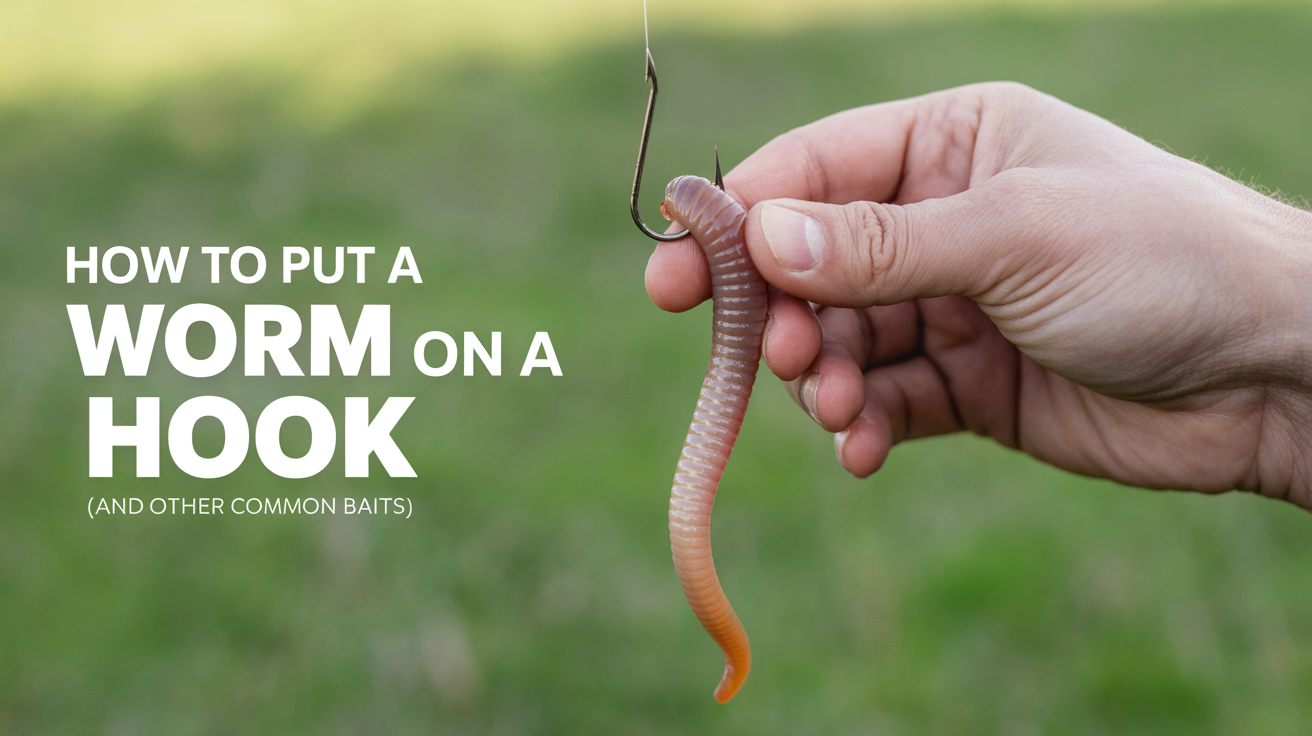
Threading a worm onto a hook takes about ten seconds once you know what you're doing. The same goes for most other common baits, whether you're using a minnow, a cricket, or a ball of dough.
Tools You Need Before You Start
You don't need much: a hook, your bait, and clean hands. Wet or earthy hands actually help with live bait because fish can smell soap and sunscreen residue. Rinse off any sunscreen before handling bait if you can.
Hook size matters. A size 4 to size 8 baitholder hook works for most worm and cricket fishing. Minnows do better on a size 2 to size 1/0 hook depending on the fish you're targeting. If you're just getting a setup together, check out the seven things worth buying first.
One safety note that applies to all live bait work: hooks are sharp. Hold the hook by the shank (the straight part), not by the bend or the point. When pressing bait onto the hook, push away from your fingers. Keep a first-aid kit in your bag.
How to Put a Worm on a Hook
Worms are the most beginner-friendly bait because they're forgiving. Fish aren't picky about exactly how a worm is rigged as long as it's secure and has some movement.
The Thread Method
The thread method is the most common approach. It works well for smaller worms and produces a natural presentation.
- Hold the worm near one end, about a third of the way down.
- Push the hook point into the worm at that spot.
- Thread the worm up the shank like you're threading a needle, pushing it all the way to the eye of the hook.
- Bring the hook point back out through the worm's body.
- Let the tail of the worm hang free, which gives it movement in the water.
You can repeat the threading motion two or three times on a large nightcrawler. This puts more of the worm on the hook and keeps it from getting stolen easily.
The Wad Method
The wad method (also called the worm ball or chunk method) is faster and works well when fish are actively biting.
- Cut the worm into two or three pieces, or use a whole small worm.
- Thread one piece or the whole worm onto the hook, bunching it up so it covers the hook completely.
- Make sure the hook point is either buried in the worm or just barely exposed.
This method hides the hook well, which can help when fish are cautious. The trade-off is that the worm stays in place and doesn't wiggle much.
Keeping Worms Alive Longer
Worms die fast in heat. Keep your bait container out of direct sun and avoid leaving it in a hot car. If you're bank fishing, tuck the container in the shade near your gear. Nightcrawlers in wet newspaper or fresh soil stay lively for hours. Dried-out or cooked worms won't attract as many fish.
How to Hook a Minnow
Minnows are a step up in complexity but not by much. The two standard options are a lip hook and a back hook, and each works in different situations.
Lip Hooking
Lip hooking puts the hook through both lips of the minnow, bottom to top.
- Hold the minnow lightly but firmly in your non-dominant hand.
- Push the hook point up through the lower jaw, then up through the upper lip.
- Center the hook so the minnow hangs naturally.
Lip hooking keeps the minnow alive and swimming. It works well under a bobber or when you want the minnow to move around freely. The downside is the hold is lighter, so the minnow can tear off on a hard cast.
Back Hooking
Back hooking pushes the hook through the minnow's back, just in front of the dorsal fin.
- Hold the minnow with the spine facing up.
- Push the hook point shallowly through the back, staying just under the skin and avoiding the spine.
- Leave the hook bend and tail visible below.
Back hooking is better for casting because the hold is more secure. The minnow does die faster this way, but it still moves and sends vibrations that attract fish.
Keep minnows in an aerated bucket with the same water they came in. Crowding too many minnows into a small container kills them quickly.
How to Hook a Cricket
Crickets are a top bait for bluegill and crappie. They're fragile, so the technique is a little gentler.
- Pick up the cricket by pinching its body between thumb and forefinger.
- Push the hook point up through the thorax, which is the midsection between the head and the abdomen.
- Avoid the abdomen because it's soft and the cricket will tear off; avoid the head because it kills the cricket immediately.
A properly hooked cricket will kick its legs and stay alive for a while, which draws fish. Use a small hook, size 6 to size 8, to avoid damaging the cricket on the hookset.
Soft Baits: Dough and PowerBait
Dough baits like PowerBait are the go-to choice for stocked trout. They're mess-free and easy to rig.
- Pinch off a small pea-sized ball of dough.
- Press it around the hook shank, starting just below the eye.
- Form it into a rough ball that covers most of the hook, including the point.
- Make sure it's firmly packed so it won't fall off during a cast.
Scented dough baits work by releasing attractants into the water. For that to happen, the bait needs to be fully submerged. Use a small split shot sinker about 12 to 18 inches above the hook to keep the bait near the bottom where trout feed.
Different colors and scents are marketed for different conditions, but stick to the basics when starting out: chartreuse or rainbow for clear water, brighter colors for murky water. Check that the product you're using is legal in your water body since some stocked trout fisheries have restrictions on scented baits. Confirm local regulations with your state or provincial fish and wildlife agency before fishing.
Corn and Prepared Baits
Whole kernel corn is a simple, legal (in many states) option for carp and panfish. Check regulations first, as corn is prohibited in some waters.
- Push the hook point through one kernel, entering at the soft center tip.
- Thread two or three kernels onto the hook for a larger presentation.
- Leave the hook point exposed slightly for a cleaner hookset.
Canned corn works fine. The salt and brine don't hurt. Some anglers soak corn in flavoring agents like garlic powder for carp fishing, which is a cheap alternative to commercial carp dough baits.
Keeping Your Bait Lively
Live bait fishes better when it's alive and moving. A few habits help:
| Bait | Keep it alive with |
|---|---|
| Worms | Cool, moist soil or newspaper; out of direct sun |
| Minnows | Aerated bucket with original water; don't overcrowd |
| Crickets | Ventilated container; don't let them get wet |
| Dough bait | Sealed container; keep cool to maintain texture |
Change out dead bait regularly. A limp, pale worm or a floating minnow still catches fish occasionally, but live bait outperforms dead bait in most freshwater situations.
Before any trip, it helps to read up on how to start fishing as a complete beginner if you haven't already. And make sure you have a valid fishing license before you wet a line. Details on that are at how to get a fishing license.
Frequently Asked Questions
How much of the hook should be showing when I bait it? It depends on your method. For worm threading, the hook point should poke out through the worm's body so it can catch when a fish bites. For wad methods and dough baits, you can bury the point to reduce snags, but this can slow your hookset. When in doubt, leave a little of the point exposed.
Why does my bait keep flying off when I cast? Usually the bait isn't secured far enough up the shank of the hook. Thread worms further up toward the eye, pack dough baits more firmly, and use a gentler casting motion with soft baits. Baitholders, which are hooks with small barbs along the shank, help keep soft baits in place.
Can I use frozen worms? Frozen worms are soft and fall apart easily, but they still work, especially for catfish, which rely heavily on scent. If you're fishing for panfish or bass that depend more on movement, fresh or live worms are better. Refrigerate leftover worms rather than freezing them if you plan to use them again soon.
Is it okay to touch bait with bare hands? Yes for most baits. In fact, fish can sometimes detect the smell of certain soaps and insect repellents, so bare, rinsed hands are usually better than gloved ones. The exception is dough baits, which can be handled normally since they're scent-based to begin with.
Do I need different hooks for different baits? The same baitholder hook handles worms, crickets, and dough well. Minnows do better on a lighter wire hook that doesn't injure them as much when threading. For corn, any small shank hook in size 4 to size 8 works fine. You don't need a separate hook for every bait type when you're starting out.