Getting Started
How to Cast a Fishing Rod: A Step-by-Step Guide for Beginners
Learn how to cast a fishing rod with a spinning reel using clear, step-by-step technique for beginners — overhead cast, sidearm pitch, and common fixes.
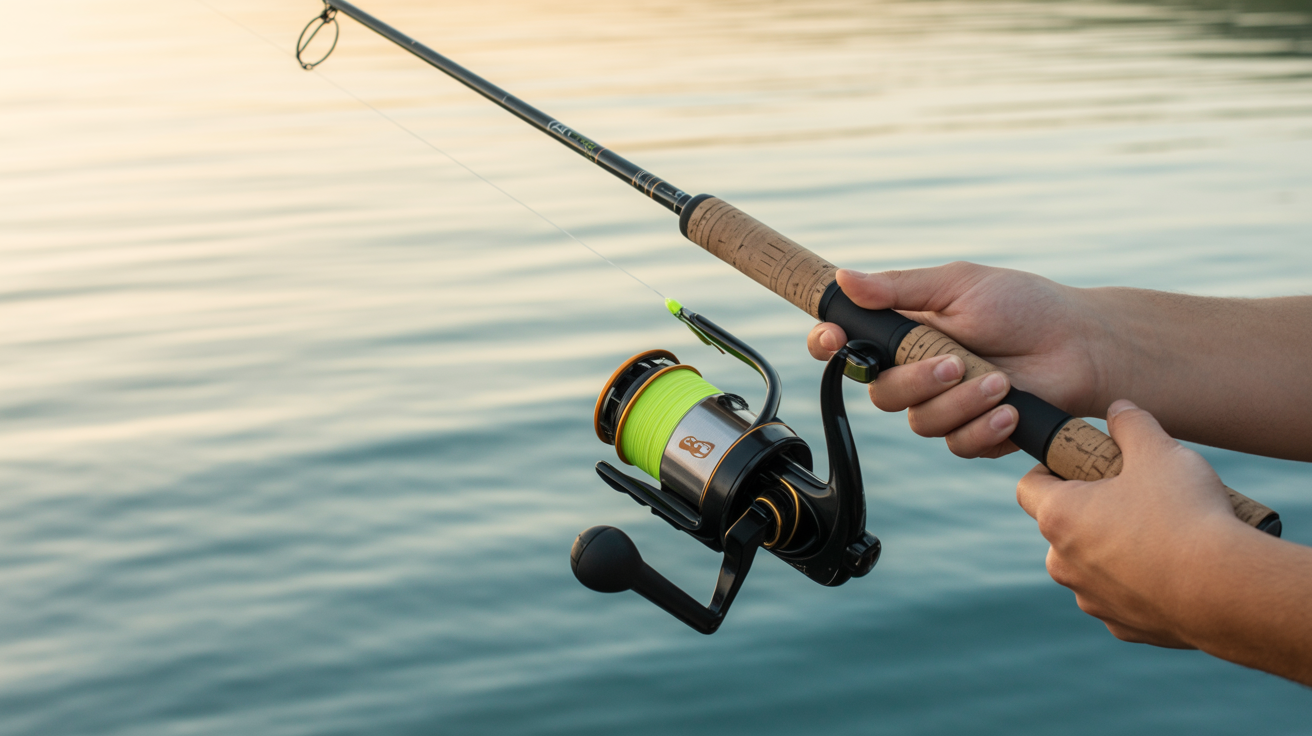
A bad cast doesn't just miss the spot, it spooks fish, tangles your line, and saps your confidence. The good news is that a clean overhead cast with a spinning reel takes about fifteen minutes to understand and a few sessions to groove. This guide walks through every step: grip, bail, loading, release, and follow-through. Then we'll cover the sidearm pitch for tight spaces, how to fix the three most common casting problems, and a simple practice drill you can do in a parking lot.
Before you head out, make sure you have a valid fishing license for your state or province. Requirements vary, Do You Need a Fishing License? How to Get One covers the basics.
What You Need Before You Cast
You don't need expensive gear to learn good casting form, but a few things matter:
- Rod: A 6- to 7-foot medium-light or medium spinning rod gives enough flex to feel the load. Shorter rods are harder to load; longer rods are harder to control at first.
- Reel: A mid-size spinning reel (2500–3000 size) spooled with 8–12 lb monofilament or 10 lb braid.
- Line condition: Old, coiled mono that springs off the spool in loose loops will fight you. Fresh line sits flat and peels clean.
- Lure or practice plug: A 1/4 oz to 3/8 oz lure is a good learning weight. Too light and you won't feel the rod load; too heavy and the cast feels stiff.
If you're still picking out a setup, Fishing for Beginners: The 7 Things to Buy First has a practical list.
The Overhead Cast: Step by Step
This is the foundational cast for open water. Master this before moving to anything else.
Step 1: Grip the Rod
Hold the rod with your dominant hand so the reel leg sits between your middle and ring finger, or between your ring and pinky, whichever feels natural. You want the reel foot nestled against your palm, not floating. Your grip should be firm but not white-knuckled. Squeezing too tight kills wrist flexibility, and wrist is half the cast.
Step 2: Open the Bail
Reach up with your non-dominant hand and flip the bail arm open. It should click or swing over easily. If it resists, you may have line wrapped around the bail wire, clear that before casting.
Step 3: Hook the Line with Your Index Finger
Before anything moves, pin the line against the rod blank with the pad of your index finger. The line should run from the spool, over your fingertip, and down toward the lure. This is the one thing most beginners skip, and it's why lures sail immediately into the water at their feet. Your finger is the only thing holding the lure up once the bail is open.
Step 4: Load the Rod
With the lure hanging about 12–18 inches below the rod tip, bring the rod back smoothly and stop it just past vertical, around the 1 o'clock position. Don't whip it back hard. The lure's weight will bend (load) the rod tip behind you. Pause for a fraction of a second to let that bend develop. A common beginner mistake is rushing past this moment; the load is what launches the lure.
Step 5: Release the Line at the Right Moment
Drive the rod forward in a smooth arc. As the tip passes through about the 10–11 o'clock position (slightly above horizontal), straighten your index finger to release the line. The timing here is the real skill: release too early (while the rod is still coming forward) and the lure goes high and short; release too late (when the tip is already dropping) and the lure drives into the water in front of you.
A useful mental cue: think about aiming the tip at a point about 15–20 feet above your target on the far bank. When your tip is pointing there, release.
Step 6: Follow Through and Close the Bail
Let the rod tip finish its arc toward your target, stopping abruptly kills distance. Once the lure lands, flip the bail closed by hand before you crank. Turning the handle to close it is fine mechanically, but it can introduce a small line twist each time; doing it by hand keeps your line cleaner over many casts.
Sidearm and Pitch Casts for Tight Spots
The overhead cast is useless when there's a dock overhead or branches at head height. Two alternatives cover most situations.
The Sidearm Cast
Keep everything the same as the overhead cast, but rotate your casting plane 90 degrees so the rod sweeps horizontally beside your body. Load the rod by swinging it back to about 3 o'clock (or 9 o'clock if you're left-handed), pause, then drive it forward and release at roughly the same point you would with an overhead, just oriented sideways. The lure will fly low and flat, which is exactly what you want to get under overhanging brush.
The Pitch Cast
Pitching works inside 20 feet for flipping a bait to a specific spot, a pocket in lily pads, the shadow under a dock corner. Hold the lure in your non-dominant hand, let out enough line so the lure hangs at reel height, and swing it forward by raising the rod tip while releasing the lure. The motion is more of an underhanded lob than a full cast. Practice this slowly; it's very controllable once you find the rhythm.
Fixing the Three Most Common Problems
Problem 1: Line Slaps the Water Right in Front of You
Cause: releasing the line too late. The rod tip has already dropped below horizontal before your finger opens.
Fix: Consciously make yourself release earlier. Try counting, "load, one, release", and release on the word "release" while the rod is still moving forward. You may overshoot at first; that's fine and easy to dial back.
Problem 2: Short, Low Casts Without Much Distance
Two causes are common here. First, not enough load, if you bring the rod back only to 12 o'clock instead of 1 o'clock, you lose rod bend and the cast falls flat. Second, releasing too early (the opposite of Problem 1), which sends the lure almost straight up and drops it nearby.
Fix: Record yourself from the side on your phone. You'll see immediately whether your back cast is reaching far enough back. Add a beat of pause at the back of the cast to let the rod bend more fully.
Problem 3: Wind Knots (Random Loops and Tangles in the Line)
Wind knots aren't really caused by wind, they happen when slack forms in the line during the cast and the loose loop gets caught in itself. This is especially common with light lures on braid or limp mono.
Fix: Keep the line taut the entire time. When you open the bail and hook the line on your finger, make sure there's no loose loop hanging from the rod guides. Also check that you're closing the bail by hand after each cast rather than with the handle crank, which can leave a tiny slack loop.
A Practice Drill That Works
Grab a 1/4 oz practice plug (rubber-tipped, no hooks) or tie on a small sinker with no hook, and head to a flat patch of grass or pavement. Put down a hat, frisbee, or chalk circle as your target at 30 feet.
Cast to the circle ten times using only the overhead cast. Count your releases: were they early, late, or on time? Move the target to 40 feet for the next ten, then back to 20 feet for ten more. Short targets train your release timing; longer targets train your load. Switching distances prevents you from grooming one specific muscle memory that doesn't transfer to the water.
Ten minutes of this before your first fishing trip is worth more than reading about casting. The brain wants feedback loops, the target gives you one.
Casting With Different Line Types
Monofilament is the most forgiving line for casting practice. It has stretch and memory, which means it loads the rod predictably and doesn't tangle as viciously when something goes wrong.
Braided line has zero stretch and almost no memory, which means it comes off the spool fast and casts far, but any slack in the system and you'll get a wind knot or a big overrun loop. If you're learning on braid, go slightly heavier on the lure (3/8 oz instead of 1/4 oz) to keep the line tensioned through the cast.
Fluorocarbon sinks and is stiffer than mono. It's not the best choice for a full spool when you're just starting out, though many anglers use fluoro as a leader tied to braid.
For a full breakdown of line types, How to Start Fishing: A Complete Beginner's Guide covers the trade-offs in more detail.
Tackle Theory is an independent freshwater-fishing resource. Our guides are researched and written in-house; we are not affiliated with, endorsed by, or sponsored by any tackle brand or retailer we mention. Fishing licenses, seasons, and size and creel limits vary by location, always confirm current regulations with your local fish and wildlife agency.
FAQ
How far should a beginner be able to cast?
Thirty to forty feet is a realistic starting goal for an overhead cast with a 1/4 oz lure. Most freshwater fishing happens inside that range anyway, fish hold near cover, and cover is rarely in the middle of the lake. Distance matters less than accuracy. A cast that lands 25 feet away in the right spot beats a 60-foot cast that lands three feet from where the fish are.
Do I always need to open the bail manually before casting?
Yes. Some anglers develop the habit of letting the first crank of the handle close the bail before the cast and then casting with the bail closed, this puts enormous pressure on the bail spring and eventually breaks it. Always open the bail by hand, hook the line with your finger, cast, and then close the bail by hand after the lure lands.
Why does my line keep coming off the spool in big loops?
This usually means the spool is overfilled. Line should be filled to within about 1/8 inch of the spool lip. Any more than that and the line wants to jump off in coils. If the spool is correctly filled and you're still getting big loops, check whether your line has developed a lot of twist from repeated handle-bail-closing, re-spooling will fix it.
Can I cast a spinning rod the same way as a spincast (closed-face) rod?
The motion is similar, but the mechanics are different. A spincast reel has a button on the back that you press and hold, then release when you want the lure to go. A spinning reel uses the open bail and your finger. The casting arc is the same; what changes is which hand controls the release. If you learned on a spincast as a kid, the transition to spinning is quick, just give yourself a few casts to retrain the finger habit.
How do I cast in the wind?
Cast into a headwind by keeping the cast low and tight, using a sidearm plane. Wind from behind is free distance, let it help you. A crosswind is the tricky one: if wind is coming from your rod-side, it can blow the line into the guides on the way through. Turn so the wind comes from your non-dominant side, which keeps the line away from your body and the rod path cleaner.